
October 29, 2026
Costa Rica tap water for African cichlids: how to prepare it
Tap water from AyA, local ASADAS or wells varies a lot by area. How to test it, remove chlorine and harden it for Malawi cichlids at every water change.
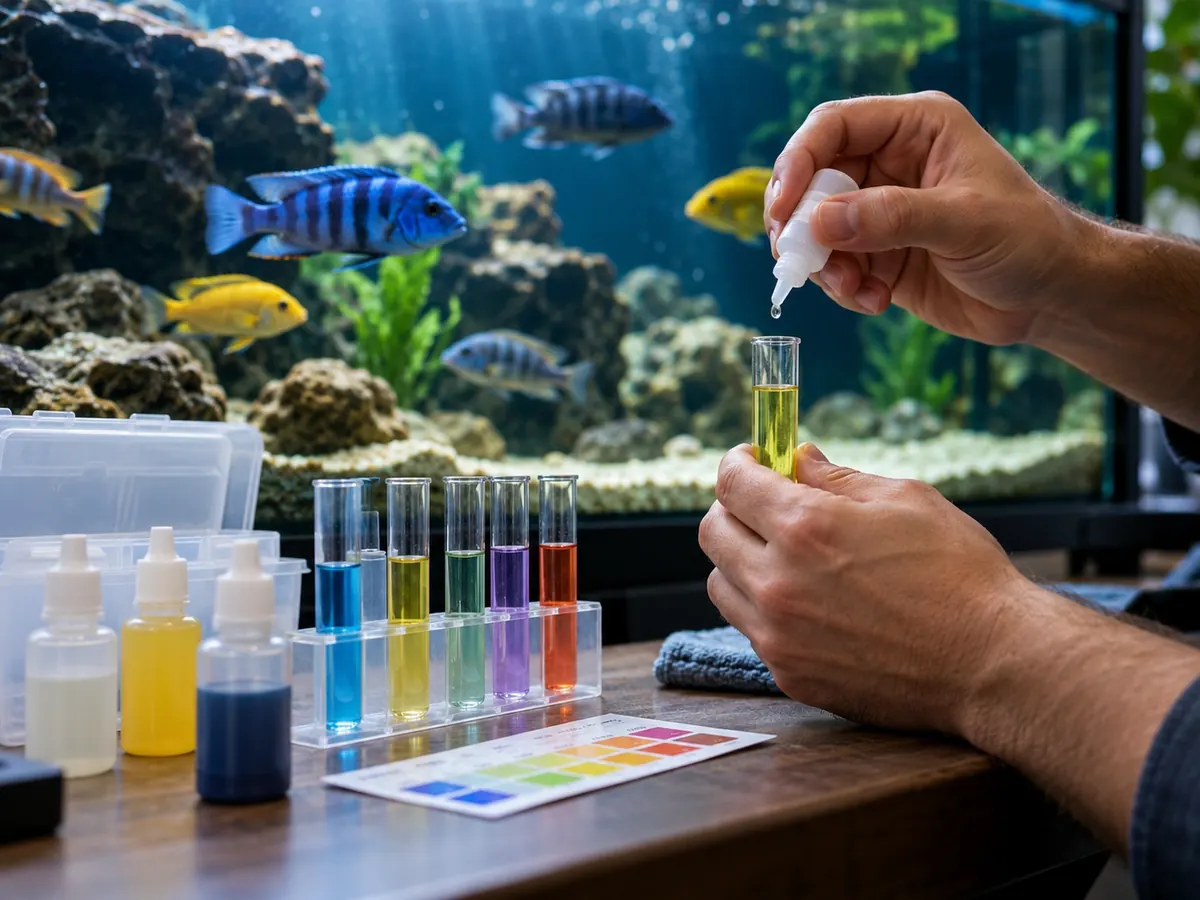
One of the questions we get most is whether tap water works for African cichlids. The short answer: yes, but it almost always needs preparing. In Costa Rica, water comes from very different sources: AyA, municipalities, community water boards (ASADAS) or private wells. Two hobbyists in neighboring towns can have completely different water. This guide helps you get to know yours and make it ready for your fish.
Why water differs from place to place
What comes out of your tap depends on where it is collected. Water from mountain springs and rivers is usually soft, with few minerals, while some wells give harder water. The same network can also change between the dry and rainy seasons, or when the utility blends sources.
Lake Malawi cichlids need the opposite of soft water: hard, alkaline water with a pH of 7.8 to 8.6 and good carbonate hardness (KH). With soft water, the pH tends to drop between water changes, which stresses the fish even if they look fine.
Step 1: test your water
No table can tell you what your home water is like: you need to test it. Get liquid test kits for pH, KH and GH from an aquarium shop; they are more reliable than strips.
- Test water straight from the tap.
- Let a bucket stand for 24 hours and test again: the pH can shift as the water releases gases.
- Test again in another season, especially if your fish change behavior.
- Log everything in My aquarium so you can compare over time.
As a rule of thumb, if the KH is below 6 °dKH or the pH below 7.5, your water needs help for Malawi cichlids.
Step 2: remove the chlorine
Drinking water contains chlorine or chloramine to make it safe, and both harm fish gills and filter bacteria. Always use a water conditioner in new water, at the dose on the label. Letting water stand removes some chlorine but not chloramine, so a conditioner is the safest option.
Step 3: harden it, steadily
The goal is not to force the pH up but to give the water carbonates and minerals that keep it stable. There are three ways, from the most passive to the most direct:
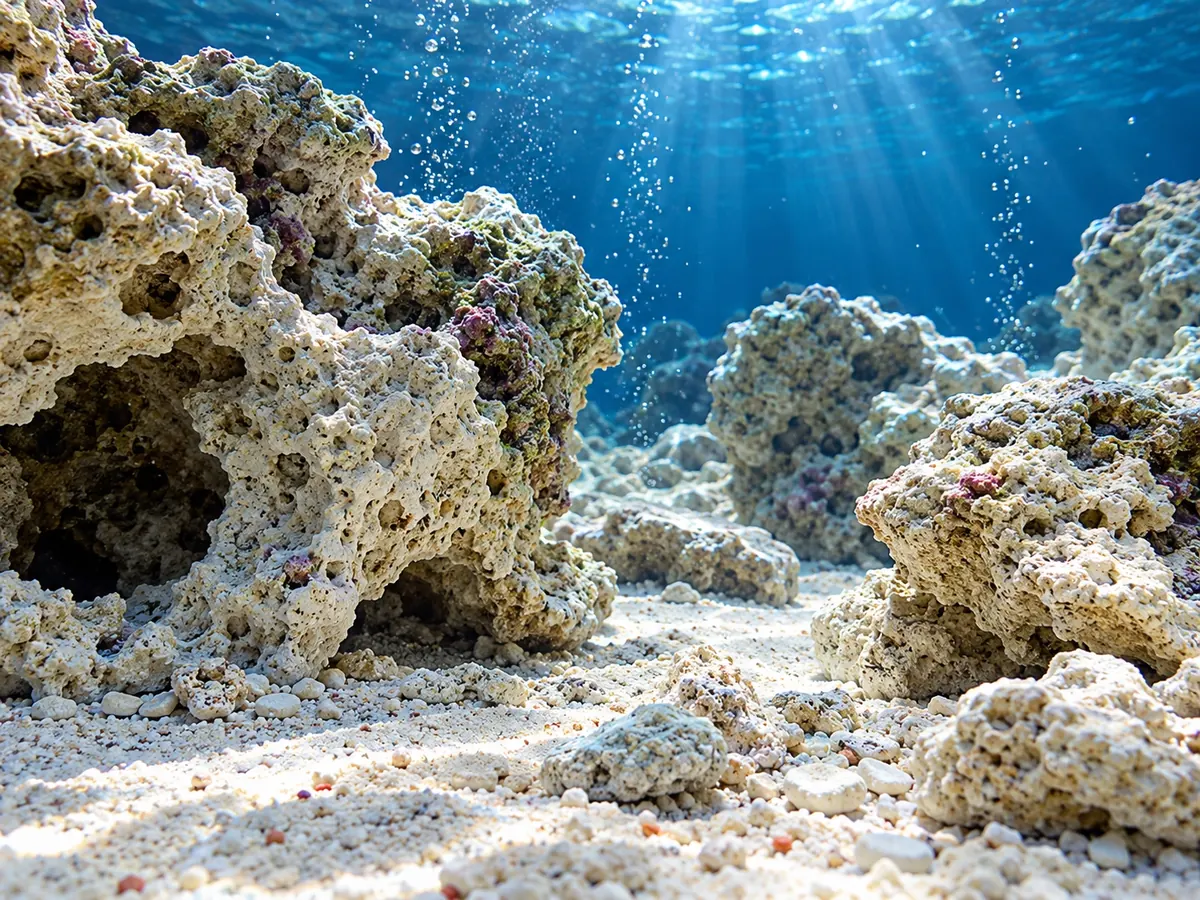
- Aragonite sand or crushed coral in the tank or filter. It releases carbonates slowly. In very soft water it is rarely enough on its own, but it helps stability a lot.
- Limestone rocks in the decor, with the same, slower effect.
- African lake salts or a homemade mix at every water change.
The homemade mix, carefully
Many hobbyists make their own mix with supermarket or pharmacy products:
- Baking soda (sodium bicarbonate): raises KH and stabilizes pH.
- Epsom salt (magnesium sulfate): adds magnesium and raises GH.
- Optionally, a little marine aquarium salt for trace minerals.
We do not give a fixed recipe because it depends on your starting water. The safe way is to find your own dose:
- Fill a bucket with a known amount of water, for example 20 liters, and add conditioner.
- Add a small, measured amount of baking soda, dissolve it well, wait a few minutes and test the KH.
- Repeat in small steps until you reach a KH of 8 to 12 °dKH, and write down how much you used.
- Use that same dose, scaled to the liters, at every water change.
The golden rule: everything goes into the new water, in the bucket, never straight into the tank with fish in it. And if your tank already has fish in soft water, make the change gradually over several weeks: a sudden pH swing is worse than an imperfect pH.
Common mistakes
- Using "pH up" products without adding KH: the pH rises and falls back a few days later.
- Changing a lot of water at once without preparing the new water to match the tank.
- Using water from home reverse osmosis filters without remineralizing: it has almost no minerals.
- Not testing: the tank can look perfect while the pH slowly drops.
Summary
Test your water, remove the chlorine, give it stable carbonates and prepare every water change the same way. That gives your Red Zebra, Electric Yellow or Benga peacock water much like Lake Malawi's. To understand what each value means, also read hard, alkaline water for Malawi cichlids, and if you are building a tank from scratch, our guide to tank size, rocks and stocking.
Discuss it in the forumMy aquarium
More from the blog
 November 2, 2026
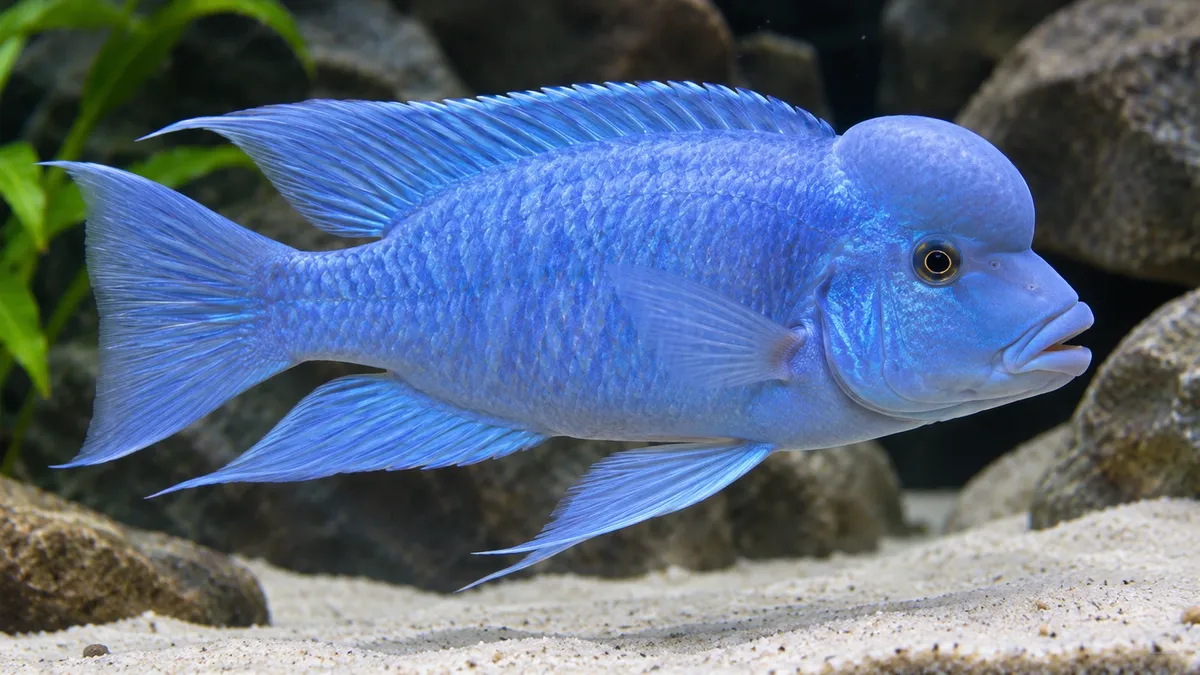
Blue Dolphin (Cyrtocara moorii): care, hump and calm temperament
Lake Malawi's humped blue cichlid: how big it gets, what tank and food it needs, how to sex it and why it is one of the most peaceful large cichlids.
Read →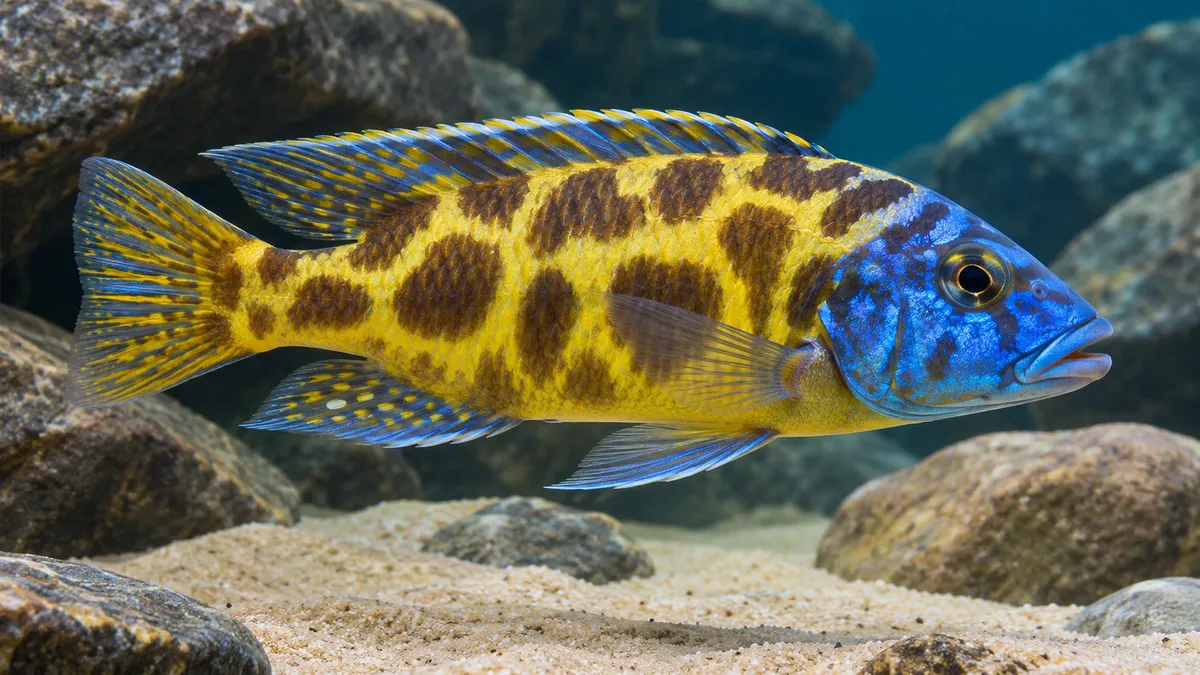 November 2, 2026
Venustus (Nimbochromis venustus): care, size and tank mates
Lake Malawi's giraffe cichlid: how big it gets, what tank it needs, what it eats, how to tell male from female and which fish can live with it without being eaten.
Read → November 1, 2026
Benga peacock (Aulonocara baenschi): care, colors and tank mates
The yellow peacock with a blue face: size, tank, diet, male and female differences, and how to build a calm peacock tank.
Read →