
November 2, 2026
Venustus (Nimbochromis venustus): care, size and tank mates
Lake Malawi's giraffe cichlid: how big it gets, what tank it needs, what it eats, how to tell male from female and which fish can live with it without being eaten.
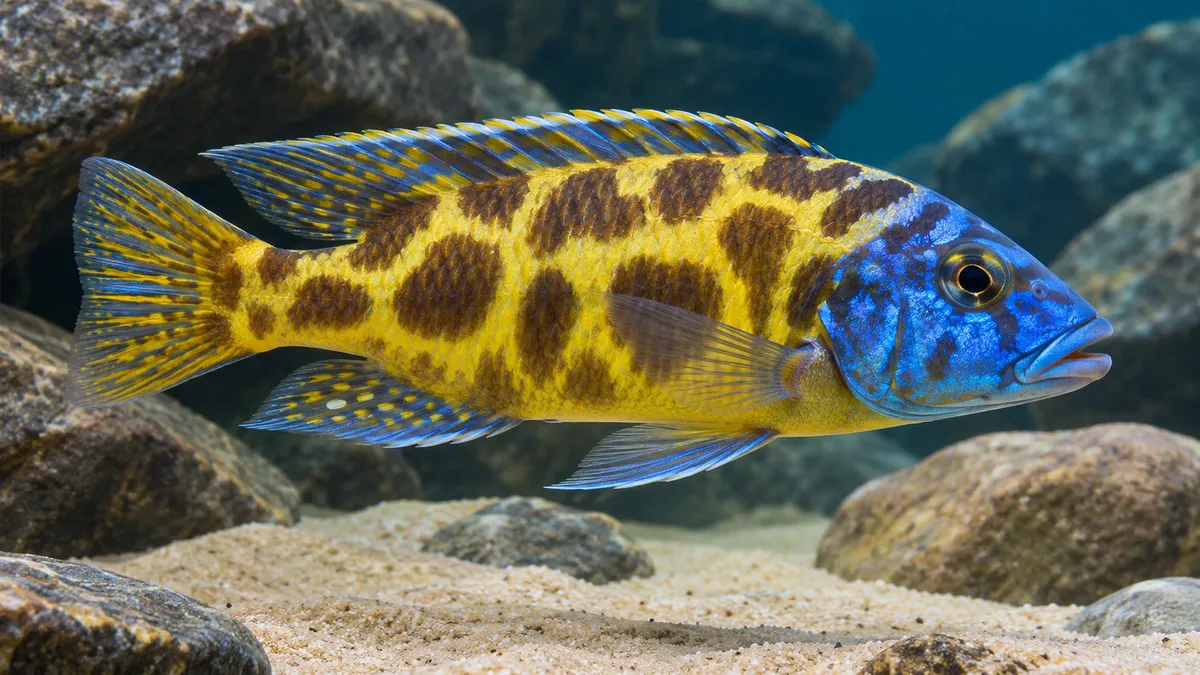
The Venustus (Nimbochromis venustus) is one of the most beautiful large cichlids from Lake Malawi. The adult male has an intense blue face and a golden yellow body; females and juveniles wear a brown pattern that looks like a giraffe's. It is calm for its size, but it is a predator: it grows big and eats any fish that fits in its mouth. This guide helps you give it the right space and tank mates.
Quick facts
| Scientific name | Nimbochromis venustus |
|---|---|
| Group | Haplochromine (not mbuna), Lake Malawi |
| Adult size | Up to 25 cm for males; females slightly smaller |
| Temperament | Calm with fish its size; preys on small fish |
| Minimum tank | 400 liters, 180 cm long |
| Water | pH 7.8 to 8.6, hard; 24 to 27 °C |
| Diet | Carnivore: quality protein pellets, krill, shrimp |
| Breeding | Maternal mouthbrooder |
Male and female: very different colors
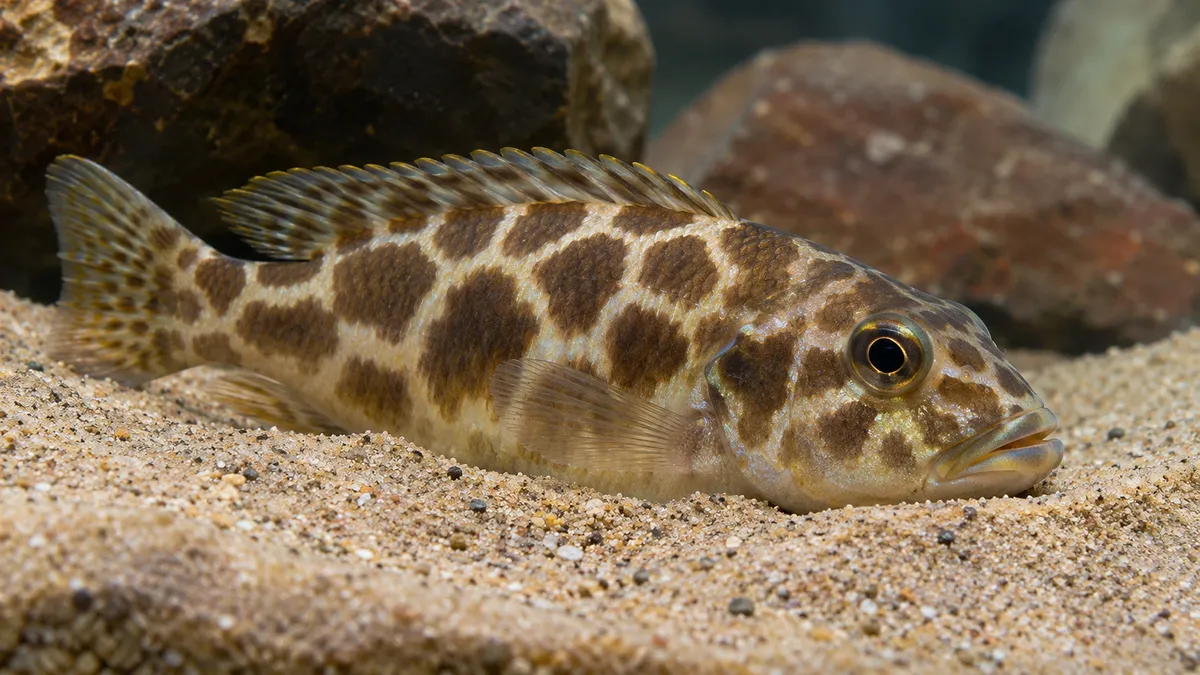
All juveniles have the giraffe pattern: large brown blotches on a beige or yellowish body. As he matures, the dominant male becomes spectacular: blue face and fins, golden yellow body, and the blotches fade when he is in full color. The female keeps the giraffe pattern for life. More in how to tell a male from a female African cichlid.
An ambush hunter
In the lake, the Venustus lies still on the sand, camouflaged, and strikes at small fish that come close. In the aquarium it keeps that instinct: any fish that fits in its mouth is food, including small mbuna and fry. It is not aggressive toward fish its own size, but the community has to be planned with this in mind.
Tank: space, sand and water
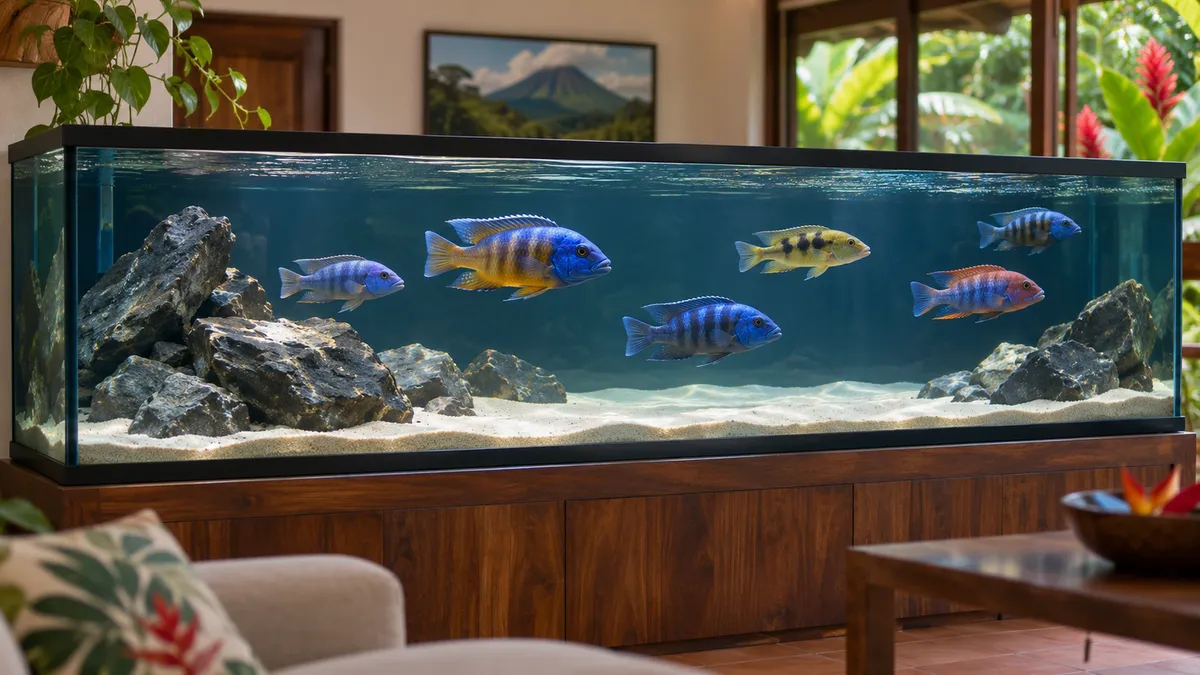
- Big and long: at least 400 liters and 180 cm for an adult with his females. A 25 cm male needs room to swim.
- Fine sand and open areas, with a few large, well-supported rocks. It does not need a tank packed with stones like mbuna do.
- A strong filter and 30 % weekly water changes: it eats a lot and makes a mess.
- Hard, alkaline water, pH 7.8 to 8.6. We explain how to get there with Costa Rica tap water.
More on setup in tank size and stocking.
Diet
It is a carnivore. The staple should be a quality pellet for carnivorous cichlids, with krill or shrimp a couple of times a week. There is no need for live fish: it takes pellets readily, and you avoid bringing in disease. Feed once or twice a day, only what it eats in a couple of minutes. We compare diets in feeding mbuna and peacocks.
Tank mates
- Good: other large, calm haplochromines such as the Blue Dolphin or the Polystigma, and adult peacocks (Aulonocara) such as the Saffron.
- With care: robust adult mbuna in very large tanks. Small ones end up as food.
- Avoid: small fish of any kind and community tropical fish.
- Ratio: one male with 3 or 4 females.
More combinations in compatible African cichlids.
Breeding
The female holds the eggs in her mouth for about three weeks and releases many fry, sometimes more than a hundred. The fry show the giraffe pattern from early on. Since the male and the other fish eat them, it is best to move the female to a separate tank. We explain the process in how to breed African cichlids.
Venustus in Costa Rica
We have Venustus for sale: a large juvenile male, a female and a jumbo adult male. They are already sexed, so you know what you are buying. You can order online or message us from each profile.
Discuss it in the forumMy aquarium
More from the blog
 November 2, 2026
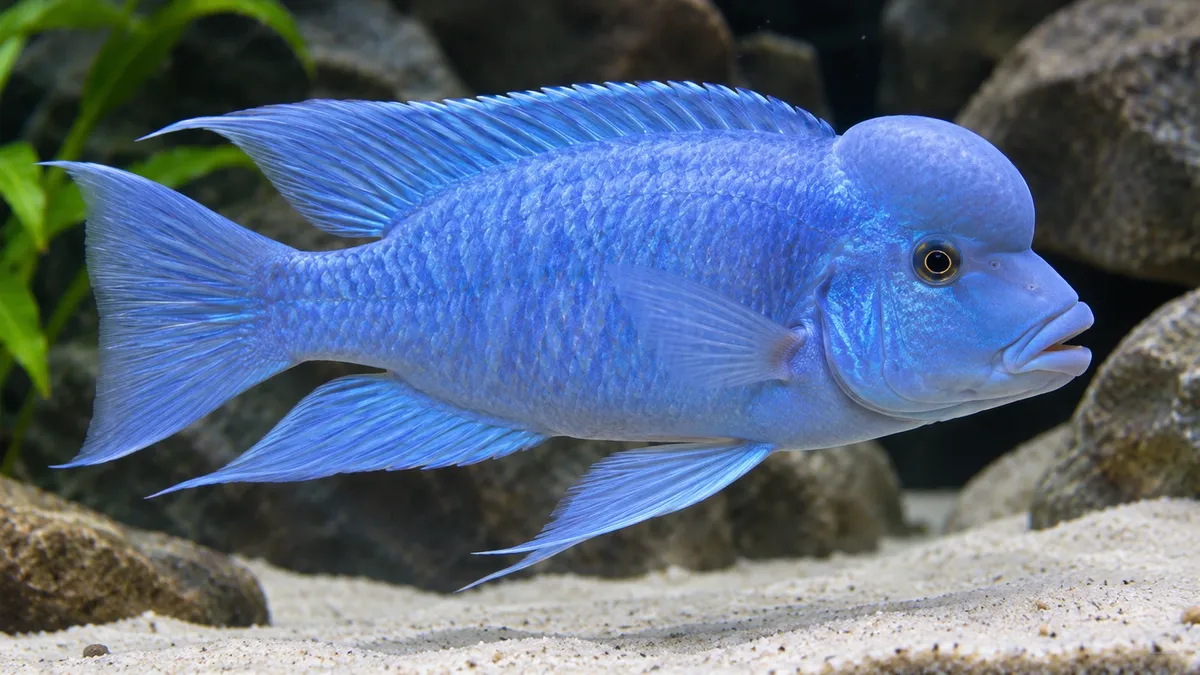
Blue Dolphin (Cyrtocara moorii): care, hump and calm temperament
Lake Malawi's humped blue cichlid: how big it gets, what tank and food it needs, how to sex it and why it is one of the most peaceful large cichlids.
Read →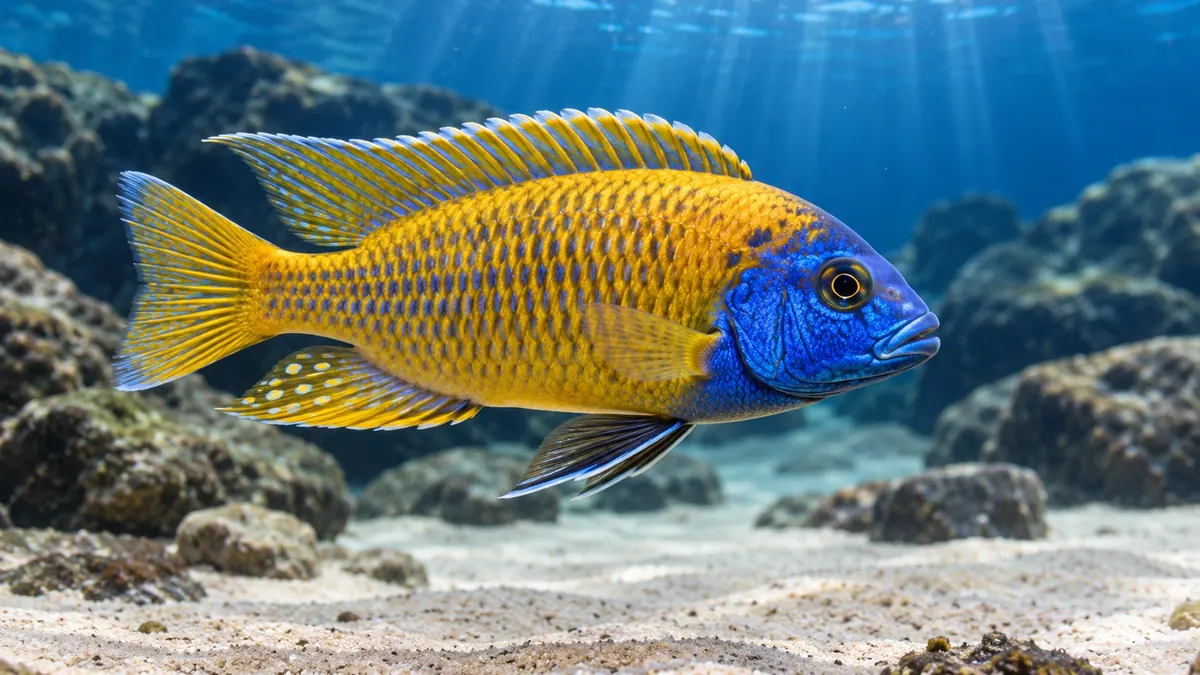 November 1, 2026
Benga peacock (Aulonocara baenschi): care, colors and tank mates
The yellow peacock with a blue face: size, tank, diet, male and female differences, and how to build a calm peacock tank.
Read → November 1, 2026
Chipokae (Melanochromis chipokae): care and how to handle its temperament
One of the most beautiful and most aggressive mbuna: male and female colors, tank, diet, sex ratio and which fish it can live with.
Read →