
November 2, 2026
Blue Dolphin (Cyrtocara moorii): care, hump and calm temperament
Lake Malawi's humped blue cichlid: how big it gets, what tank and food it needs, how to sex it and why it is one of the most peaceful large cichlids.
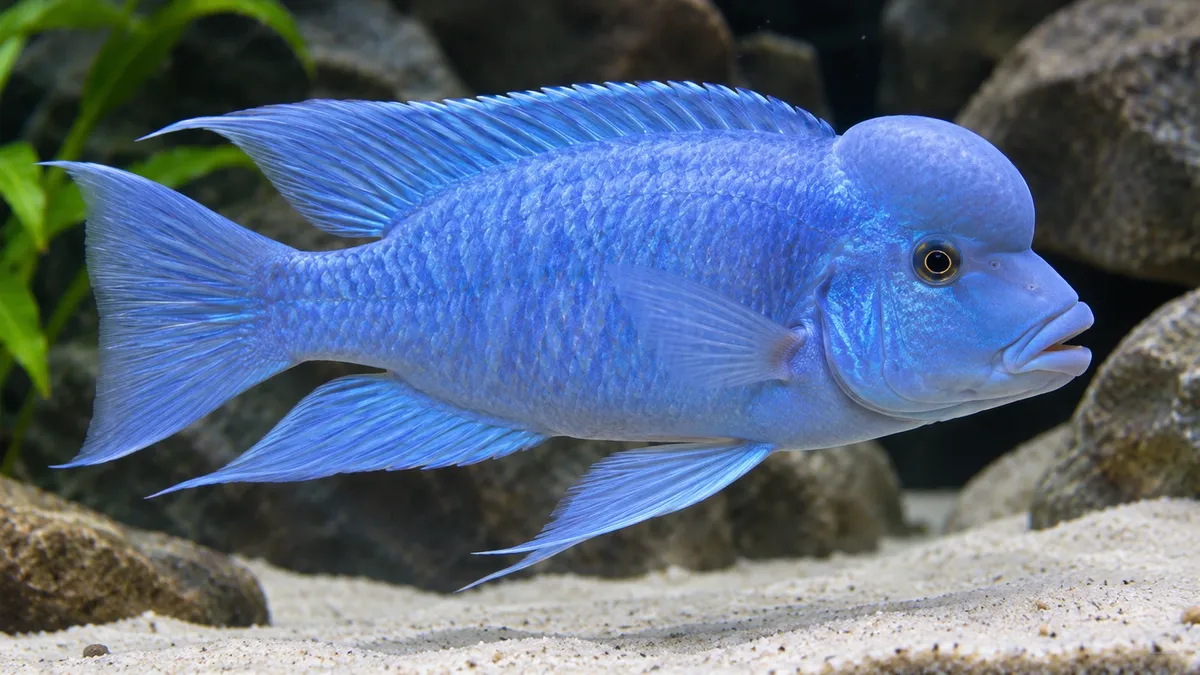
The Blue Dolphin (Cyrtocara moorii) is easy to recognize: a sky-blue body and a rounded hump on the forehead that looks like a dolphin's. It is one of the calmest large cichlids from Lake Malawi, ideal if you want big fish without mbuna aggression. This guide covers what it needs to look its best.
Quick facts
| Scientific name | Cyrtocara moorii |
|---|---|
| Group | Haplochromine (not mbuna), Lake Malawi |
| Adult size | 20 to 25 cm |
| Temperament | Peaceful; somewhat territorial only when breeding |
| Minimum tank | 350 liters, 150 cm long |
| Water | pH 7.8 to 8.6, hard; 24 to 27 °C |
| Diet | Omnivore: sinking pellets, little animal protein |
| Breeding | Maternal mouthbrooder |
The hump and the color
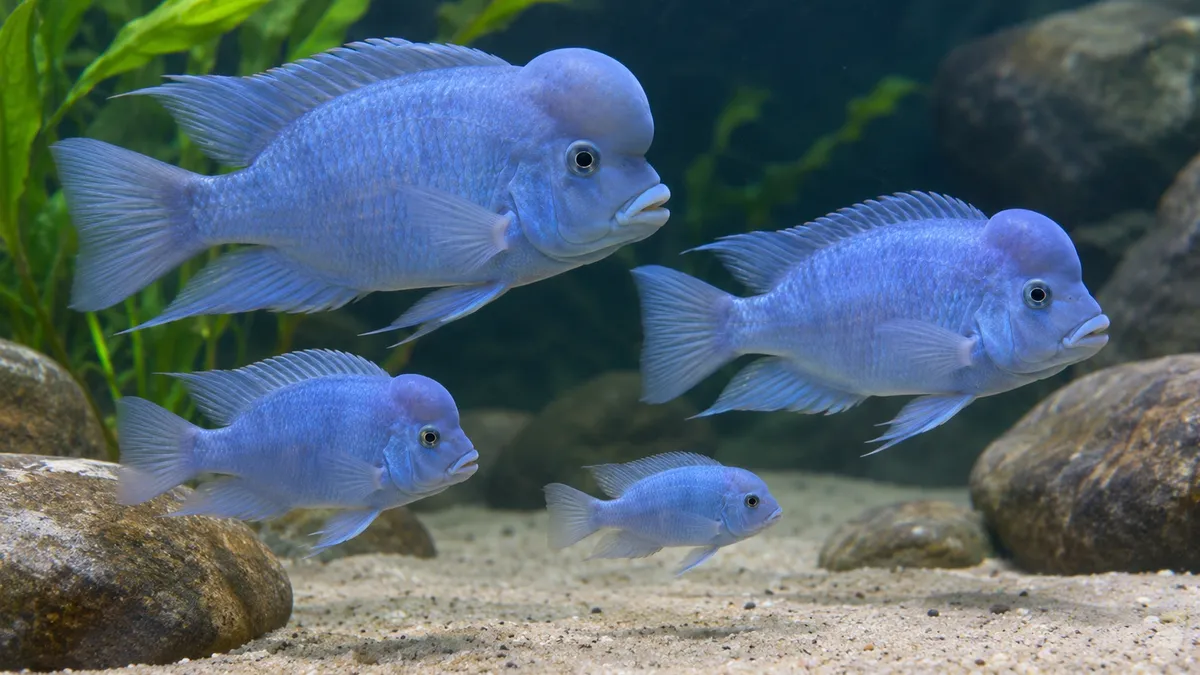
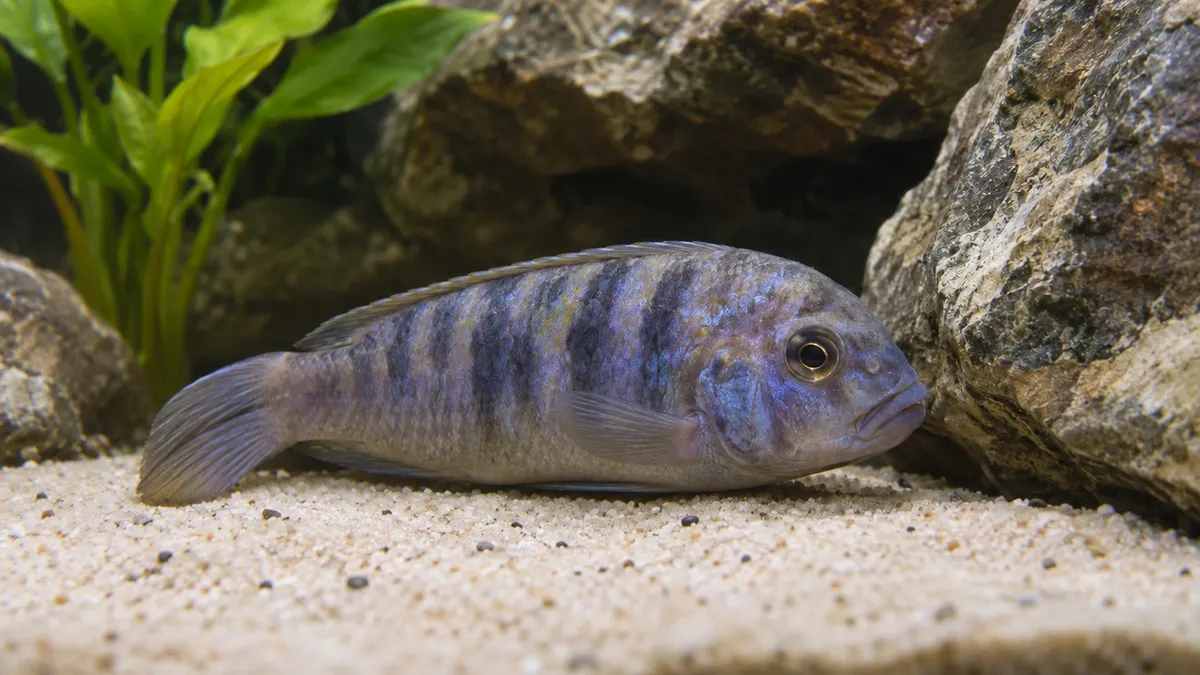
The hump (nuchal hump) appears in both males and females and grows with age; adult males usually have a bigger one. The blue deepens as the fish matures and feels at ease: a pale Blue Dolphin is usually stressed or housed with tank mates that are too aggressive.
Sexing it by eye is hard. Adult males are a little bigger, with longer fins and a brighter blue, especially when courting. In juveniles there is hardly any difference.
Tank
- Space: at least 350 liters and 150 cm for a small group. It grows to 25 cm and swims in open water.
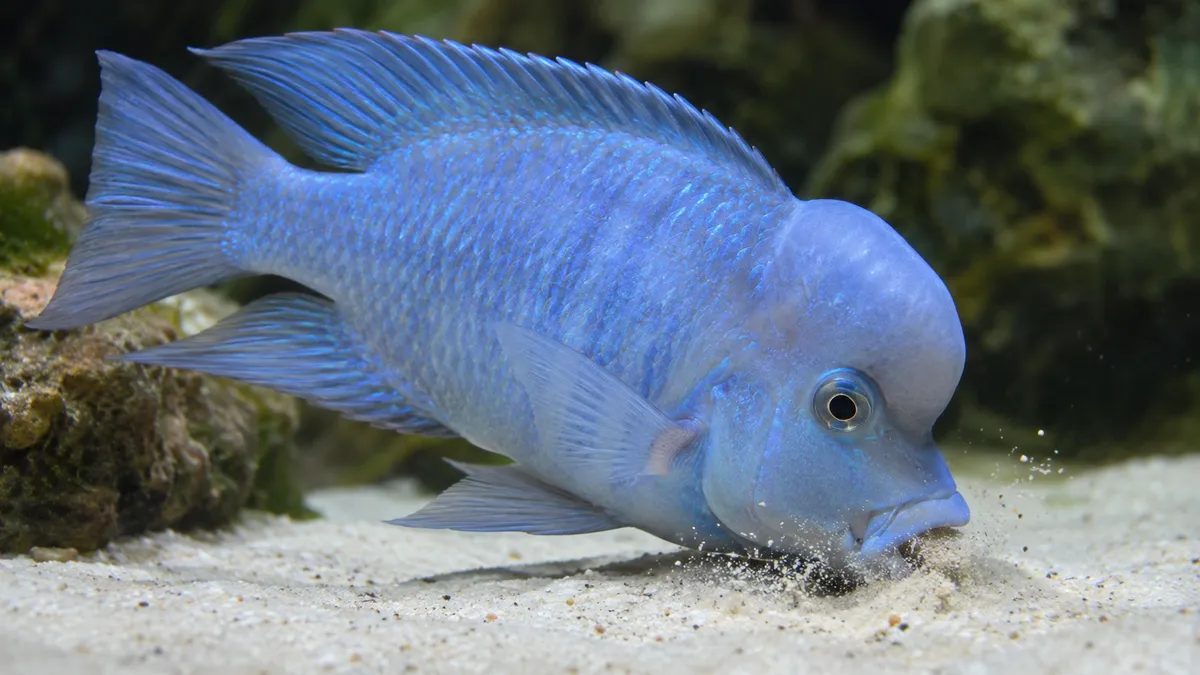
- Fine sand: it likes to sift through it for food.
- A few large rocks, well supported, leaving the middle open.
- Hard, alkaline water and a good filter. We explain how to prepare it in Costa Rica tap water.
More on setup in tank size and stocking.
Diet
In the lake it follows sand-digging fish and eats what they uncover. In the aquarium, feed quality sinking pellets with spirulina and little animal protein, once or twice a day. A couple of times a week you can add krill or brine shrimp. Too much protein and overfeeding can cause Malawi bloat.
Tank mates
- Good: peacocks (Aulonocara) such as the Saffron, crosses like the Red Empress × Rubin Red and other calm haplochromines.
- With care: the Venustus and the Polystigma are predators: only with Blue Dolphins of the same size.
- Avoid: aggressive mbuna such as the Chipokae or the Auratus. They harass it and it loses its color.
- Group: one male with several females, or a group of 4 to 6 if you do not know the sexes.
More combinations in compatible African cichlids and mbuna vs. peacock cichlids.
Breeding
The male cleans a flat stone or a pit in the sand and courts the female in his brightest blue. She holds the eggs in her mouth for about three weeks. It is one of the easiest large cichlids to breed in a calm tank. More in how to breed African cichlids.
Blue Dolphin in Costa Rica
Our last Blue Dolphin is no longer available. If you are looking for one, message us from the profile and we will let you know when we have another. Meanwhile, see the fish available that go well with it, such as the Saffron or the Sulfurhead.
Discuss it in the forumMy aquarium
More from the blog
 November 12, 2026
Common African cichlid diseases: how to recognize them and what to do
White spot, fin rot, fungus, Malawi bloat, hole in the head and wounds: signs, causes and first steps, starting with a water check.
Read →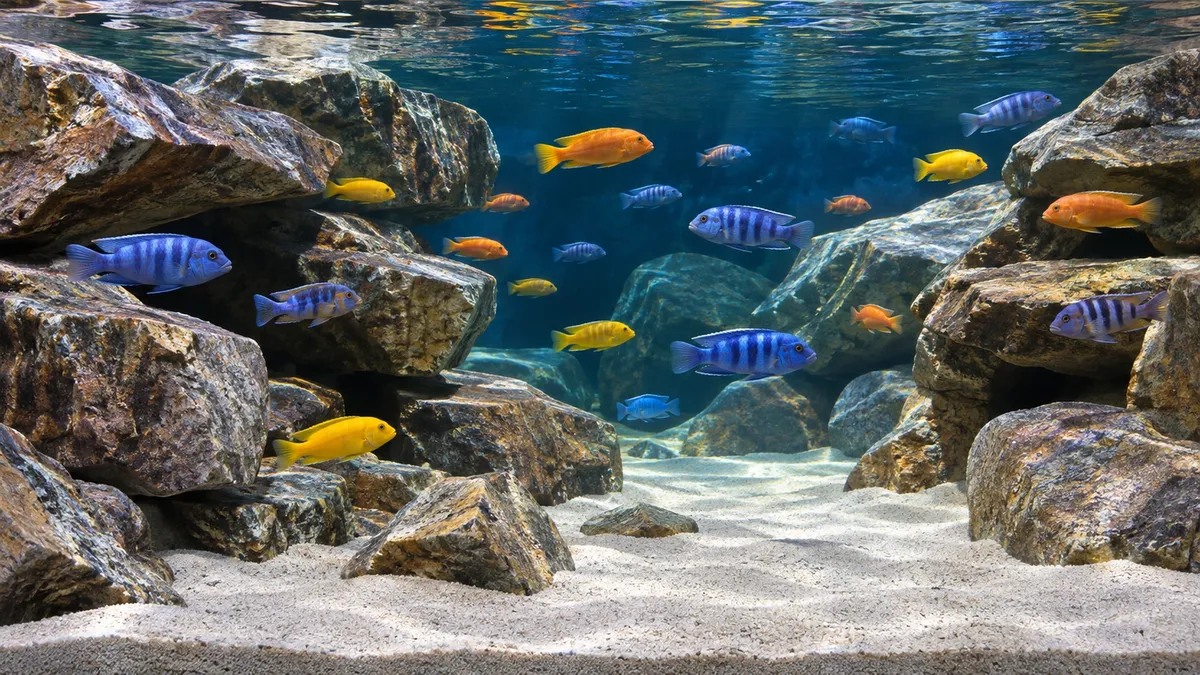 November 12, 2026
Malawi aquarium: how to set up a lake biotope step by step
How to set up a tank that recreates Lake Malawi: rocks, sand, plants that survive, water, light and the order to build it in, depending on whether you keep mbuna or peacocks.
Read → November 11, 2026
How to choose food for your cichlids: what to read on the label
What to look for on an African cichlid food label: ingredients, protein, fat, spirulina, color enhancers, pellet size, expiry date and how to store it.
Read →