
November 1, 2026
Benga peacock (Aulonocara baenschi): care, colors and tank mates
The yellow peacock with a blue face: size, tank, diet, male and female differences, and how to build a calm peacock tank.
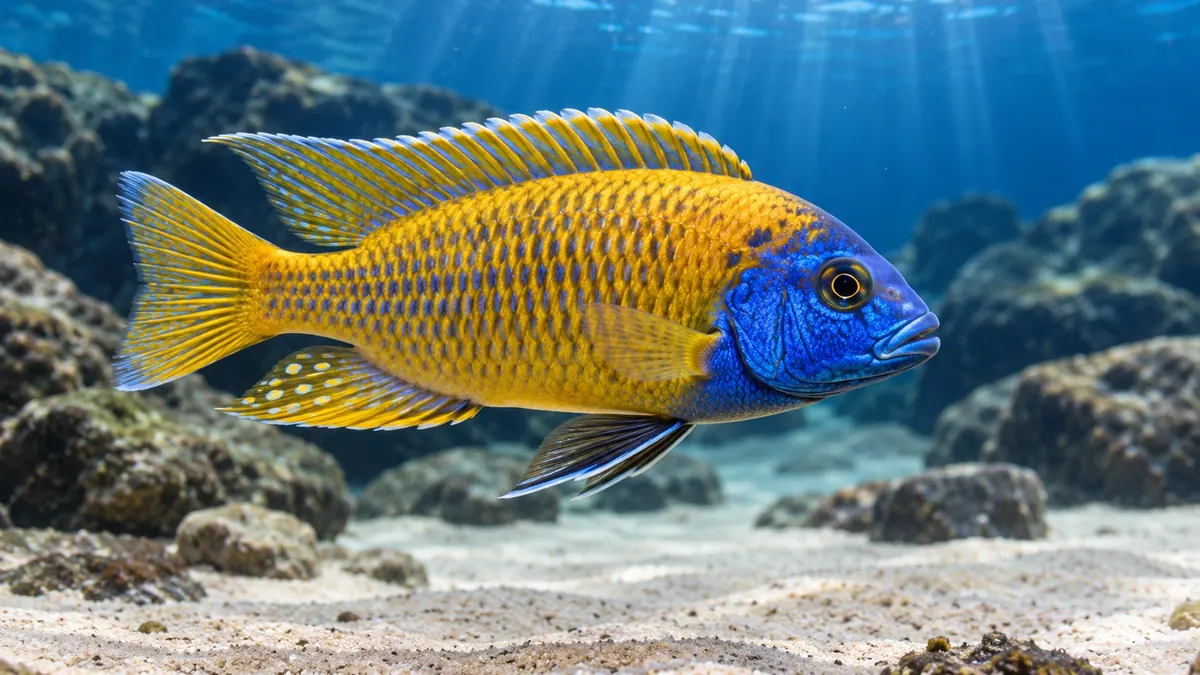
The Benga peacock (Aulonocara baenschi), also known as the yellow regal peacock, is one of the most striking Aulonocara. The adult male has a golden yellow body and an intense electric blue face, a combination that is hard to beat. It is also calm and easy to keep. Here is the complete guide.
Quick facts
| Scientific name | Aulonocara baenschi |
|---|---|
| Other names | Yellow regal peacock, Benga |
| Group | Peacock (Aulonocara), Lake Malawi |
| Adult size | 11 to 13 cm for males, slightly less for females |
| Temperament | Calm; males hold a small territory |
| Minimum tank | 250 to 300 liters, 120 cm long |
| Water | pH 7.8 to 8.6, hard; 24 to 27 °C |
| Diet | Moderate carnivore: quality pellets and small crustaceans |
| Breeding | Maternal mouthbrooder |
Colors: male and female
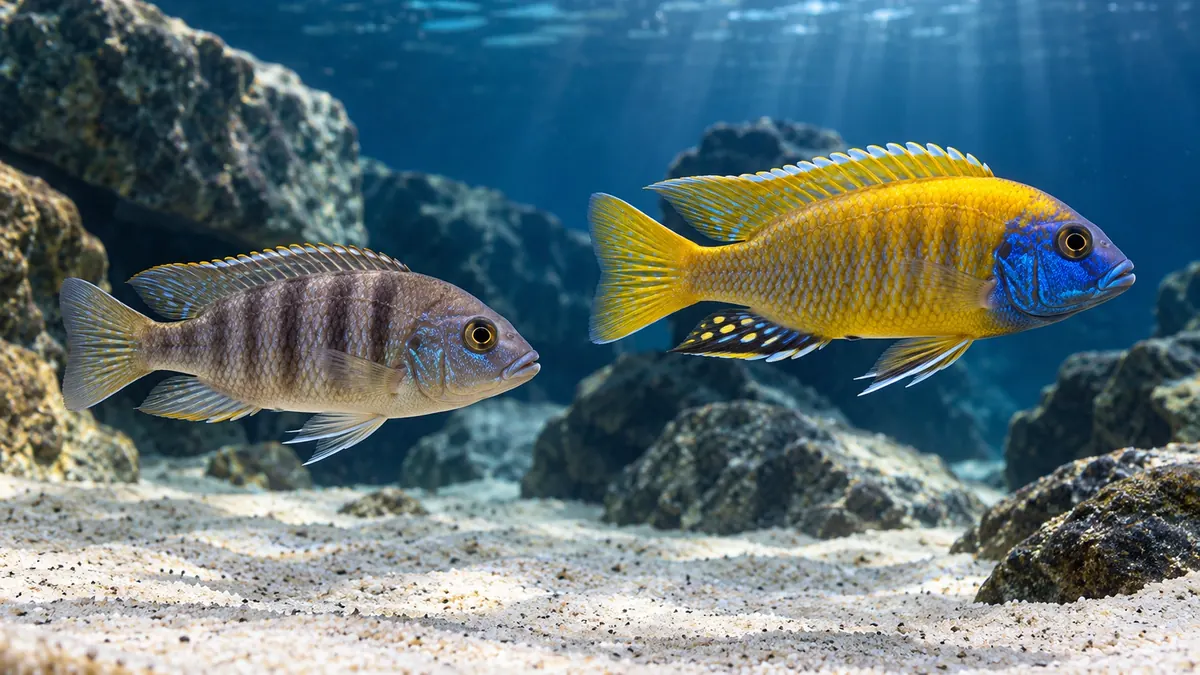
As with all peacocks, color belongs to the males. The adult male is golden yellow with a blue face and throat, sometimes with blue highlights on the fins. The female is gray or brown with faint vertical bars, far more modest. Juveniles look like females, and males start coloring up between 6 and 12 months.
Temperament
The Benga is far calmer than a mbuna. It spends the day swimming in open water and over the sand without chasing other fish for no reason. Males do defend a small territory, especially against other males of similar color. The best setups are:
- One male with 3 or 4 females, or
- An all-male tank of different species and colors. This is the most common way to keep a colorful peacock tank.
Tank and water
It grows larger than a mbuna and needs room to swim, so plan on a tank of 250 to 300 liters at least. Unlike mbuna, it prefers more open space and fine sand to sift for food, with a few rocks at the back for shelter. The water, as everywhere in Lake Malawi: hard and alkaline, pH 7.8 to 8.6, at 24 to 27 °C. We explain how to get there in Costa Rica tap water.
Diet
In the lake it hunts small invertebrates buried in the sand. In the tank, the staple should be a quality cichlid pellet with fish or krill protein, plus brine shrimp or mysis a few times a week. Feed small amounts once or twice a day. If you keep it with mbuna, be careful: the peacock's protein diet can give mbuna bloat.
Tank mates
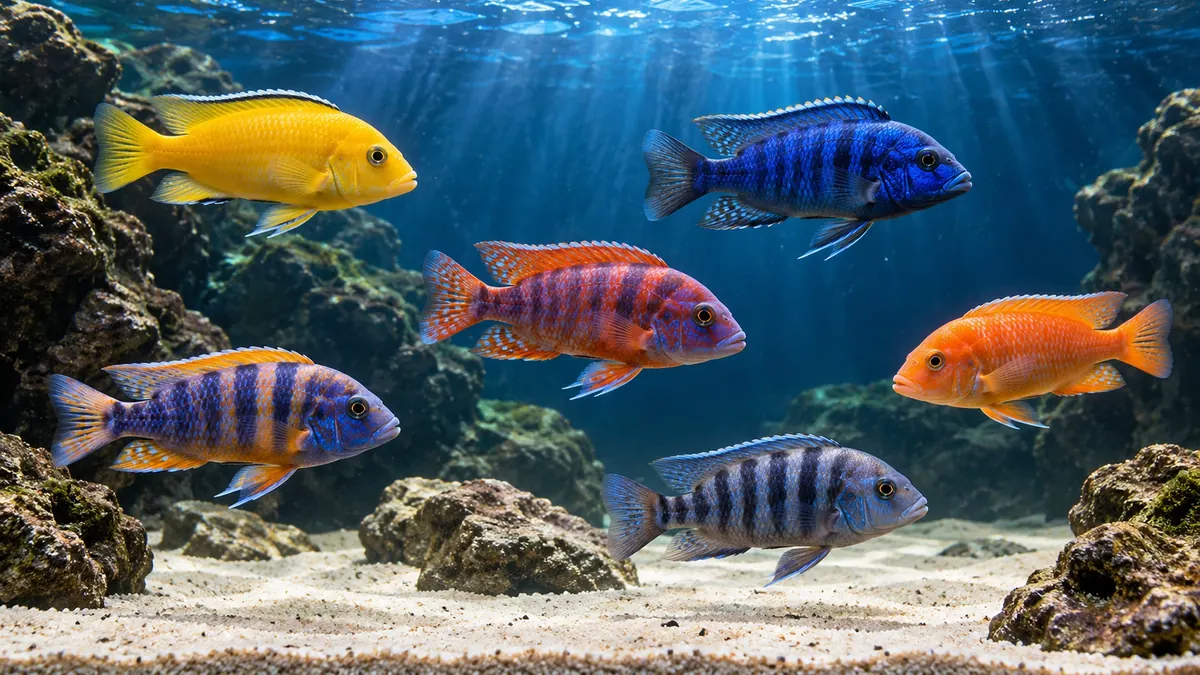
- Ideal: other peacocks in different colors, such as the Dragon Blood or the Golden Dragon, and calm haps of similar size.
- Possible: the Electric Yellow, one of the few calm mbuna, in large tanks.
- Avoid: aggressive mbuna such as the Auratus, the Chipokae or the Red Zebra, which harass it and steal its food. Also large predatory haps that could eat the smaller fish.
- Females of different Aulonocara together: they can crossbreed, so if you want to breed, keep females of a single species.
More in mbuna vs. peacocks and compatible African cichlids.
Breeding
It breeds readily: the male courts the female over the sand or a flat rock, and she holds the eggs in her mouth for about three weeks. The fry are brown like their mother, and the males color up over the months. The whole process is in how to breed African cichlids.
Benga peacock in Costa Rica
See the Benga peacock profile in our catalog for availability and price, or message us on WhatsApp from there. If you are choosing between peacocks and mbuna, the beginner's guide helps you decide.
Discuss it in the forumMy aquarium
More from the blog
 November 2, 2026
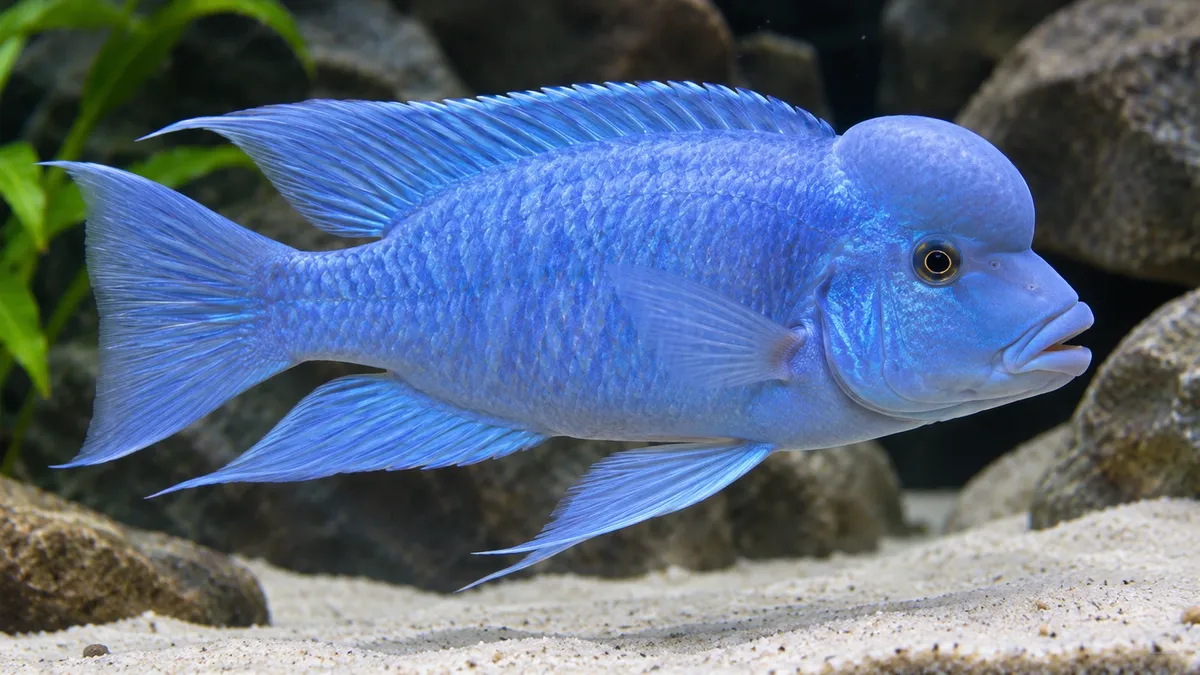
Blue Dolphin (Cyrtocara moorii): care, hump and calm temperament
Lake Malawi's humped blue cichlid: how big it gets, what tank and food it needs, how to sex it and why it is one of the most peaceful large cichlids.
Read → November 2, 2026
Venustus (Nimbochromis venustus): care, size and tank mates
Lake Malawi's giraffe cichlid: how big it gets, what tank it needs, what it eats, how to tell male from female and which fish can live with it without being eaten.
Read → November 1, 2026
Chipokae (Melanochromis chipokae): care and how to handle its temperament
One of the most beautiful and most aggressive mbuna: male and female colors, tank, diet, sex ratio and which fish it can live with.
Read →