
November 4, 2026
Dragon Blood peacock (Strawberry): care, color and tank mates
The red peacock with the white netting: where it comes from, how its color changes with age, how to keep it intense, male and female, and which fish to keep it with.
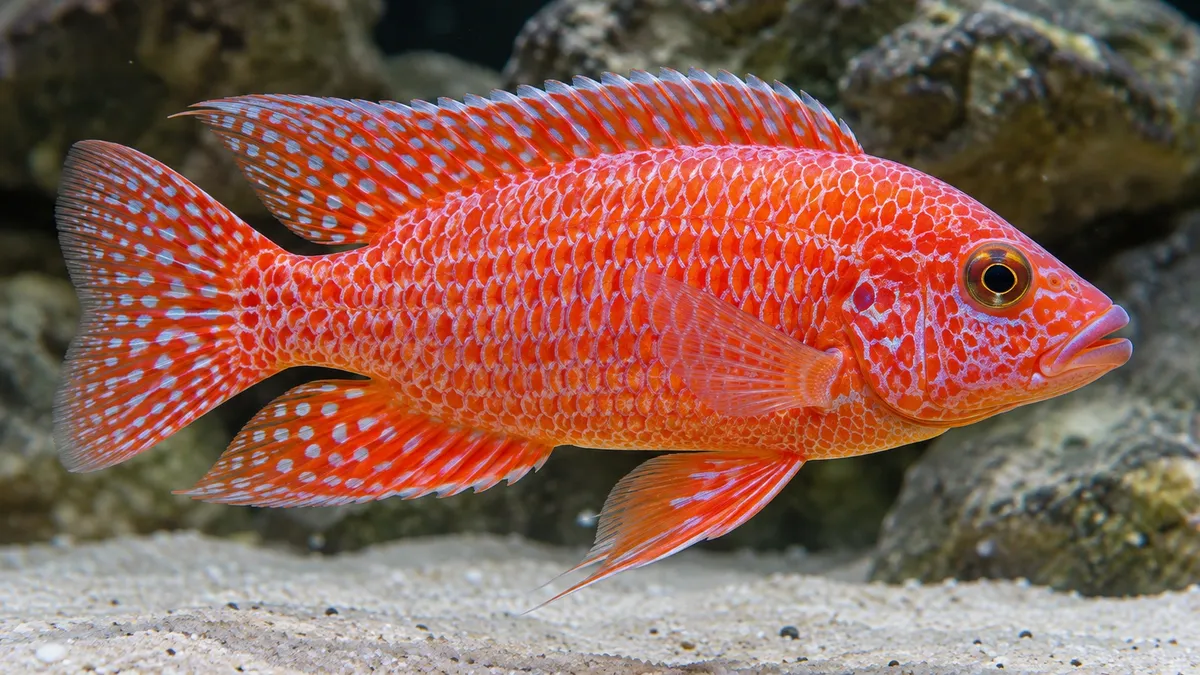
The Dragon Blood, also called the Strawberry peacock, is one of the best-selling peacocks: a red-orange body with a white-pink netting over every scale, like a strawberry. It is calm, hardy and very easy to combine. This guide explains what it is and how to keep its color.
Quick facts
| Name | Dragon Blood or Strawberry peacock, Aulonocara "Dragon Blood" |
|---|---|
| Origin | Aquarium-bred line, not wild |
| Adult size | 12 to 15 cm |
| Temperament | Calm |
| Minimum tank | 250 liters, 120 cm long |
| Water | pH 7.8 to 8.6, hard; 24 to 27 °C |
| Diet | Quality pellets, with krill or mysis |
Where it comes from
The Dragon Blood does not exist in Lake Malawi: it is an aquarium variety, developed by breeders from peacocks (Aulonocara) selected for color. The same is true of the OB peacock or the Rubin Red. We always say so in our profiles.
How the color changes
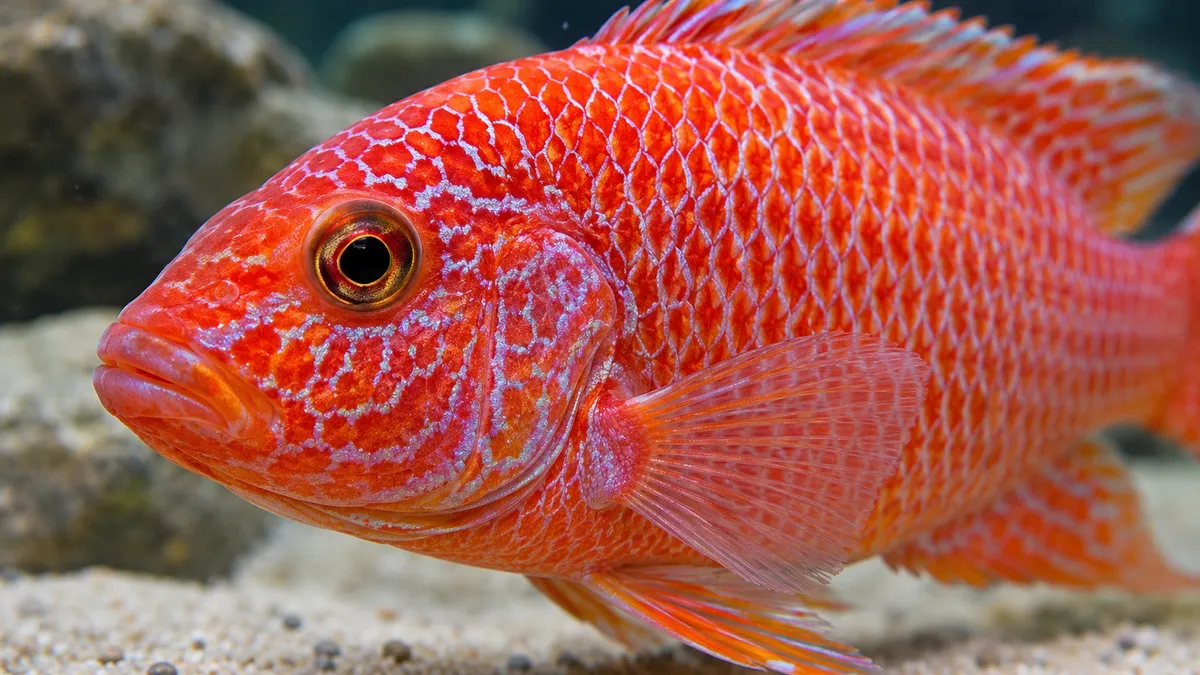
Juveniles are pink or pale orange, sometimes almost white. The red and the netting show from about 5 or 6 cm and keep deepening into adulthood. The male ends up redder, with spotted fins and egg spots on the anal fin. The female is colorful too, though paler. If you buy a young one, be patient: the color comes with age.
To keep the red intense:
- Food with carotenoids: krill, mysis and pellets with astaxanthin bring out the red naturally.
- Good water quality: stress and dirty water dull it.
- No bullying: a male dominated by another loses color. See why a cichlid loses color.
Be wary of very small Dragon Bloods with an overly intense red: some sellers use hormones or dyes, and that color fades within weeks.
Care
It is kept like any peacock: a tank of 250 liters or more with fine sand and room to swim, hard and alkaline water, a good filter and weekly water changes. We explain it in tank size and stocking and feeding mbuna and peacocks.
Tank mates
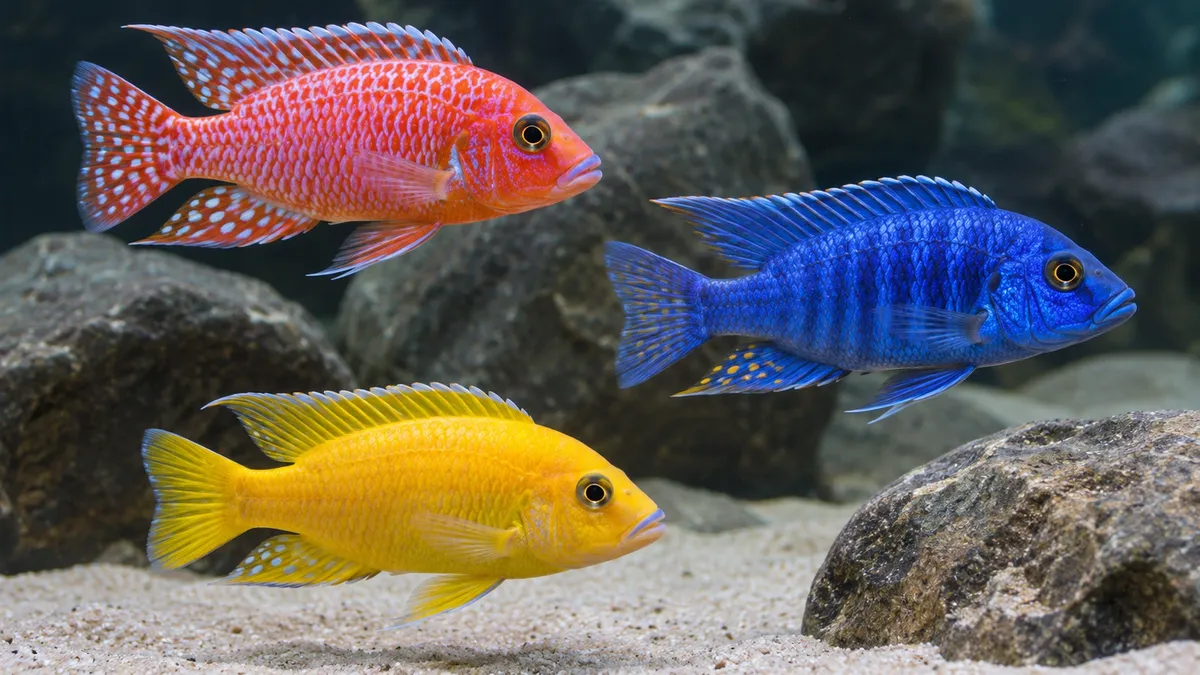
- Good: blue and yellow peacocks such as the Sulfurhead or the Benga, and calm haps such as the Blue Dolphin.
- With care: calm mbuna such as the Electric Yellow, in large tanks.
- Avoid: aggressive mbuna and large predators.
- One red male per tank: two males of the same color will fight.
More combinations in compatible African cichlids.
Breeding
A Dragon Blood pair breeds readily: the female holds the eggs in her mouth for about three weeks. To keep the line, breed them only with each other and not with females of other peacocks. More in how to breed African cichlids.
Dragon Blood in Costa Rica
We have already-sexed Dragon Blood males and females, now 50 % off. It is a good time to put together a pair or a group. Each profile has real photos and the price.
Discuss it in the forumMy aquarium
More from the blog
 November 4, 2026
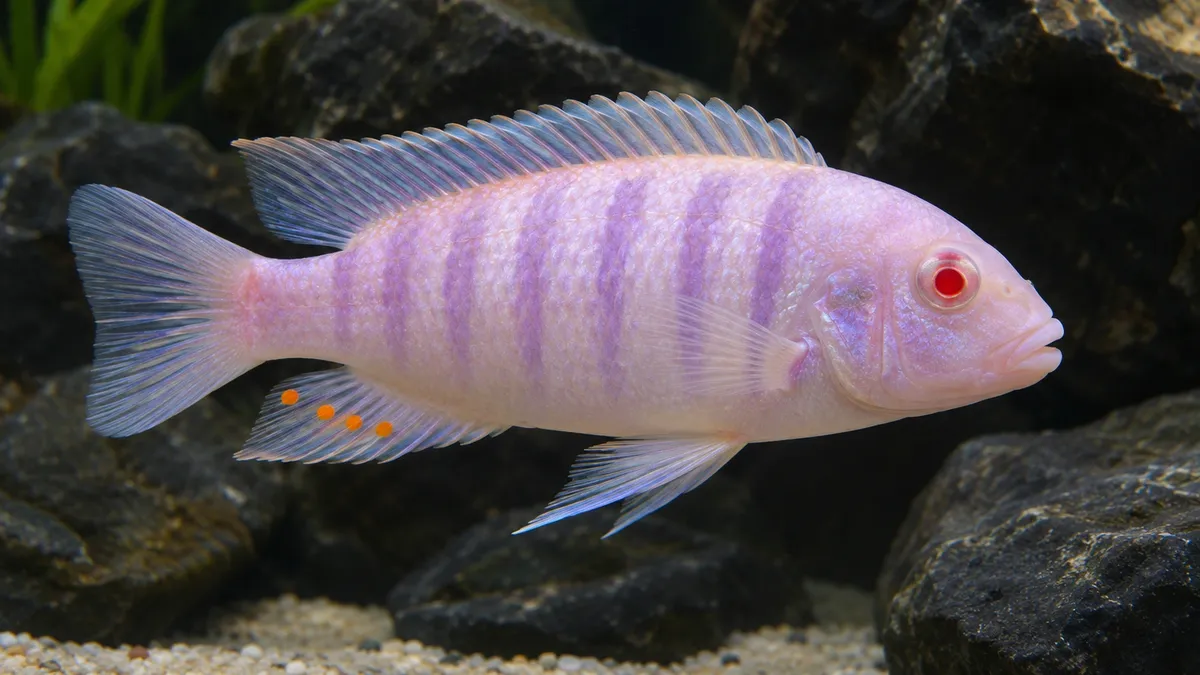
Albino African cichlids: what they are, care and how to choose one
Why they have red eyes, what extra care they need (light, tank mates and food), which albino varieties exist and how to spot a good fish.
Read →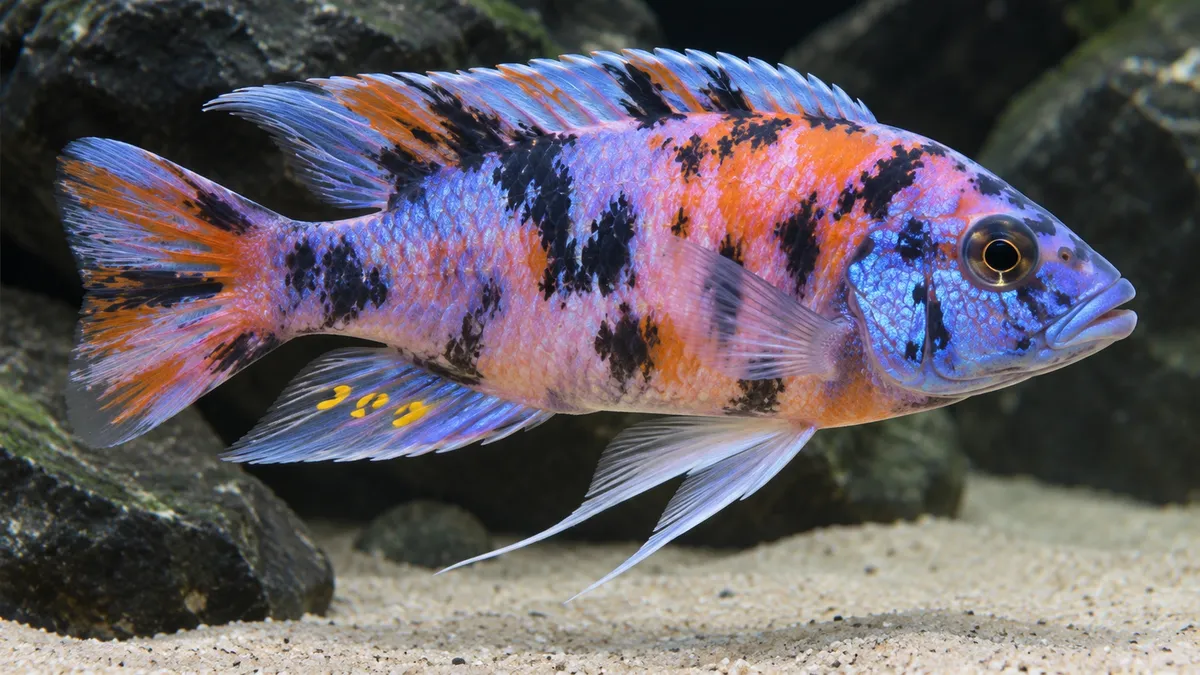 November 4, 2026
OB peacock (Aulonocara "OB"): what it is, colors and care
What OB means, why no two look alike, how males and females differ, how to keep them and what to know before breeding them.
Read →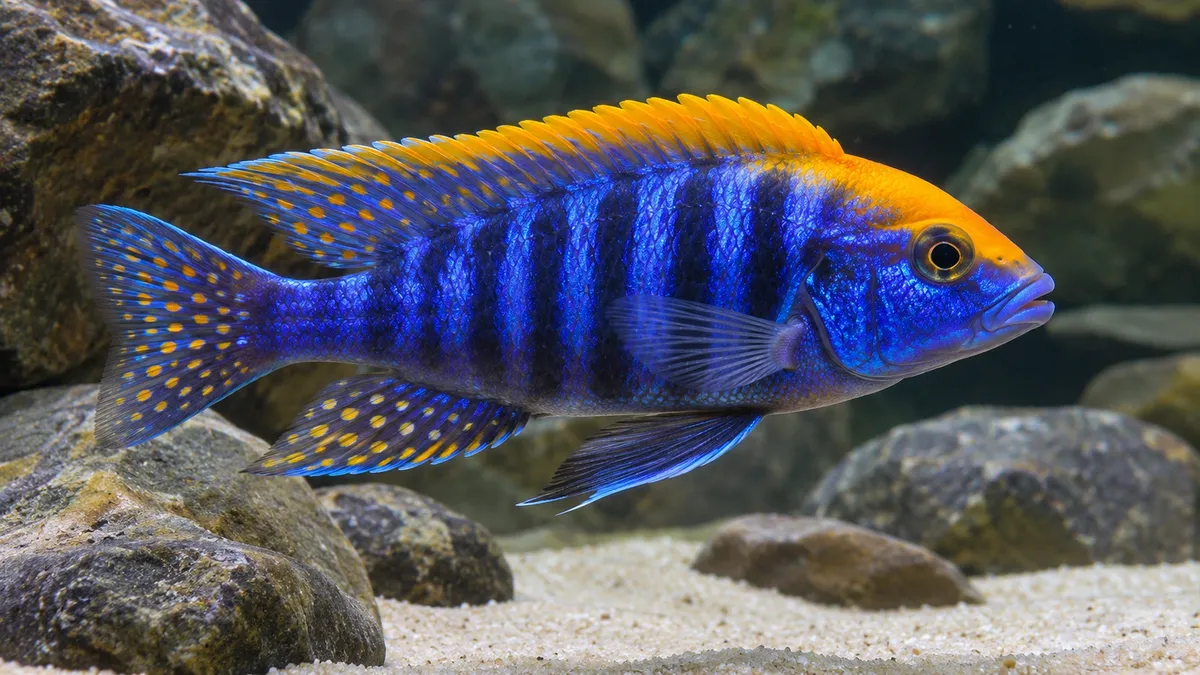 November 4, 2026
Sulfurhead peacock (Aulonocara maylandi): care, colors and tank mates
The blue peacock with the yellow crown: size, tank, diet, how to tell male from female, which fish it lives well with and how to avoid hybrids.
Read →