
October 30, 2026
Why is my African cichlid losing color or hiding?
A pale or hiding cichlid is telling you something: a new fish, dominance, poor water quality, a female holding eggs or disease. How to find the cause and what to do.
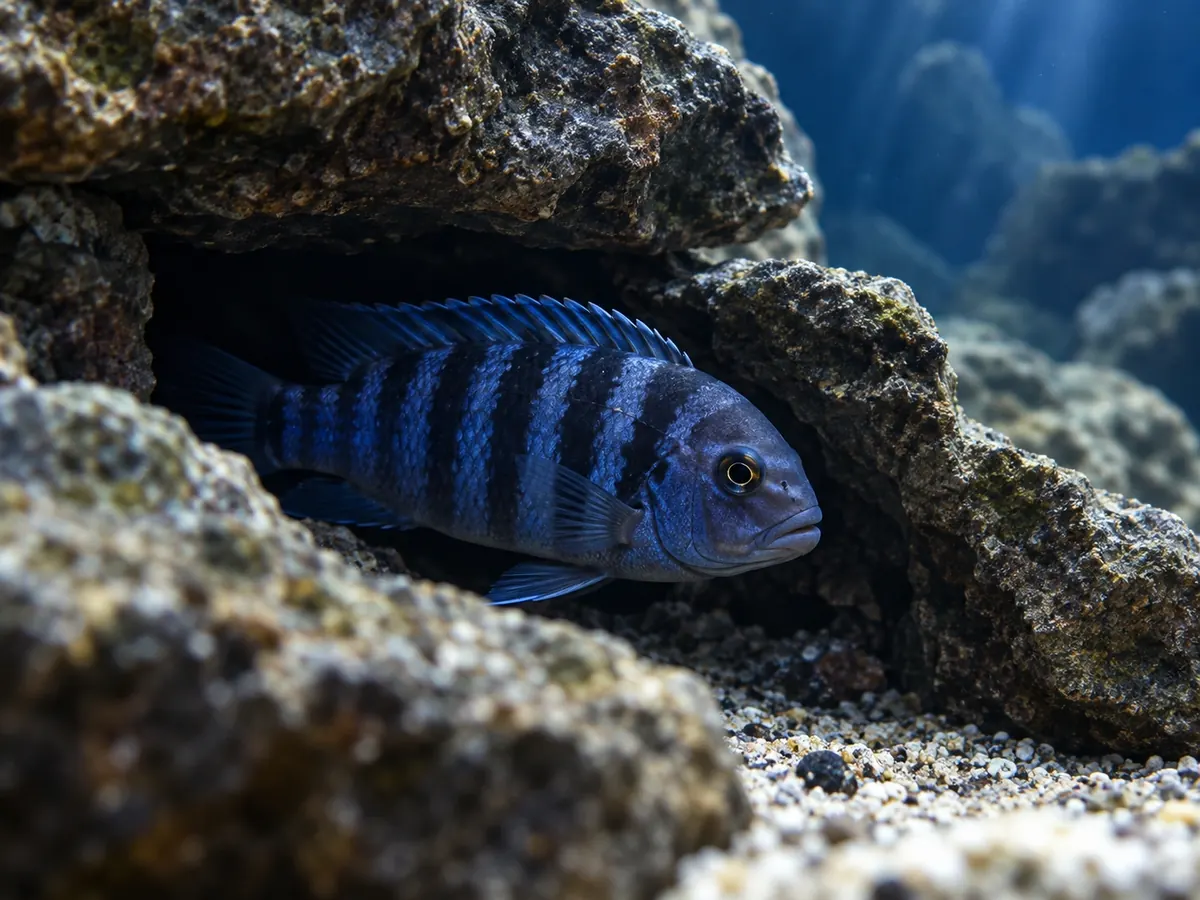
A healthy African cichlid is brightly colored, curious and active. When one turns pale or spends the day hiding, it is telling you something has changed. Sometimes it is normal and temporary; other times it is a warning sign. This guide helps you find the cause, in the order worth checking.
1. It is a new fish
A newly arrived fish almost always loses color and hides for the first few days. It is stressed from the trip, the different water and a tank where it has no territory yet. That is normal: within a week or two it should regain color and come out more. To help, quarantine and acclimate it well and keep the light off for a few hours after releasing it.
2. There is a dominant male
This is the most common cause in mbuna. When there are several males, the dominant one shows full color and the others fade to avoid fights. A male that loses the contest can turn almost female-colored and spend the day hiding.
Look for one fish always chasing the same victim, torn fins, or a fish that will not even come out to eat. Fixes:
- Check the ratio: one male for every 3 or 4 females.
- Add more rocks and caves to break lines of sight.
- Rearrange the decor so everyone loses their territory and starts over.
- If the harassment does not stop, separate the victim or the bully.
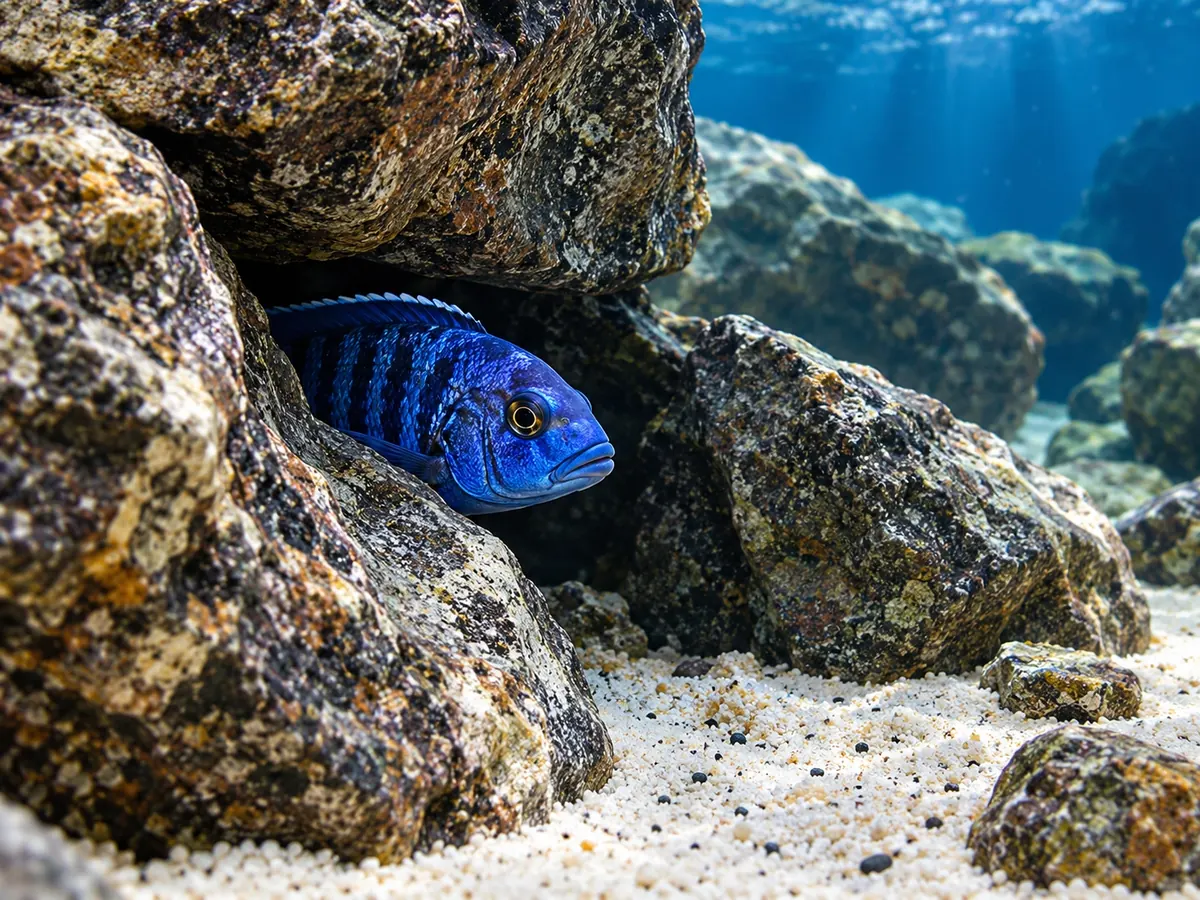
3. Water quality
If several fish lose color at once, check the water first. The usual causes:
- Ammonia or nitrite above zero: a dirty filter, too much food or too many fish for the filter.
- High nitrate from too few water changes.
- A drop in pH, typical with soft water. See Costa Rica tap water for African cichlids.
- Temperature outside 24 to 27 °C.
Test ammonia, nitrite, nitrate and pH. If anything is off, change 25 to 30% of the water with properly prepared water and check the filter. Log the results in My aquarium to spot repeats.
4. A female holding eggs
If the hiding fish has a swollen mouth, a jutting jaw and refuses food, she is probably holding eggs. Mbuna and peacock females carry the eggs in their mouths for about three weeks and hide to protect them. That is not a problem: it is a good sign the tank is doing well. If you want to breed them, read our guide to responsible breeding.
5. Diet
A poor diet dulls color over time. Mbuna need a food with spirulina, and peacocks quality pellets with carotenoids that bring out reds and yellows. But do not overdo it: too much protein can cause "bloat" in mbuna. More in feeding mbuna and peacocks.
6. Disease
If a pale fish also shows any of these symptoms, it may be sick:
- Swollen belly, long white feces, fast breathing and no appetite: possible "bloat". This is urgent.
- White spots like grains of salt on the body: ich (white spot).
- Frayed fins or fins with white edges, or cottony patches.
- Scratching against rocks or gasping at the surface.
Move the sick fish to a hospital tank, check the water and ask before medicating blindly. You can post a photo or video in the forum.
7. Minor causes
- Time of day: many cichlids look paler at night or right after the light comes on.
- Background and light: in a very bright tank with no background, fish look paler and get more stressed. A dark or rock background helps.
- Age: juveniles do not have adult colors yet. In species like the Auratus, the color changes completely as they mature.
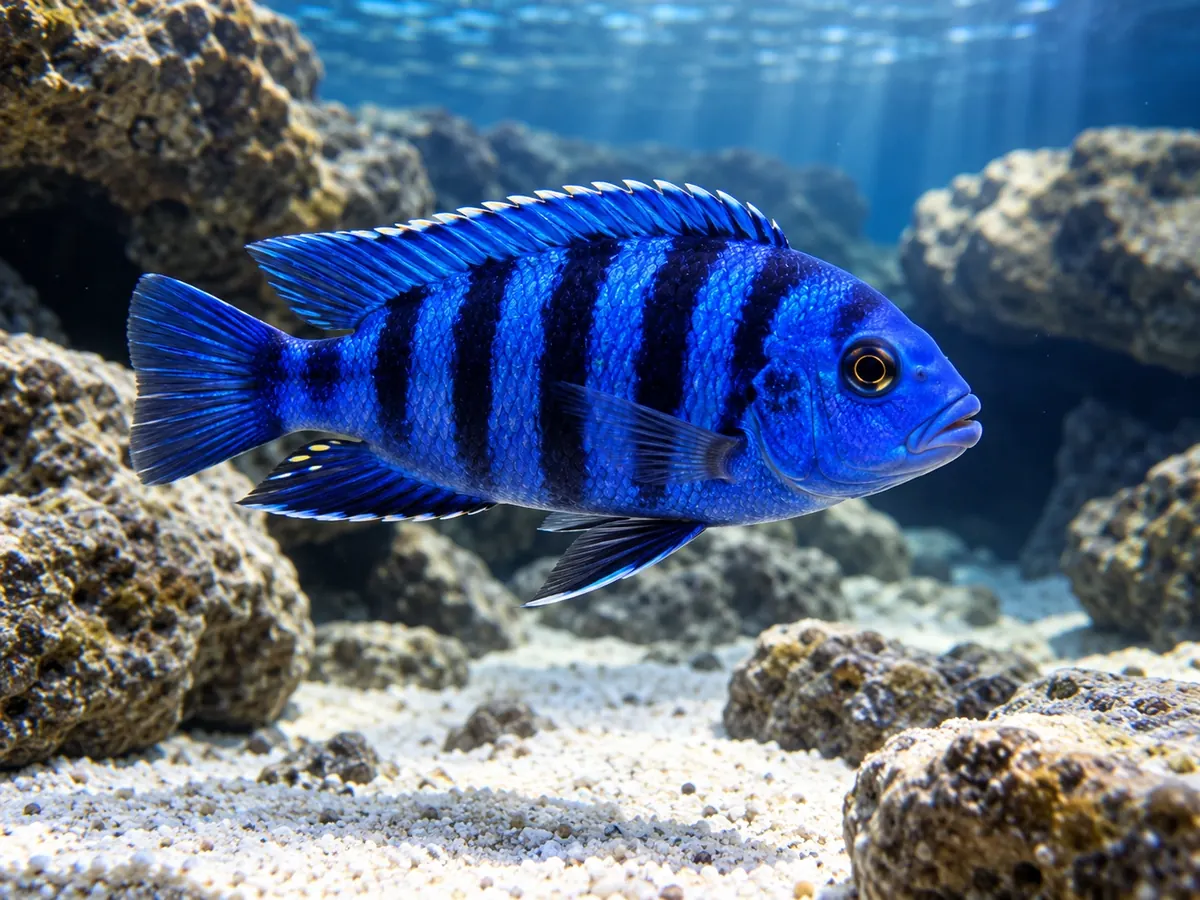
Summary: what to check first
- Is it new? Give it a week or two.
- Is it just one fish? Look for a bully or a female holding eggs.
- Several fish? Test the water right away.
- Other symptoms? Separate it and treat the disease.
Most of the time the cause is stress, solved with good water, good rocks and a good mix of fish. To plan your group from scratch, see compatible African cichlids.
Discuss it in the forumMy aquarium
More from the blog
 November 2, 2026
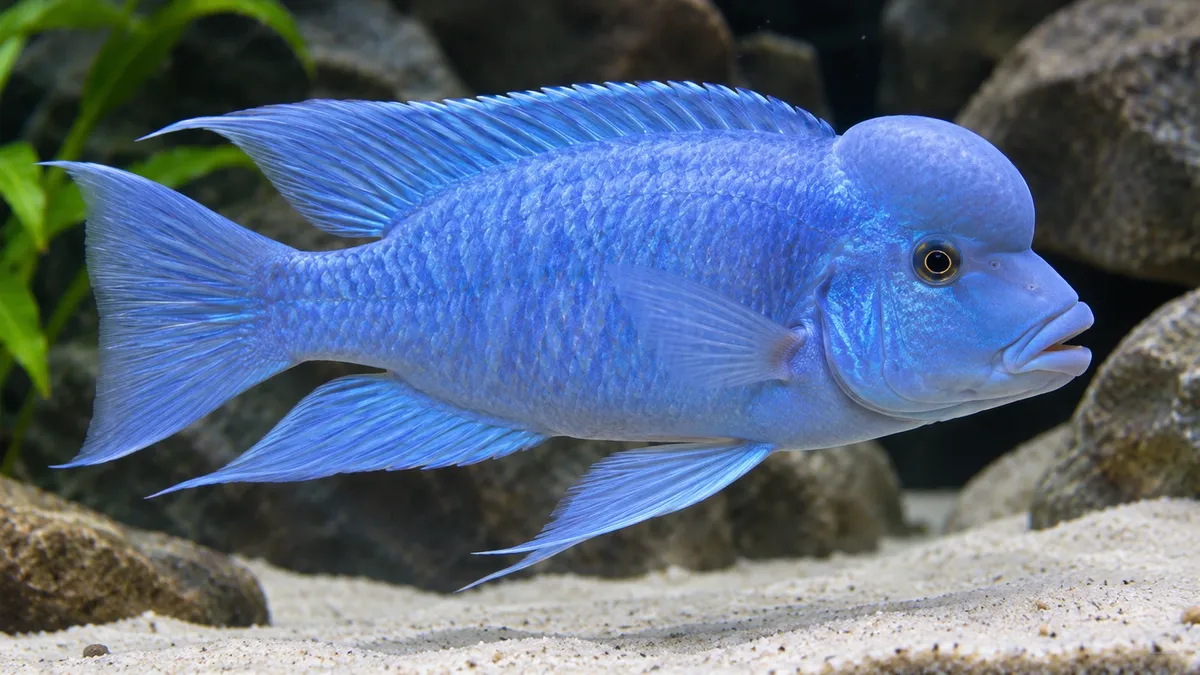
Blue Dolphin (Cyrtocara moorii): care, hump and calm temperament
Lake Malawi's humped blue cichlid: how big it gets, what tank and food it needs, how to sex it and why it is one of the most peaceful large cichlids.
Read →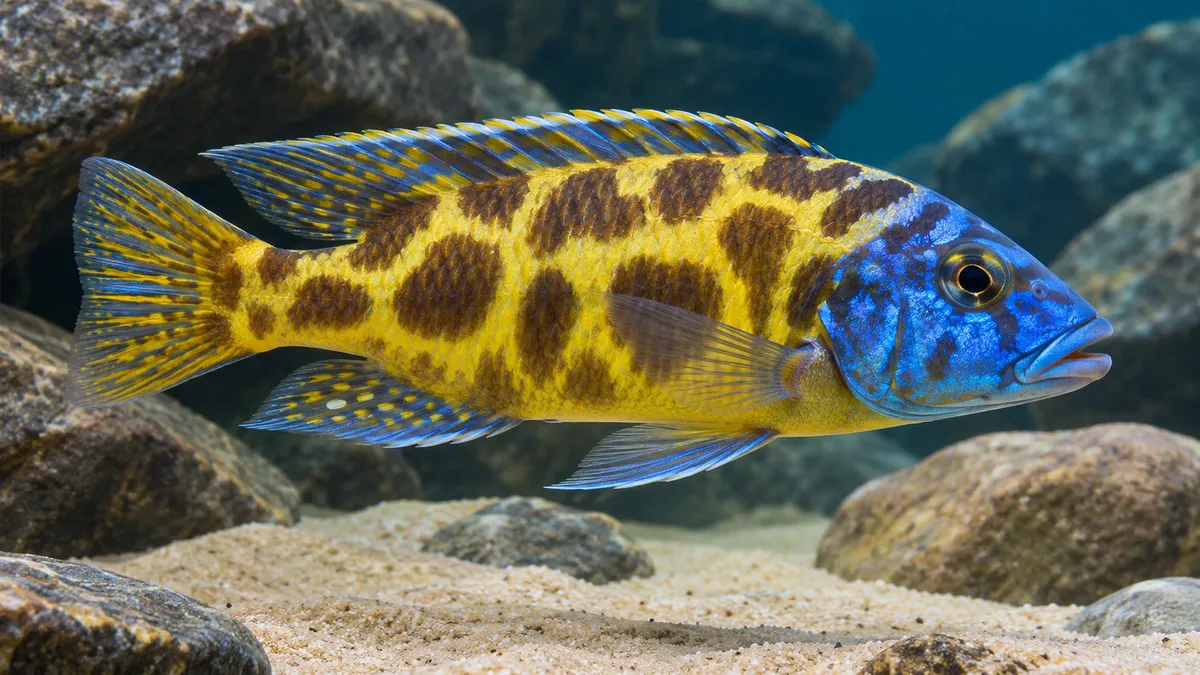 November 2, 2026
Venustus (Nimbochromis venustus): care, size and tank mates
Lake Malawi's giraffe cichlid: how big it gets, what tank it needs, what it eats, how to tell male from female and which fish can live with it without being eaten.
Read →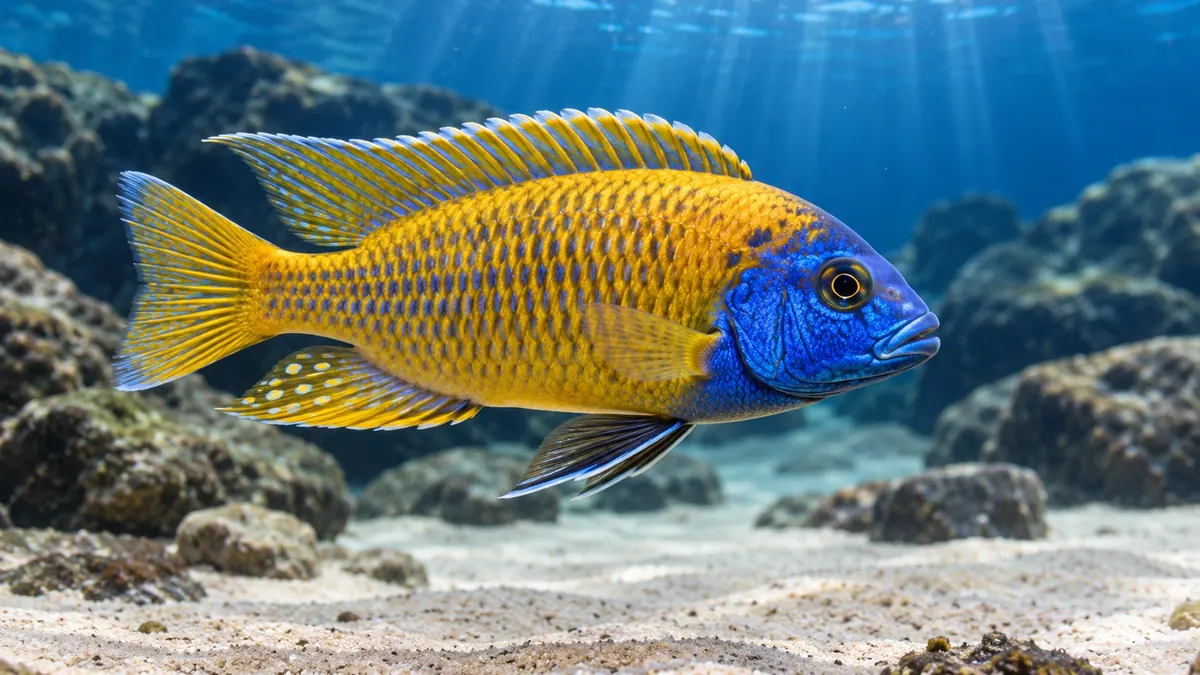 November 1, 2026
Benga peacock (Aulonocara baenschi): care, colors and tank mates
The yellow peacock with a blue face: size, tank, diet, male and female differences, and how to build a calm peacock tank.
Read →