
October 25, 2026
What mbuna and peacocks eat (and why it isn't the same)
Mbuna that scrape algae and peacocks that hunt invertebrates in the sand: how to feed each group, how much and what to avoid.
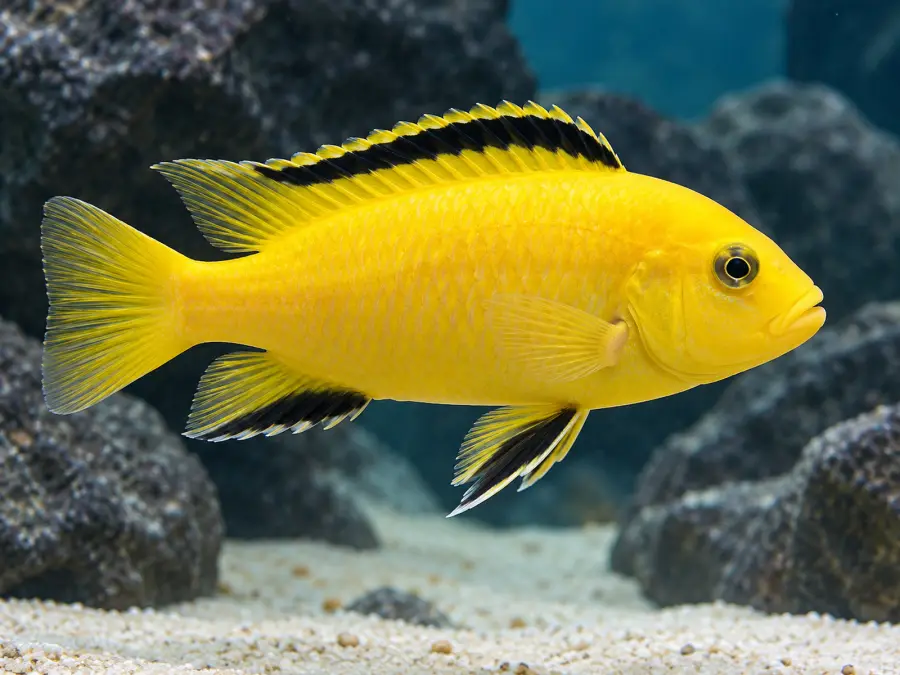
In Lake Malawi, each group of cichlids specialized in a way of eating. That's why the same food doesn't suit all of them equally, even in a shared tank.
Mbuna: rock scrapers
Many mbuna, like the Red Zebra, spend the day scraping the layer of algae and tiny organisms that covers the rocks. In the aquarium, a diet with a good share of plant matter is usually recommended: foods with spirulina or other algae, and less animal protein.
There are exceptions, though: the Chipokae hunts invertebrates among sand and rocks, and the Electric Yellow has its own diet. Check each species' profile before generalizing.
Peacocks: hunters in the sand
Peacocks, like the Benga peacock, detect small invertebrates buried in the sand. In the aquarium they take higher-protein foods: quality pellets for carnivorous cichlids and, now and then, frozen food.
That's why they do well with fine sand, where they can "hunt" as they would in the lake.
What if they share a tank?
Mixing them is common and can work, but it takes more care with food:
- Choose a balanced staple food without excess protein.
- Give the higher-protein food in small amounts, near where the peacocks feed.
- Watch who eats what: mbuna are usually faster and hog the food.
How much and how often
- Small portions, once or twice a day, finished within a couple of minutes.
- One fasting day a week is a common practice among keepers.
- Remove leftovers: rotting food makes the water worse.
Overfeeding, or too much protein, is linked to digestive problems in some mbuna. If a fish stops eating or bloats, separate it and ask someone experienced or a fish vet before medicating.
What do you feed yours, and how has it gone? Tell us in the forum and log your routines in My aquarium.
Discuss it in the forumMy aquarium
More from the blog
 November 2, 2026
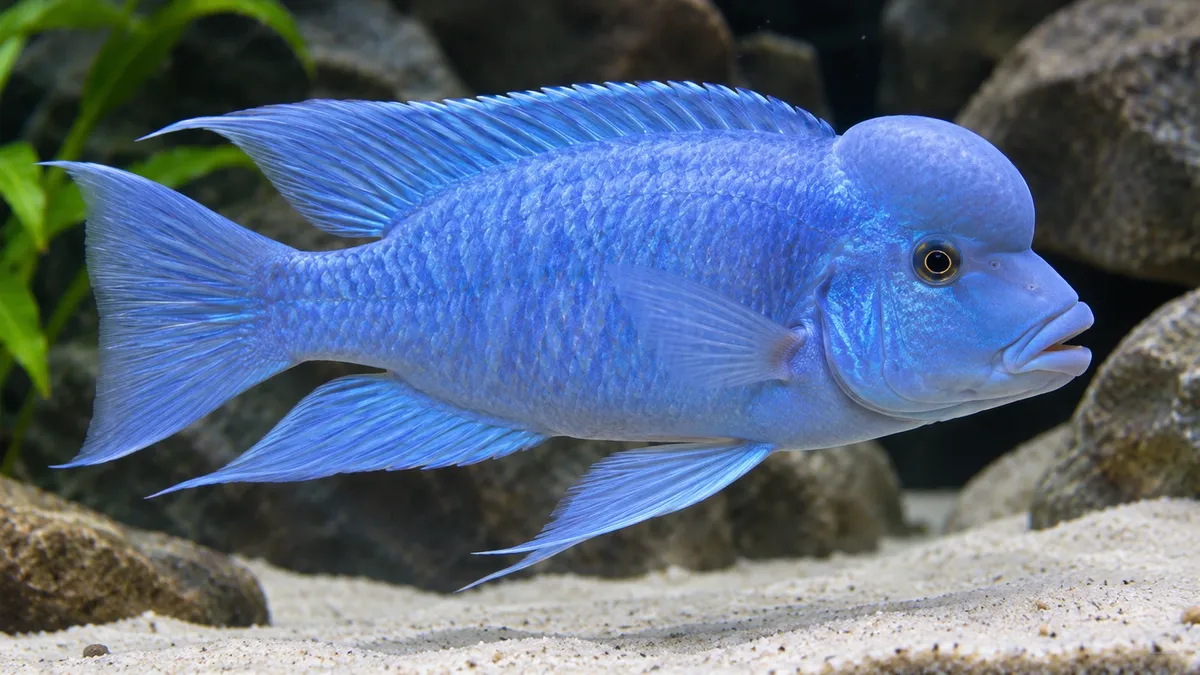
Blue Dolphin (Cyrtocara moorii): care, hump and calm temperament
Lake Malawi's humped blue cichlid: how big it gets, what tank and food it needs, how to sex it and why it is one of the most peaceful large cichlids.
Read →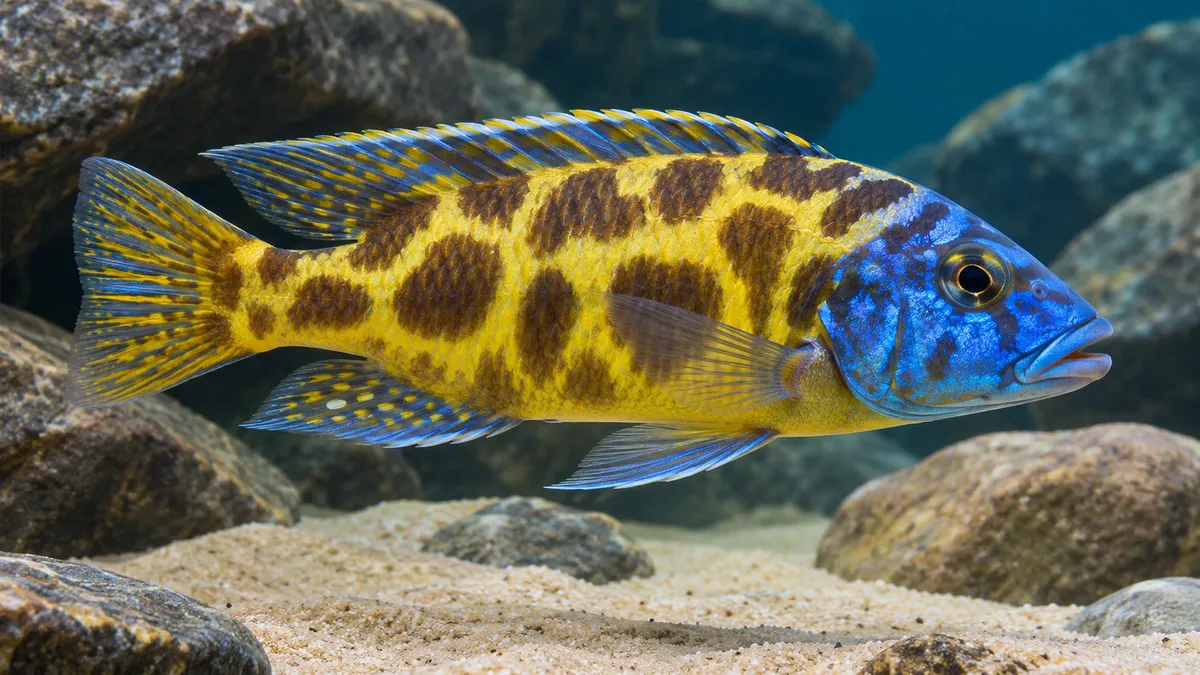 November 2, 2026
Venustus (Nimbochromis venustus): care, size and tank mates
Lake Malawi's giraffe cichlid: how big it gets, what tank it needs, what it eats, how to tell male from female and which fish can live with it without being eaten.
Read →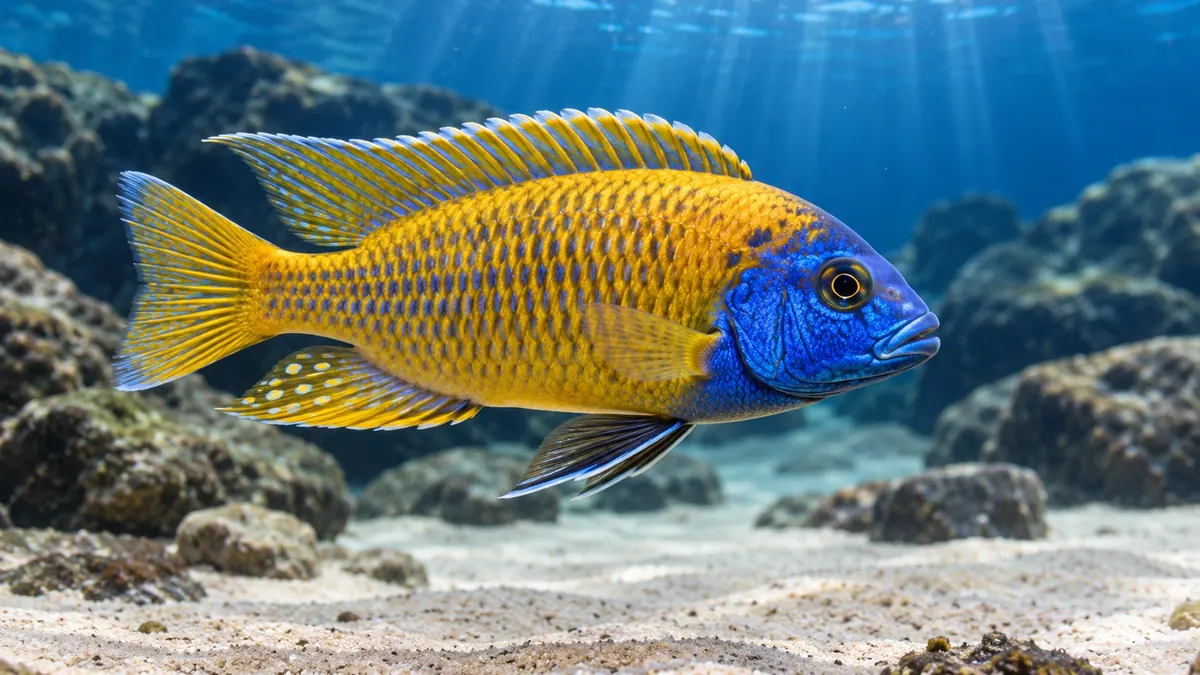 November 1, 2026
Benga peacock (Aulonocara baenschi): care, colors and tank mates
The yellow peacock with a blue face: size, tank, diet, male and female differences, and how to build a calm peacock tank.
Read →