
October 30, 2026
How to breed African cichlids: mouthbrooders step by step
From courtship to fry: how Malawi cichlids breed, how to tell a female is holding eggs, what to do with her and how to raise the fry.
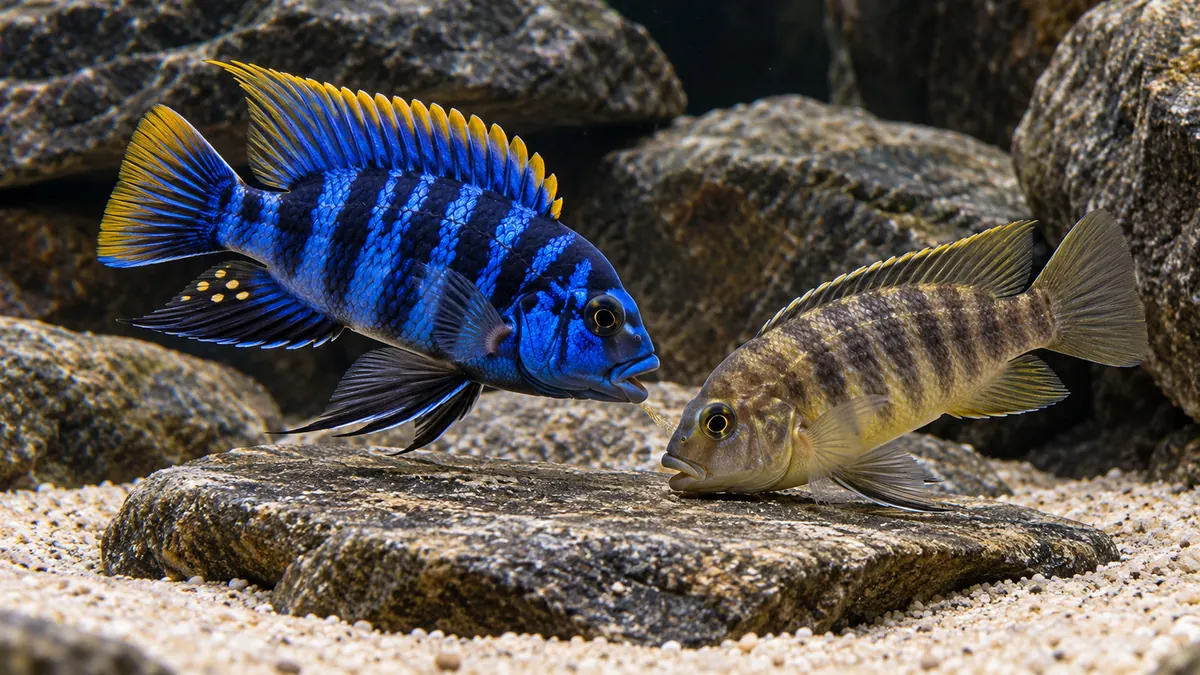
One of the most fascinating things about Lake Malawi cichlids is how they breed. Most are maternal mouthbrooders: the female keeps the eggs in her mouth for weeks and releases fully formed fry. In a healthy tank they breed on their own without any help. This guide explains the process and what to do so more fry reach adulthood.
What you need
- Healthy adult fish: most mbuna mature between 6 and 12 months.
- The right ratio: one male for every 3 or 4 females, so the male does not wear out a single one. See how to tell males from females.
- Flat rocks and caves where the male can set up his territory.
- Stable water and good food, with spirulina for mbuna.
Courtship and spawning
When a female is ready, the male intensifies his colors, flares his fins and shimmies in front of her to lead her to his territory, often a flat rock or a pit in the sand. There the female lays a few eggs and picks them up in her mouth almost immediately.
Then something curious happens: the female also tries to pick up the yellow spots on the male's anal fin (egg spots), because they look like eggs. At that moment the male releases sperm and the eggs are fertilized inside the female's mouth. The cycle repeats until she has laid all her eggs.
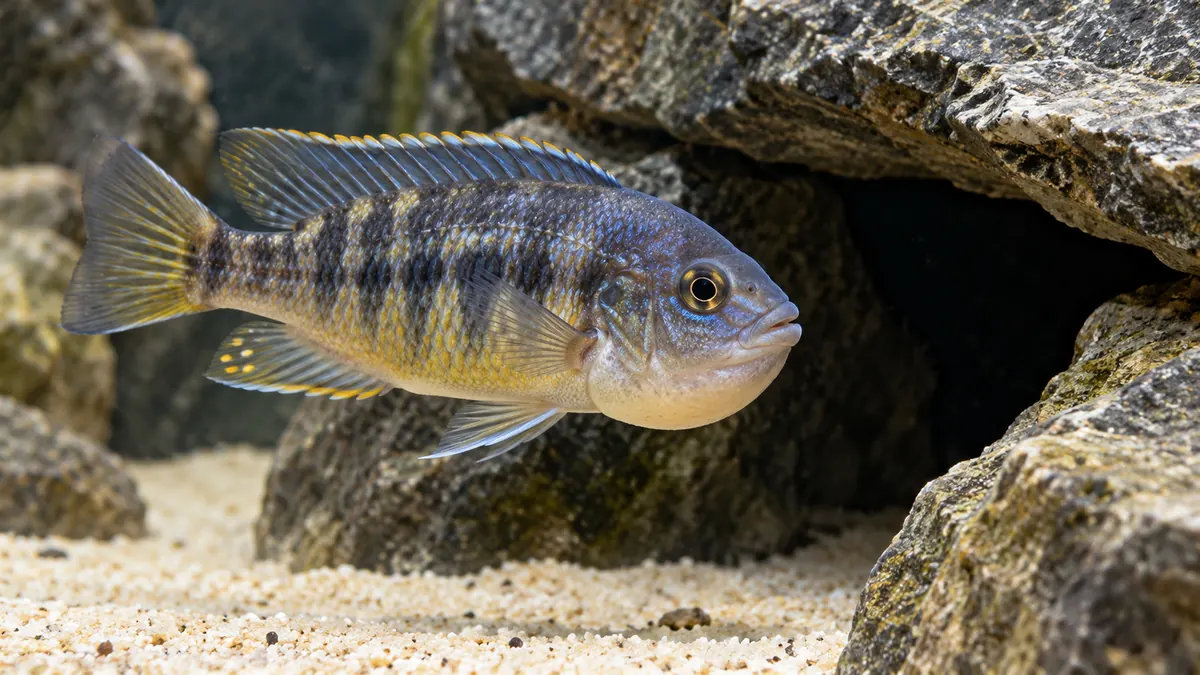
How to tell a female is holding
- Her mouth and throat look swollen, with the lower jaw jutting out.
- She stops eating or takes food and spits it out.
- She keeps apart from the others and spends more time hiding.
- Sometimes you see her chewing: she is turning the eggs to oxygenate them.
Holding lasts about three weeks at 26 °C, during which the female barely eats.
Move the female or leave her?
There are two options, and both work:
- Leave her in the main tank: the most natural and least stressful for her. With plenty of rocks, some fry will survive by hiding, but other fish will eat many.
- Move her to a separate tank midway through holding, with water from the main tank: every fry stays safe. Move her gently and rarely, since a stressed female can spit or swallow the eggs.
Once she releases the fry, return her to the group and feed her well so she recovers. If she was away a long time, rearrange the rocks so the others do not treat her as an intruder.
The fry
Fry leave their mother's mouth fully formed, about 8 to 10 mm long, and eat from day one. To help them grow:
- Fine food: flakes crushed to powder, fry food or newly hatched brine shrimp.
- Several small meals a day, 3 to 5.
- Small, frequent water changes, since water fouls quickly in a small tank.
- A sponge filter, which will not suck them in.
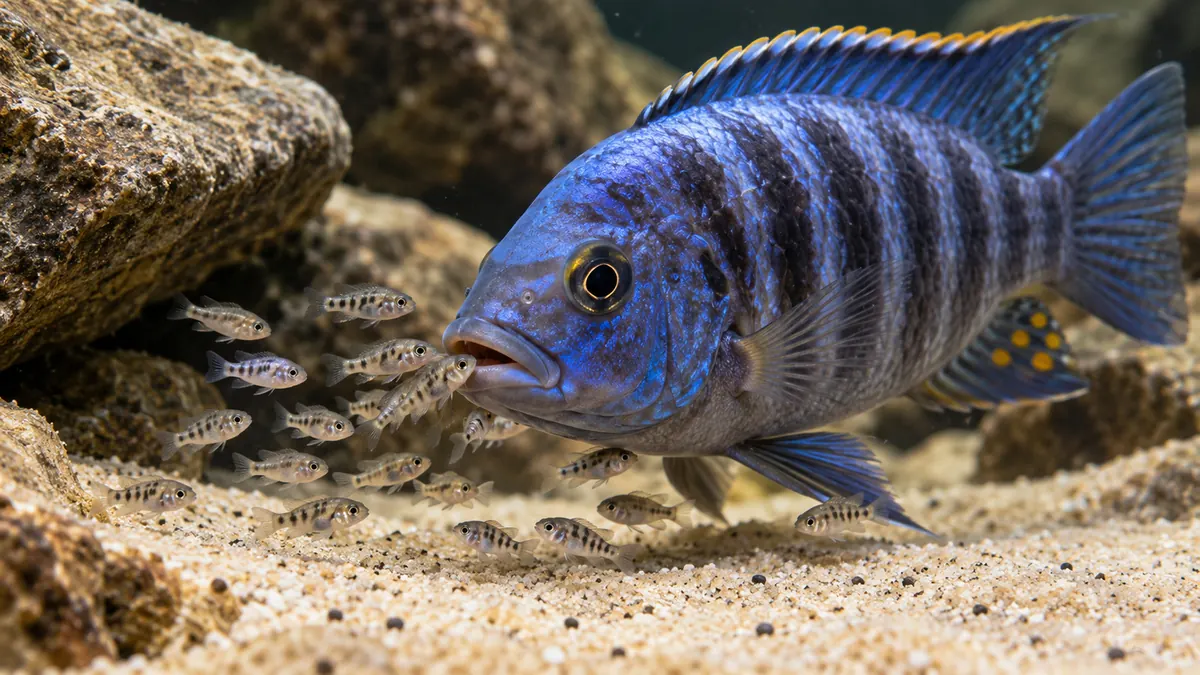
At 4 to 8 weeks, once they reach 2 to 3 cm, they can be carefully moved to a tank with adults of a similar size, or sold or given away.
Responsible breeding
Before breeding, think about what you will do with the fry: a single female can have 10 to 40 per brood. Some advice:
- Do not mix species that can crossbreed, so you do not produce hybrids sold as pure species.
- Keep records of where your fish came from and of each brood. You can log them in My aquarium.
- If you have extra fry, offer them to other hobbyists in Costa Rica on the community marketplace.
We go into more detail in our guide to responsible breeding. And if you are building your first breeding group, our catalog has juveniles such as the Auratus, ideal for forming a group and watching them mature together.
Discuss it in the forumMy aquarium
More from the blog
 November 2, 2026
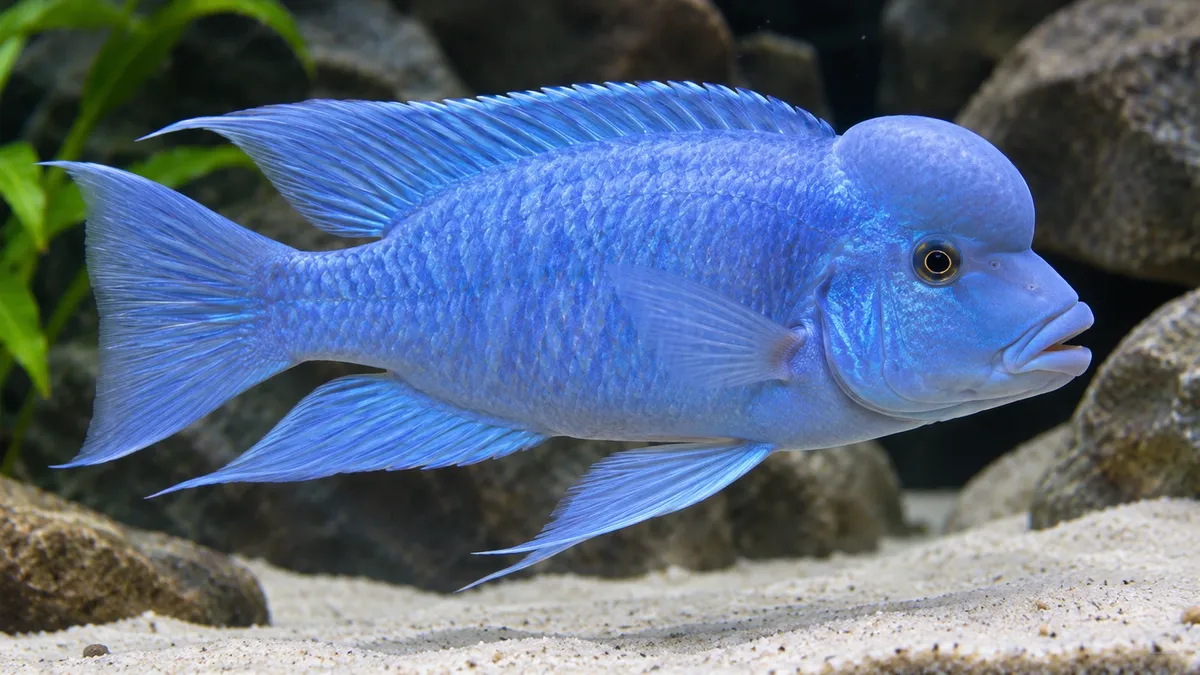
Blue Dolphin (Cyrtocara moorii): care, hump and calm temperament
Lake Malawi's humped blue cichlid: how big it gets, what tank and food it needs, how to sex it and why it is one of the most peaceful large cichlids.
Read →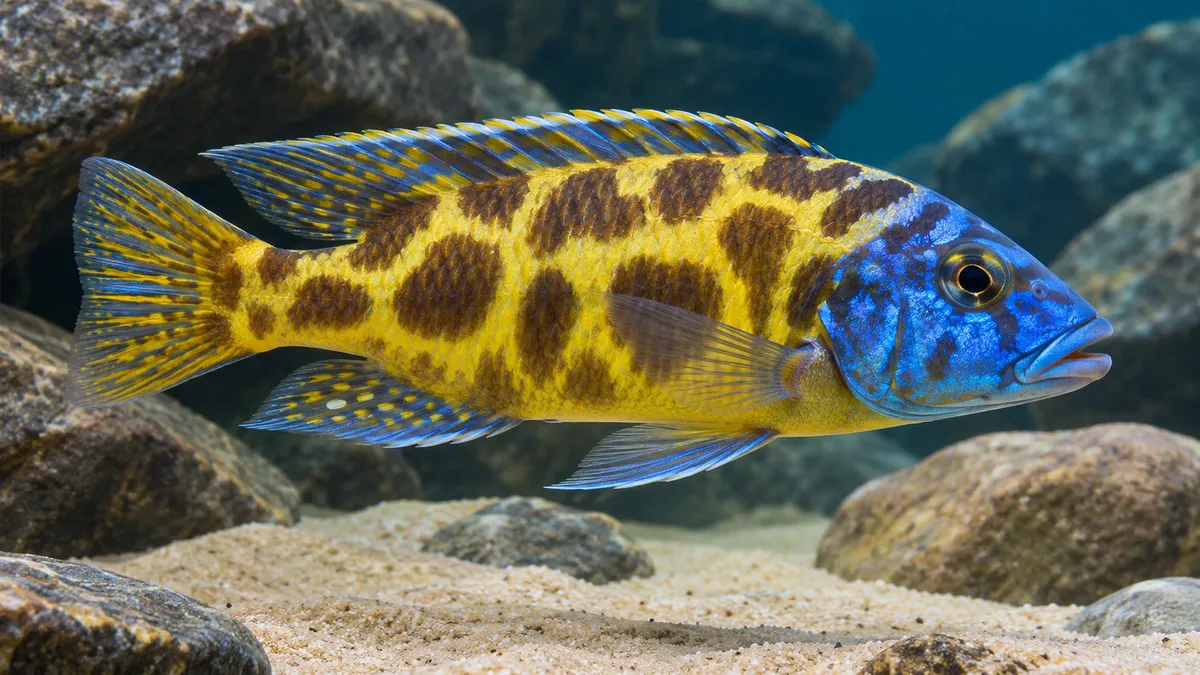 November 2, 2026
Venustus (Nimbochromis venustus): care, size and tank mates
Lake Malawi's giraffe cichlid: how big it gets, what tank it needs, what it eats, how to tell male from female and which fish can live with it without being eaten.
Read →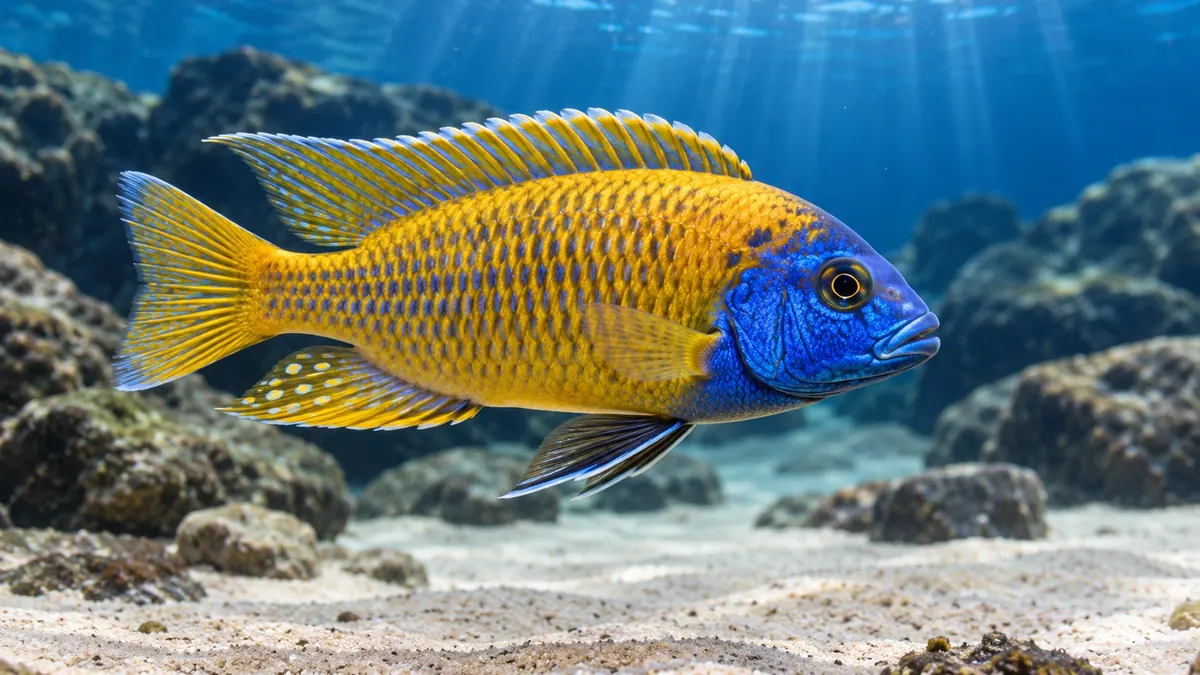 November 1, 2026
Benga peacock (Aulonocara baenschi): care, colors and tank mates
The yellow peacock with a blue face: size, tank, diet, male and female differences, and how to build a calm peacock tank.
Read →