
November 12, 2026
Malawi aquarium: how to set up a lake biotope step by step
How to set up a tank that recreates Lake Malawi: rocks, sand, plants that survive, water, light and the order to build it in, depending on whether you keep mbuna or peacocks.
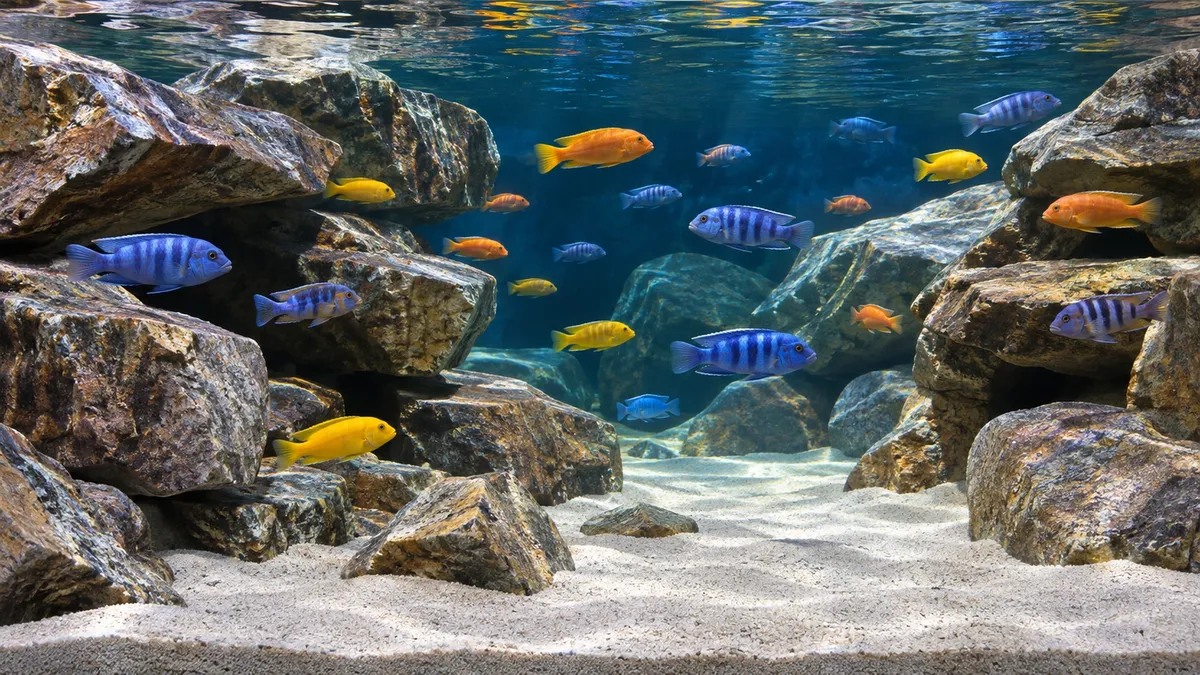
A well-built Malawi tank is recognizable from across the room: mountains of rock with caves, pale sand, crystal-clear water and colorful fish that never stop moving. Recreating the lake is not just about looks: African cichlids are less stressed, fight less and show better color when the tank resembles home. This guide explains how to build it step by step.
What the lake is like
Lake Malawi has rocky shores, home to the mbuna, and open sandy areas, home to peacocks and haps. The water is hard, alkaline and very clear, with few plants. Before you start, decide which fish you will keep, because that shapes the setup. See mbuna vs. peacock cichlids.
What you need
- Tank: as long as possible. See tank size.
- Rocks: limestone, river rock or volcanic rock without sharp edges. No metal or paint.
- Sand: fine and pale. Coral or aragonite sand helps keep the pH high.
- A strong filter, a heater and moderate lighting.
Step by step
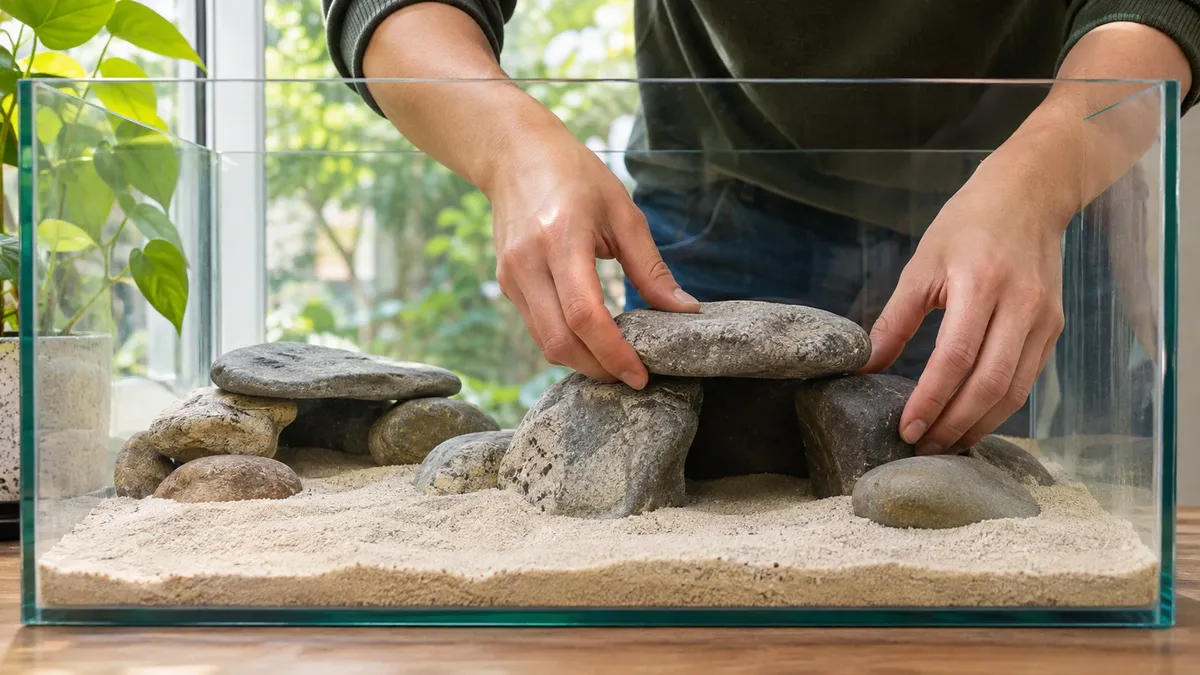
- Rocks go first, on the glass. Cichlids dig, and rocks sitting on sand can collapse. Set them directly on the bottom or on a plastic protective sheet.
- Build caves and mountains with gaps of various sizes, so each fish has a refuge. Check that nothing moves before going on.
- Add the sand around them, about 3 to 5 cm deep.
- Fill slowly, pouring the water onto a plate so the sand stays put.
- Prepare hard, alkaline water. See Costa Rica tap water.
- Cycle the tank for a few weeks before adding fish. See how to cycle the tank.
- Add the fish as a group, all at once if they are mbuna, so territories are shared out.
Setup by fish type
- Mbuna: lots of rock, from end to end, with many caves. This breaks lines of sight and cuts down fighting.
- Peacocks and haps: less rock, in groups at the sides, and plenty of open sand in the middle for swimming.
Plants that survive
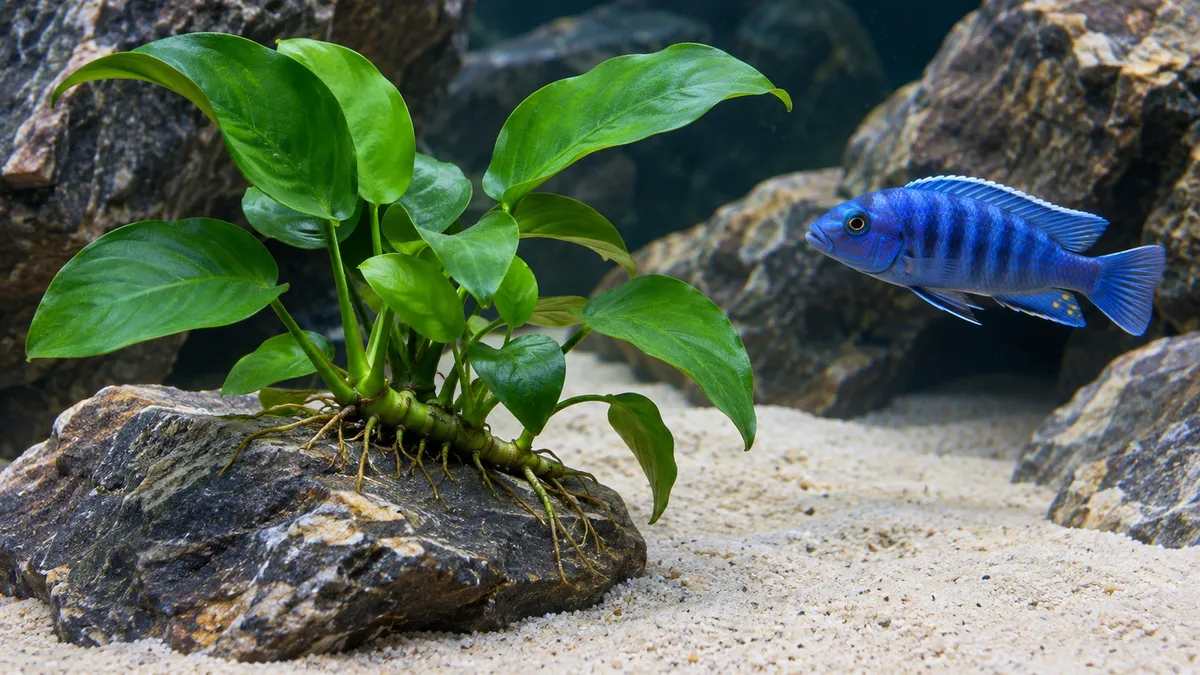
Mbuna eat or uproot almost every plant. The toughest are hard-leaved plants tied to a rock rather than planted in the sand:
- Anubias: hard leaves that are rarely eaten.
- Java fern: bitter, so fish leave it alone.
They are not required: a Malawi tank looks great with just rock and sand.
What to avoid
- Driftwood and roots: they lower the pH and stain the water.
- Coarse gravel: peacocks cannot search for food in it.
- Rocks resting on sand: they collapse when the fish dig.
- Very bright light with no shaded areas.
Fish for your Malawi tank
To choose your first fish, see the beginner's guide and compatible cichlids. Every fish in our catalog comes from Lake Malawi, with real photos of each one.
Discuss it in the forumMy aquarium
More from the blog
 November 19, 2026
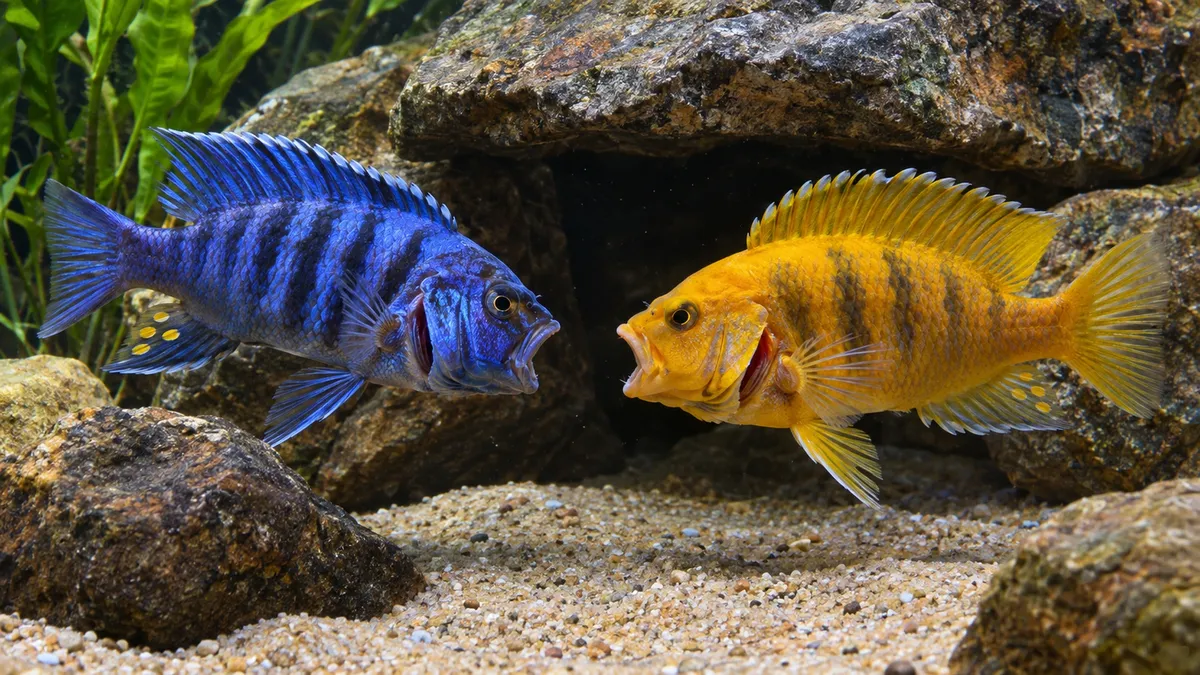
African cichlid aggression: why they fight and how to reduce it
Why African cichlids fight, when it is normal and when it is not, and what actually lowers aggression: sex ratio, rocks, colors and number of fish.
Read →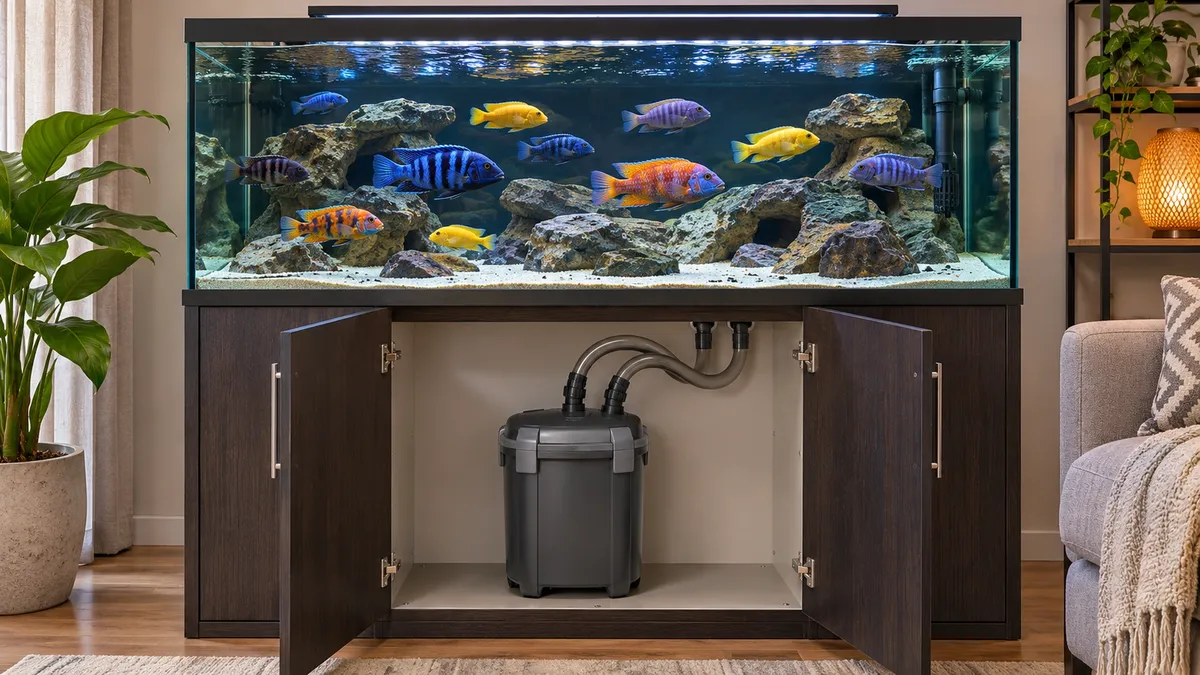 November 19, 2026
Which filter to use in an African cichlid aquarium
How much a cichlid filter should turn over, which type to choose for your tank size (canister, hang-on-back, sponge), how to order the media and how to clean it without losing the bacteria.
Read →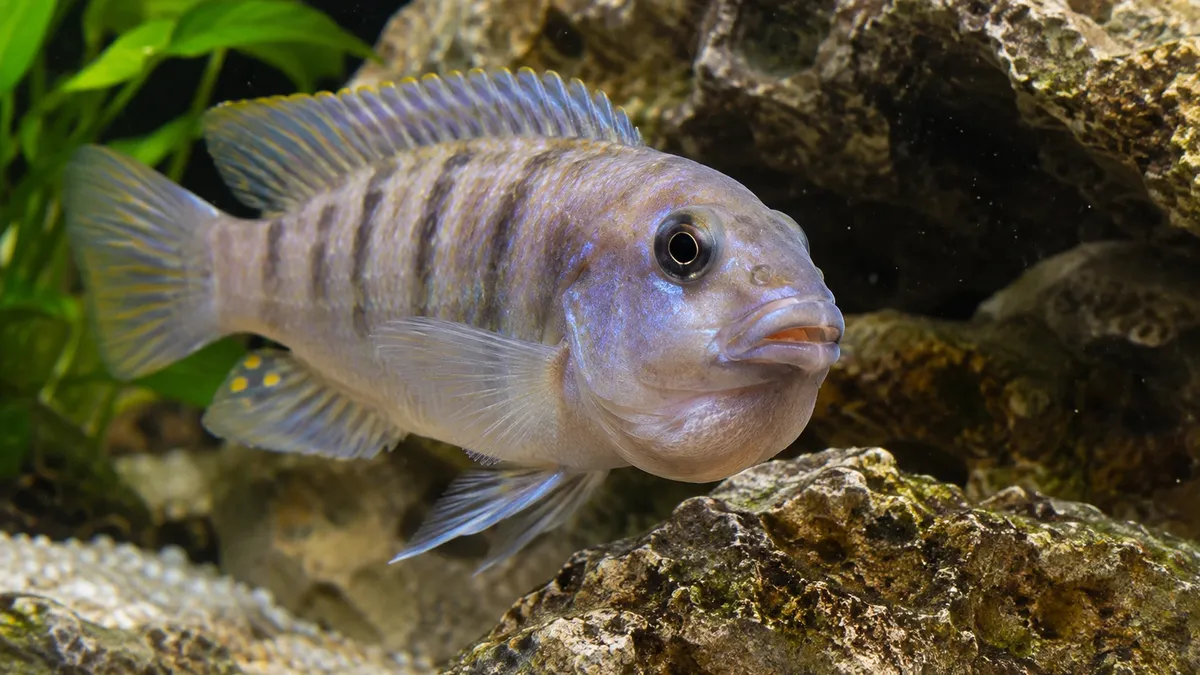 November 15, 2026
Holding female: how to tell if your cichlid has eggs in her mouth
The signs of a holding African cichlid female, how long it lasts, whether to move her, what to do when she releases the fry and how to feed them.
Read →