
November 19, 2026
African cichlid aggression: why they fight and how to reduce it
Why African cichlids fight, when it is normal and when it is not, and what actually lowers aggression: sex ratio, rocks, colors and number of fish.
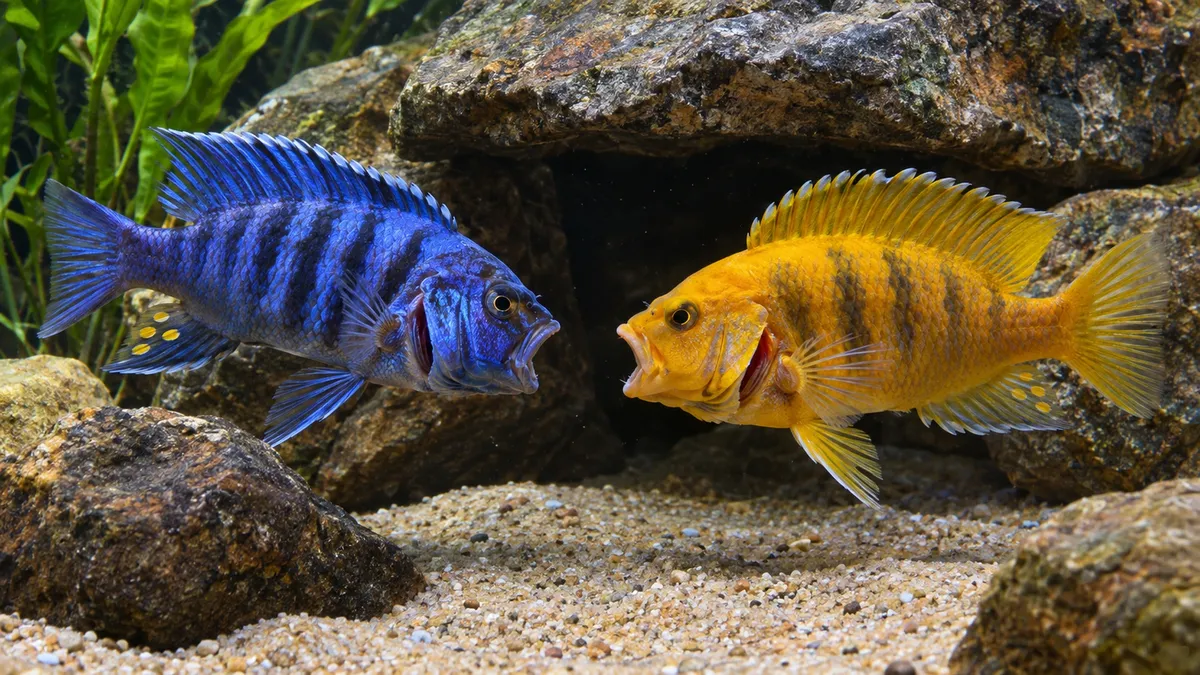
African cichlids have a reputation for being tough, and there is some truth to it: males defend their territory and chase anyone who comes close. But a well-planned cichlid tank is surprisingly peaceful. The key is to understand why they fight and set up the tank so that energy gets spread out.
When it is normal and when it is not
- Normal: short chases, fin displays, a male guarding his cave. That is how they live in the lake.
- Time to act: a fish with torn fins or missing scales, one that hides all day, stops eating or is chased nonstop.
Why they fight
- Too many males, or males of similar colors that see each other as rivals.
- Too few females: the male harasses all of them.
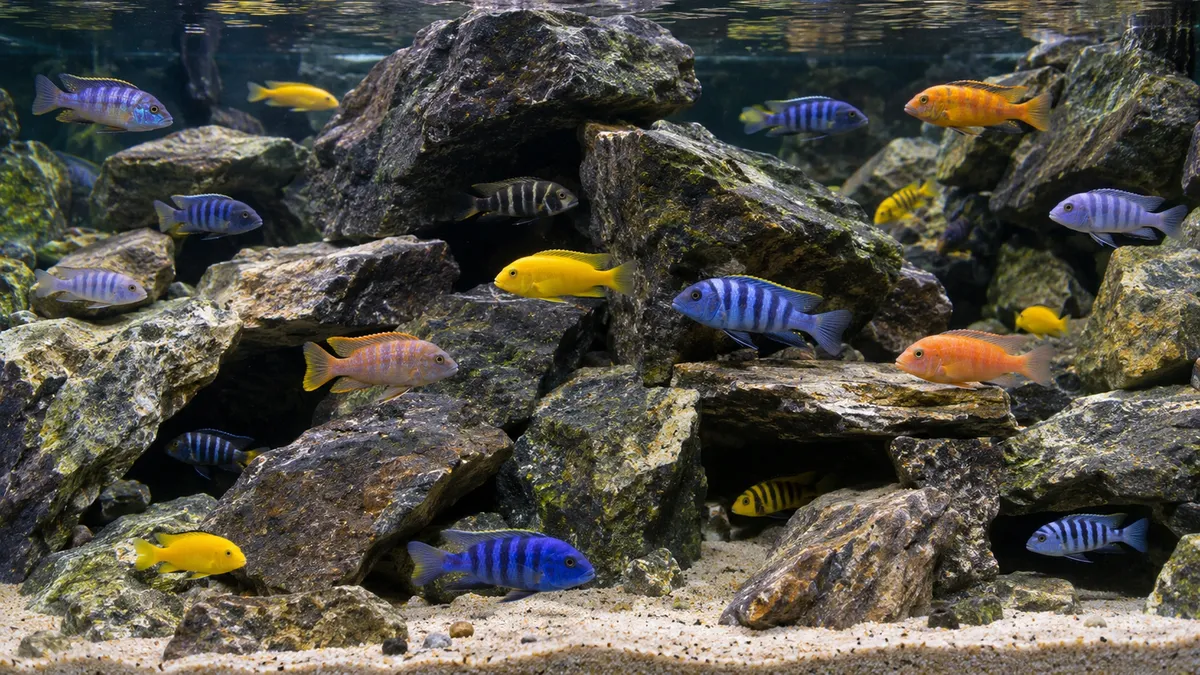
- Too few fish: with 3 or 4 mbuna, the dominant one picks a victim. In a larger group, aggression gets spread out.
- A small tank or few rocks: everyone sees everyone all the time, with nowhere to hide.
- New fish arriving in a tank where territories are already claimed.
- Species that do not mix: an aggressive mbuna with calm peacocks. See mbuna vs. peacock cichlids.
How to reduce it
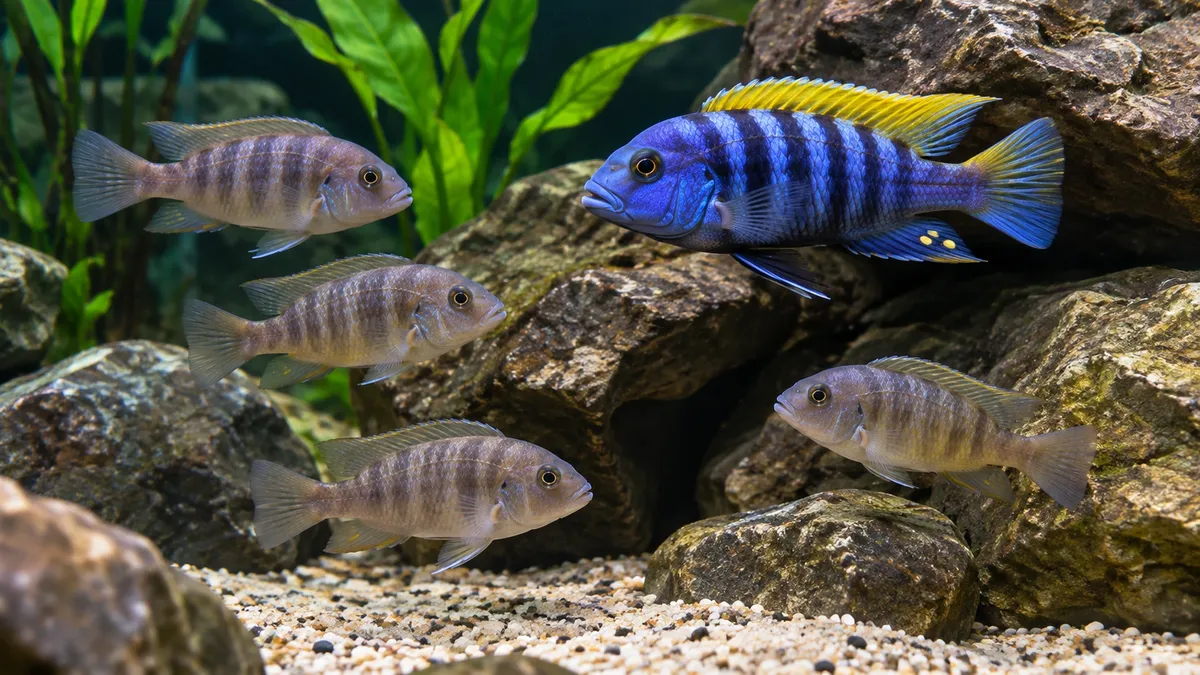
- One male for every 3 or 4 females of the same species. See how to tell male from female.
- Males of different colors: a blue, a yellow and an orange tolerate each other better than two blues.
- Plenty of rocks and caves that break the line of sight across the tank. See Malawi aquarium step by step.
- For mbuna, a large group: an mbuna tank with plenty of fish is often calmer than one with few, as long as the filter and water changes keep up. See water changes.
- Add new fish several at a time and rearrange the rocks the same day: nobody owns territory and everyone starts over.
- Spread the food over several spots so the dominant fish does not take it all.
If a fish is already beaten up
- Move the victim to a separate tank until it recovers.
- Or remove the aggressor for a few days (a "time-out"): when it returns, it has lost its territory and usually calms down.
- Check the wounds: if they get infected, see common diseases.
- If the problem continues, a fish may simply not fit that tank. Rehoming it is the healthiest solution for everyone.
Before buying, check which fish mix well in compatible African cichlids. In our catalog we state each fish's sex when we know it, so you can build groups with the right ratio.
Discuss it in the forumMy aquarium
More from the blog
 November 19, 2026
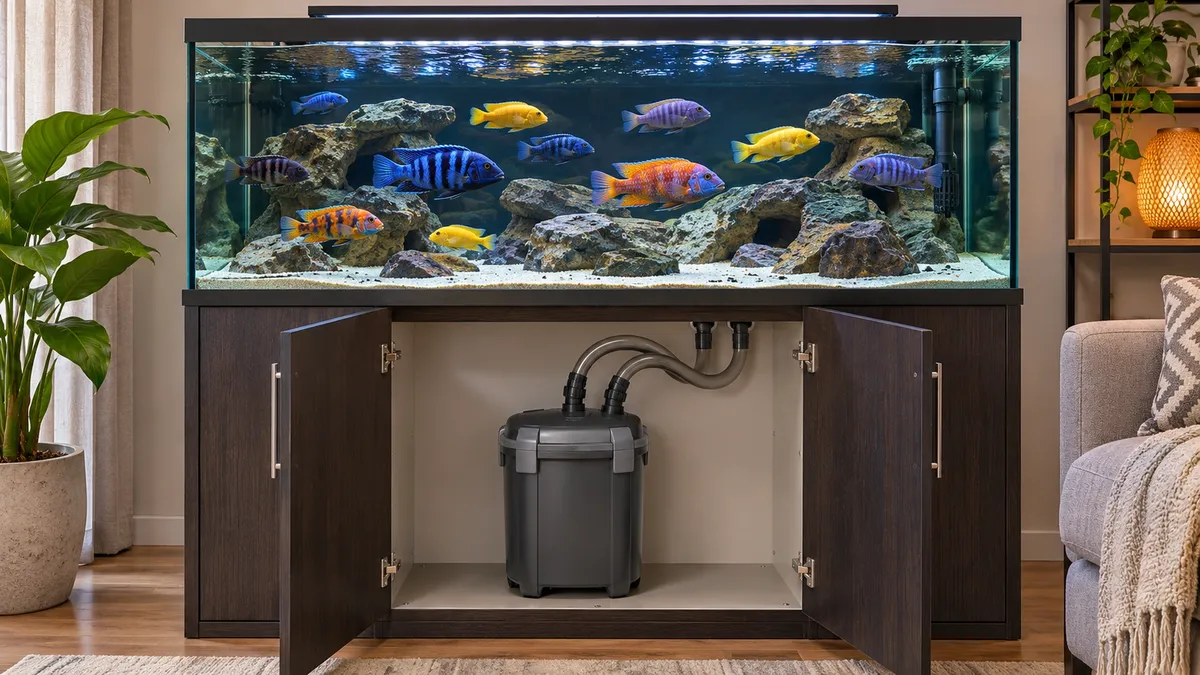
Which filter to use in an African cichlid aquarium
How much a cichlid filter should turn over, which type to choose for your tank size (canister, hang-on-back, sponge), how to order the media and how to clean it without losing the bacteria.
Read → November 15, 2026
Holding female: how to tell if your cichlid has eggs in her mouth
The signs of a holding African cichlid female, how long it lasts, whether to move her, what to do when she releases the fry and how to feed them.
Read → November 15, 2026
Water changes in a cichlid aquarium: how much, how often and how
How much water to change, how often, how to siphon the sand, how to prepare new tap water in Costa Rica and what to measure with a test kit.
Read →