
October 30, 2026
Mbuna vs. peacock cichlids (Aulonocara): differences and which to choose
Mbuna and peacocks are the two big groups of Malawi cichlids. How they differ in temperament, diet, colors and tank setup, and which suits a beginner.
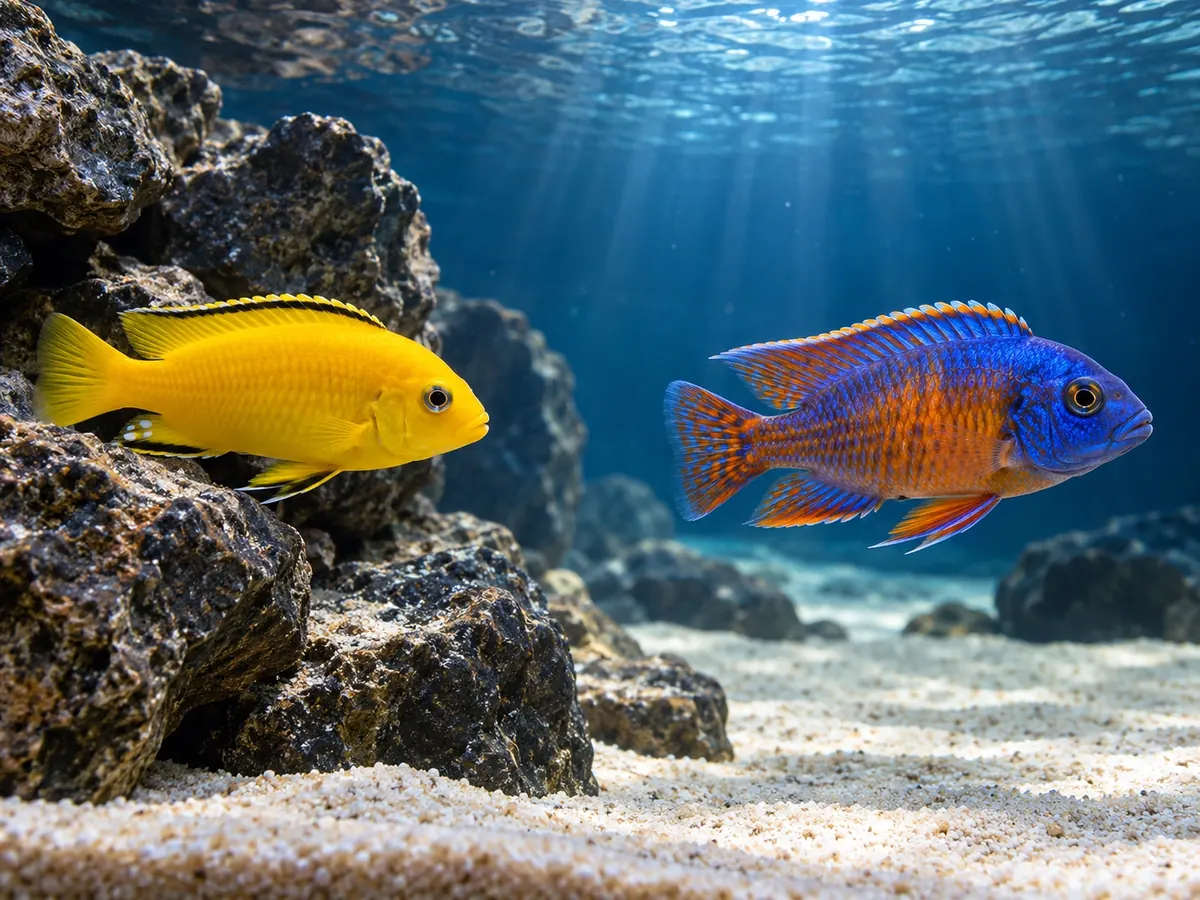
When you start with Lake Malawi cichlids, the first decision is not which species to buy but which kind of tank you want: a mbuna tank or a peacock (Aulonocara) tank. They are two very different styles, and choosing well from the start saves you fights, disease and frustration.
Two ways of living in the same lake
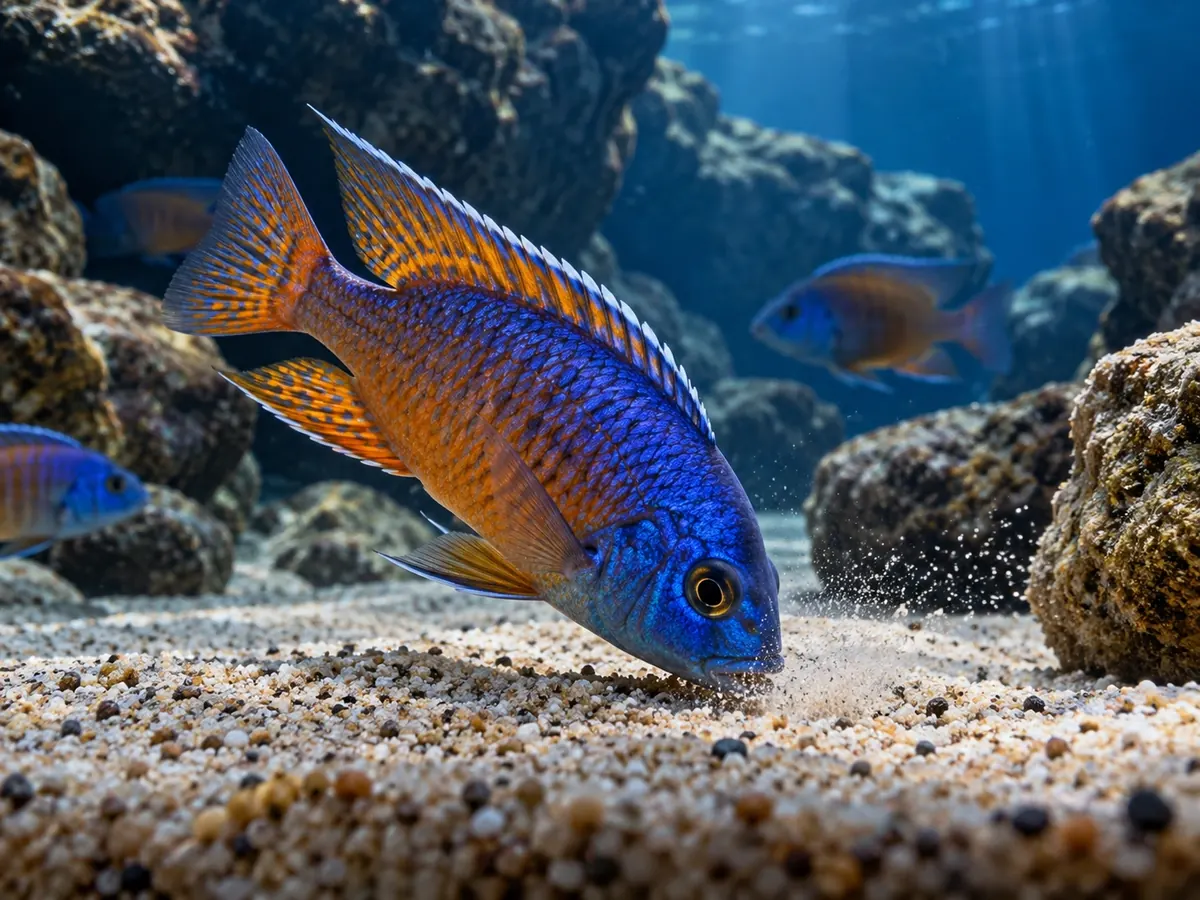
In Lake Malawi, mbuna live right against the rocky shores. Each male defends a few meters of stone, and they feed by scraping the algae and tiny organisms growing on it. Peacocks live over the sandy areas, near the rocks but in more open water, and hunt small invertebrates buried in the sand using sensory pores on their heads.
The differences, side by side
| Mbuna | Peacocks (Aulonocara) | |
|---|---|---|
| Temperament | Very active and territorial | Calmer |
| Where they swim | Among the rocks | In open water, over the sand |
| Diet | Plant-based: spirulina, algae | More protein: quality pellets, brine shrimp |
| Colors | Males and females are often colorful | Only adult males are colorful |
| Size | Mostly 8 to 12 cm | 12 to 15 cm |
| Tank | Lots of rocks, well stocked | More open space and fine sand |
| Examples | Red Zebra, Electric Yellow, Auratus | Benga peacock, Dragon Blood, Golden Dragon |
Why choose a mbuna tank
- Color all around: in many species females are colorful too, so the whole tank shows color, not just the males.
- Lots of action: there is always something happening among the rocks.
- Hardy: they are tough and breed easily.
What to manage: aggression. They need rocks, a good male-to-female ratio and a well-stocked tank. And a plant-based diet: too much protein can cause "bloat".
Why choose a peacock tank
- Calmer: they swim peacefully across the whole tank instead of hiding.
- Spectacular colors in the males: blues, reds, yellows and combinations.
- Easier to combine with each other, with several males in different colors.
What to consider: females are gray, so many hobbyists keep all-male tanks of different species. It works well in large tanks with no females to spark competition. They also need more space per fish.
Can you mix them?
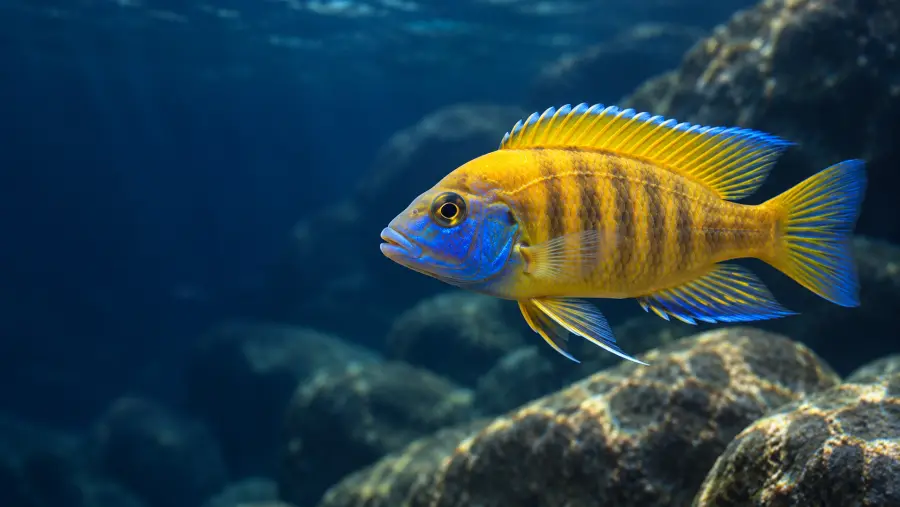
You can, but it is not ideal for beginners. Mbuna harass peacocks and beat them to the food, and the protein-rich peacock diet harms mbuna. If you still want to mix them, do it in a large tank with one of the calmest mbuna such as the Electric Yellow, and feed a mid-protein quality pellet. See compatible African cichlids for the combinations that work best.
So which should I choose?
- Choose mbuna if you want color on every fish, lots of activity and very hardy fish, and territorial behavior does not bother you.
- Choose peacocks if you prefer a calmer tank, have the space (ideally 300 liters or more) and love the intense color of the males.
Either is a great choice. In our catalog you can filter by mbuna or peacocks, and the beginner's guide covers the rest of what you need to know.
Discuss it in the forumMy aquarium
More from the blog
 November 2, 2026
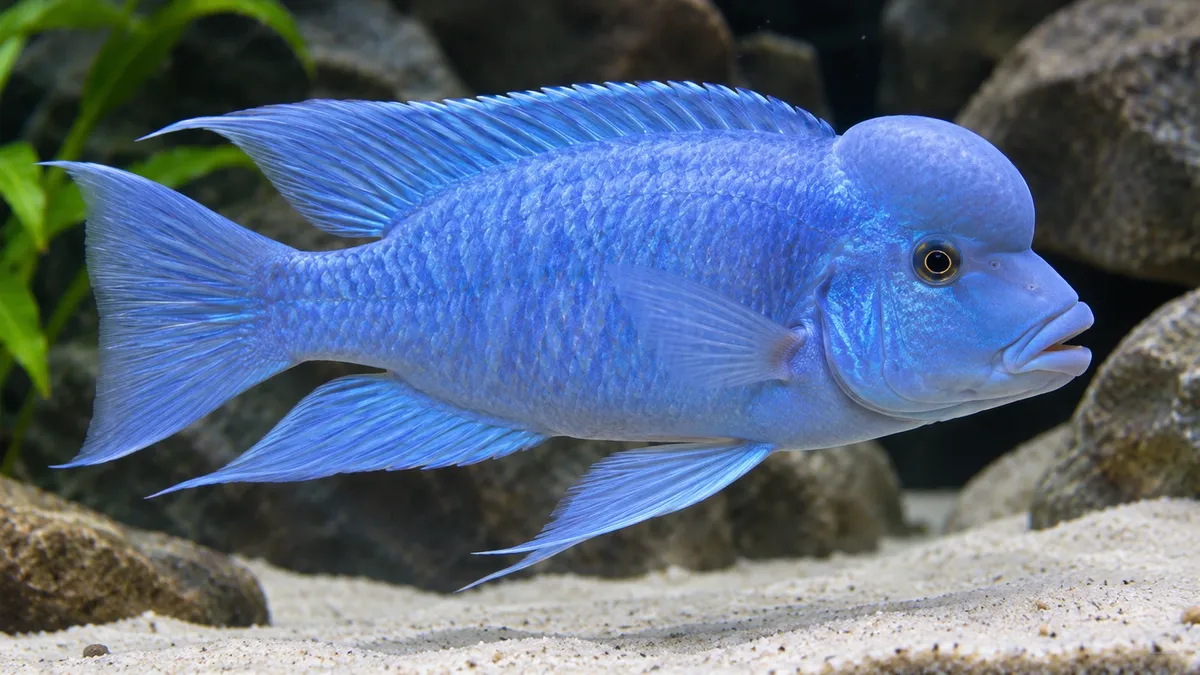
Blue Dolphin (Cyrtocara moorii): care, hump and calm temperament
Lake Malawi's humped blue cichlid: how big it gets, what tank and food it needs, how to sex it and why it is one of the most peaceful large cichlids.
Read →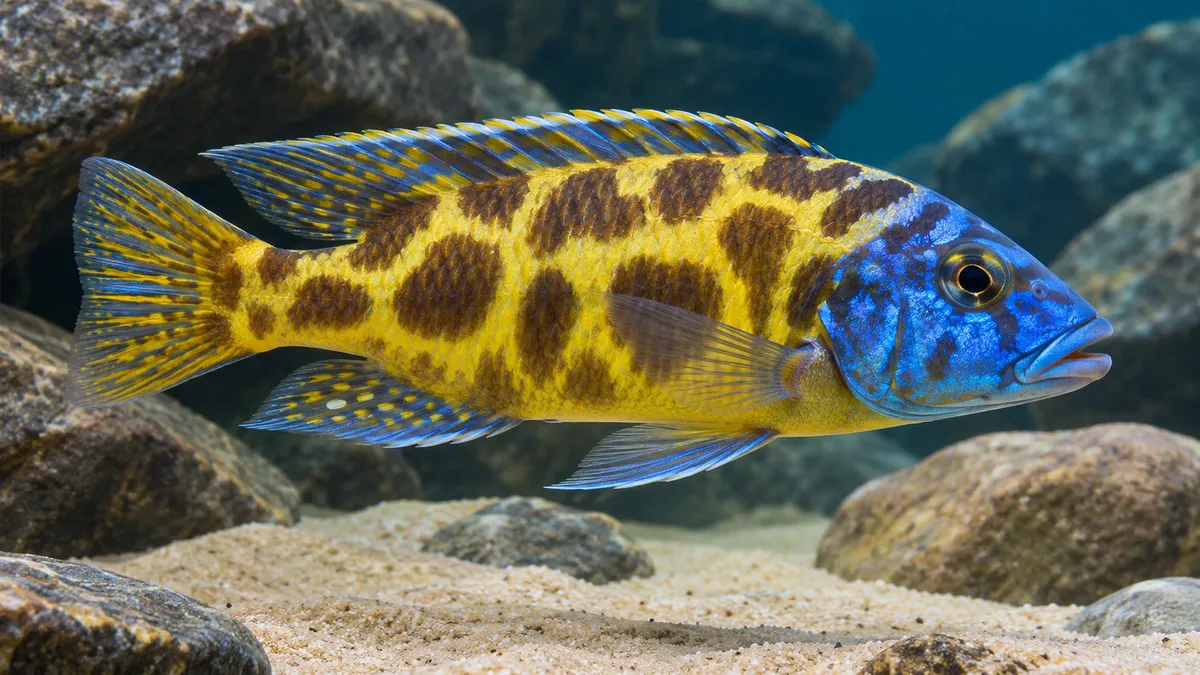 November 2, 2026
Venustus (Nimbochromis venustus): care, size and tank mates
Lake Malawi's giraffe cichlid: how big it gets, what tank it needs, what it eats, how to tell male from female and which fish can live with it without being eaten.
Read →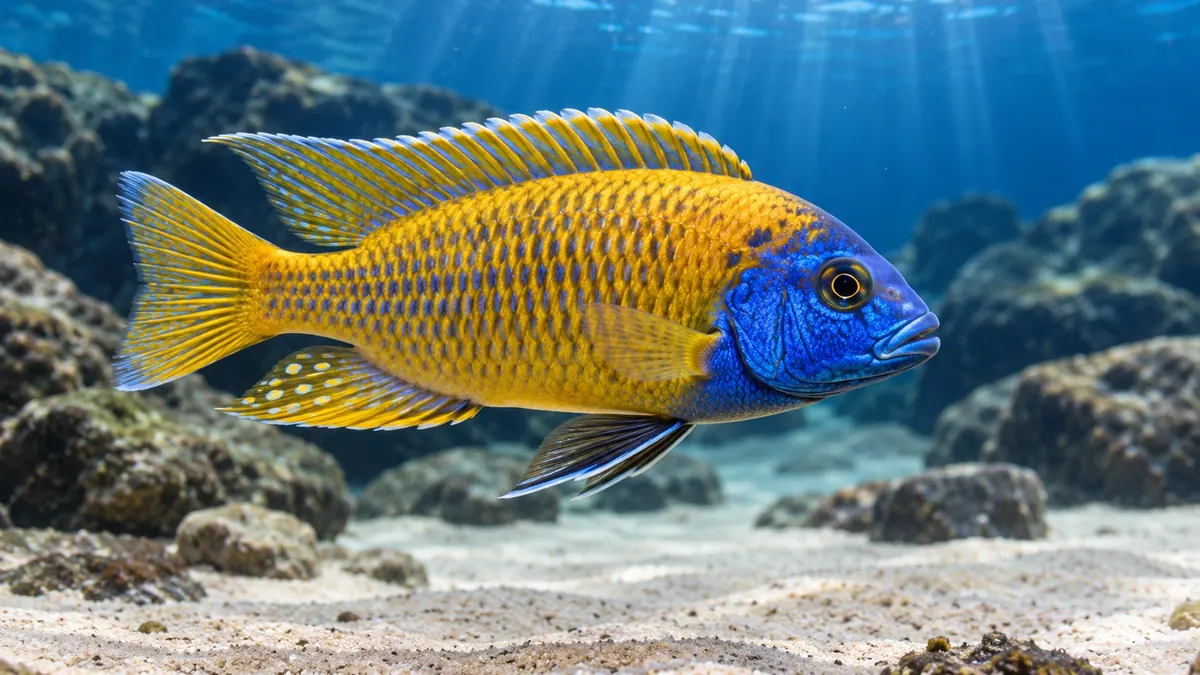 November 1, 2026
Benga peacock (Aulonocara baenschi): care, colors and tank mates
The yellow peacock with a blue face: size, tank, diet, male and female differences, and how to build a calm peacock tank.
Read →