
October 29, 2026
How to tell if an African cichlid is male or female
Color, egg spots on the anal fin, size, fins, behavior and venting: the signs for sexing mbuna and peacocks, and which ones fool you.
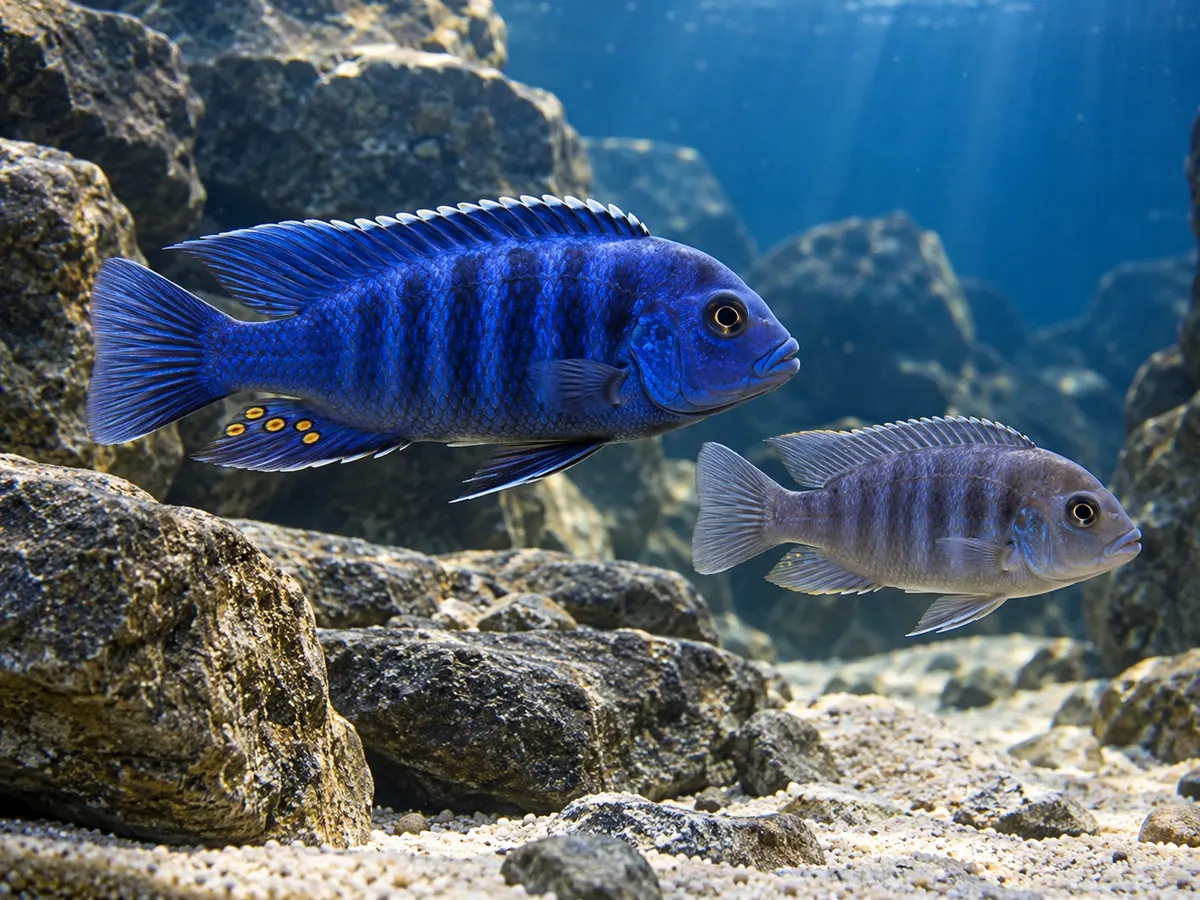
Knowing the sex of your African cichlids is key to a working tank. With mbuna, the ideal is one male for every three or four females: with too many males, the fighting never stops. The catch is that juveniles barely show their sex, and some species stay tricky even as adults. Here are the signs, from the easiest to the most reliable.
1. Color
In many species the adult males are far more colorful than the females. It is the most visible sign, but it does not always work:
- Peacocks (Aulonocara): males show intense blues, reds or yellows; females are gray or brown. Here color is a good guide in adults, as with the Benga peacock.
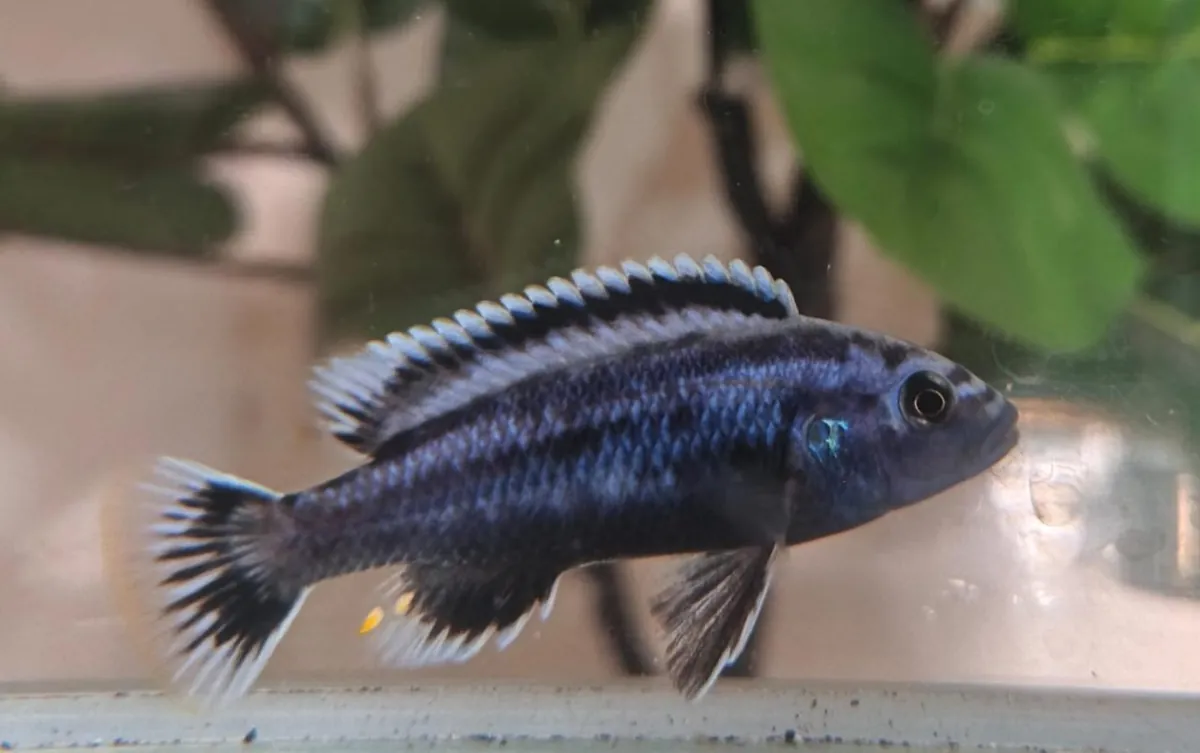
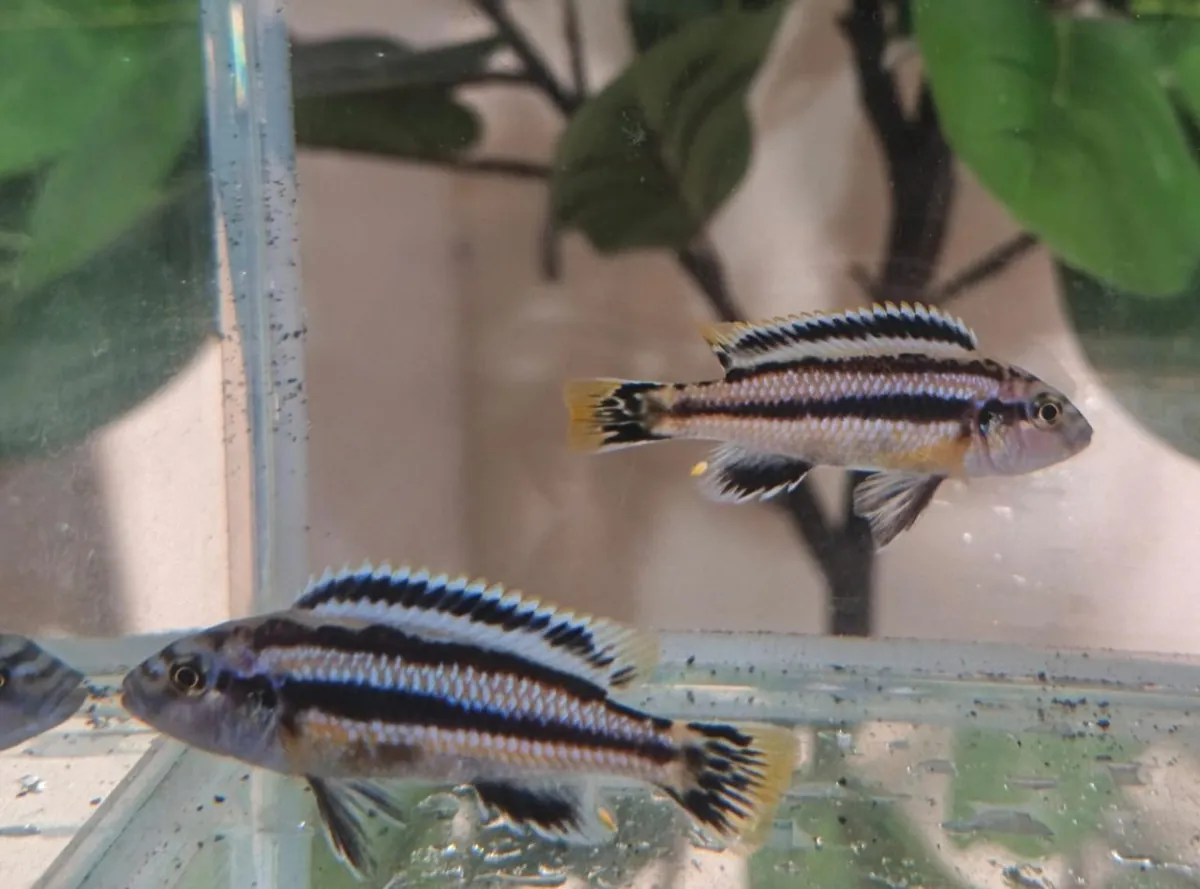
- Auratus: the most striking case. Juveniles and females are golden with black stripes, and as males mature they reverse the pattern and turn dark blue, almost black.
- Electric yellow: males and females are the same yellow. Color is useless for sexing them; look at other signs.
2. Egg spots on the anal fin
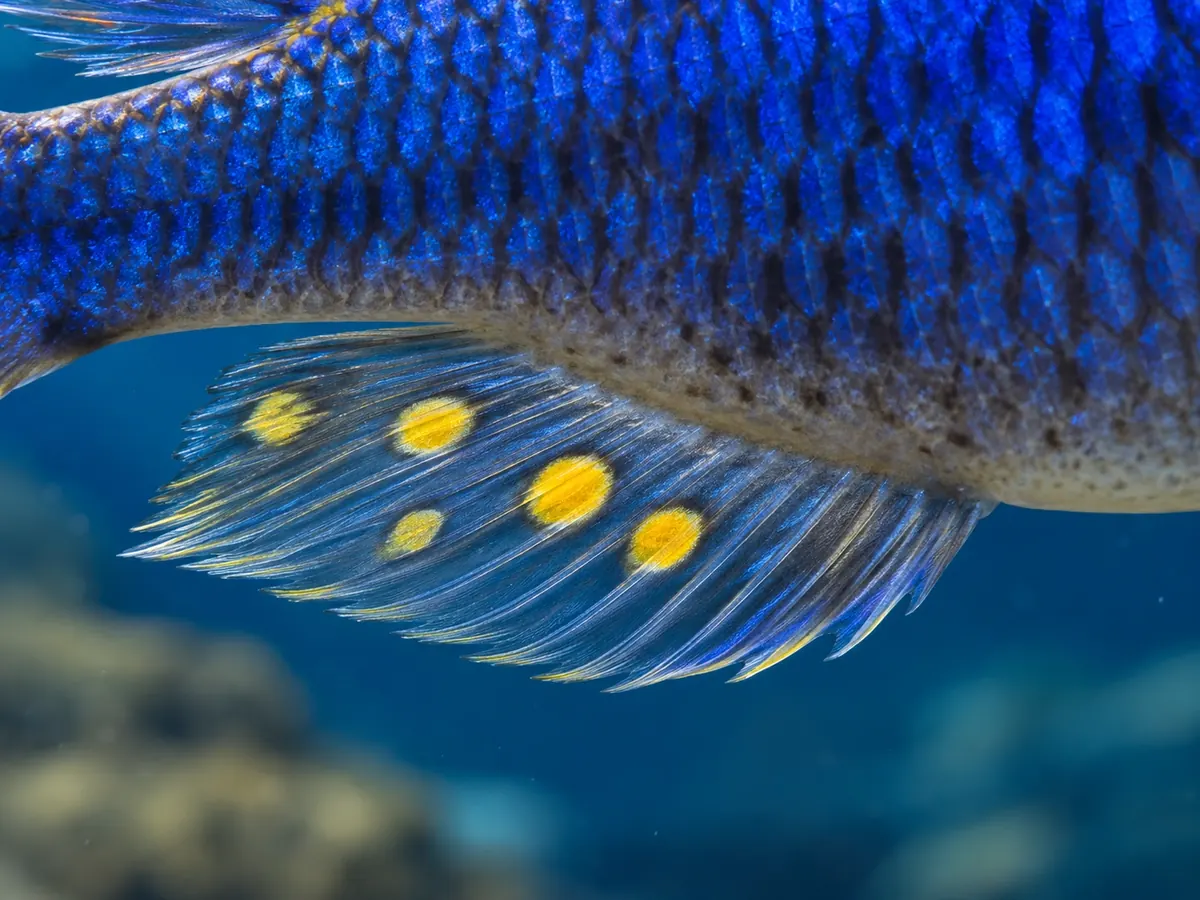
Many males have round yellow or orange spots on the anal fin called egg spots. During spawning the female tries to pick them up with her mouth, and that is how the male fertilizes the eggs.
Males usually have more and brighter egg spots, but some females have them too, especially in mbuna. Treat them as a clue, not proof.
3. Size and fin shape
- Males usually grow larger than females of the same age.
- Males' dorsal and anal fins tend to be longer and pointed; females' are shorter and rounder.
These differences show best when comparing fish of the same group and age, not a single fish on its own.
4. Behavior
Mature males act like landlords: they defend a cave, dig a "nest" in the sand, chase other males and court the females with a shimmying body and flared fins. Females carrying eggs are easy to spot by their swollen mouth and because they stop eating for weeks.
5. Venting (the most reliable method)
The most reliable method is checking the genital area, between the anal fin and the vent. Hold the fish gently in a net or a wet hand, belly up, for just a few seconds:
- Male: two small openings of similar size.
- Female: the second opening is larger and rounder, since that is where the eggs come out.
It takes practice and works best on fish over 5 or 6 cm. Do it quickly, with wet hands, and keep the fish out of the water as little as possible.
What about juveniles?
Small fish do not show these signs yet. The practical approach is to buy a group of juveniles and let them mature: within months you will see which ones take on male color and behavior, and you can adjust the ratio. That is one reason juveniles are a good buy, like our juvenile Auratus.
Summary
Color and egg spots give the first clue, size and behavior confirm it, and venting is the surest test. If you are unsure about your fish, post a photo in the forum and we will help. To plan how many males and females to keep, see our guide to tank size and stocking.
Discuss it in the forumMy aquarium
More from the blog
 November 2, 2026
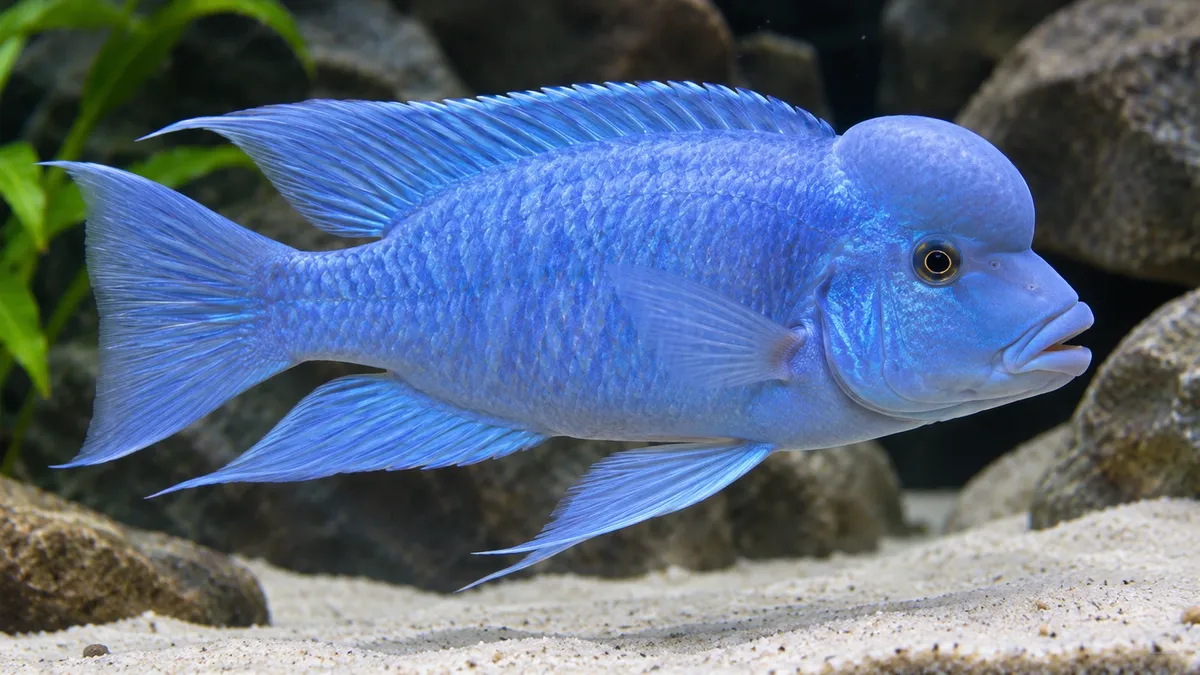
Blue Dolphin (Cyrtocara moorii): care, hump and calm temperament
Lake Malawi's humped blue cichlid: how big it gets, what tank and food it needs, how to sex it and why it is one of the most peaceful large cichlids.
Read →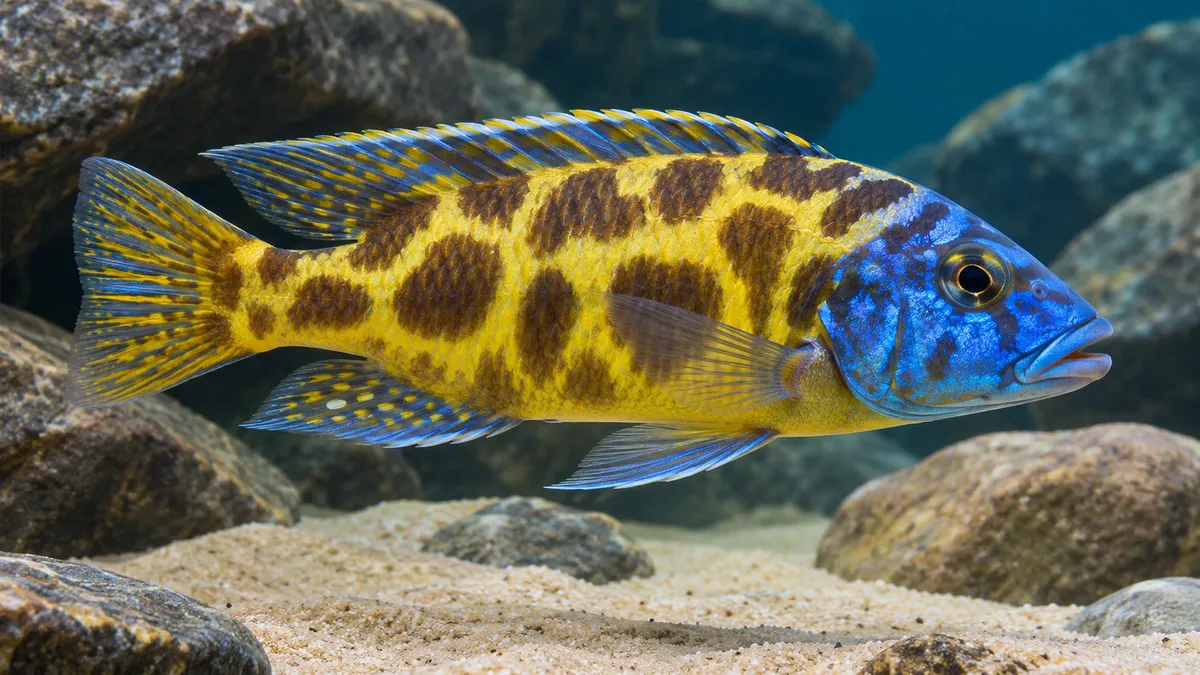 November 2, 2026
Venustus (Nimbochromis venustus): care, size and tank mates
Lake Malawi's giraffe cichlid: how big it gets, what tank it needs, what it eats, how to tell male from female and which fish can live with it without being eaten.
Read →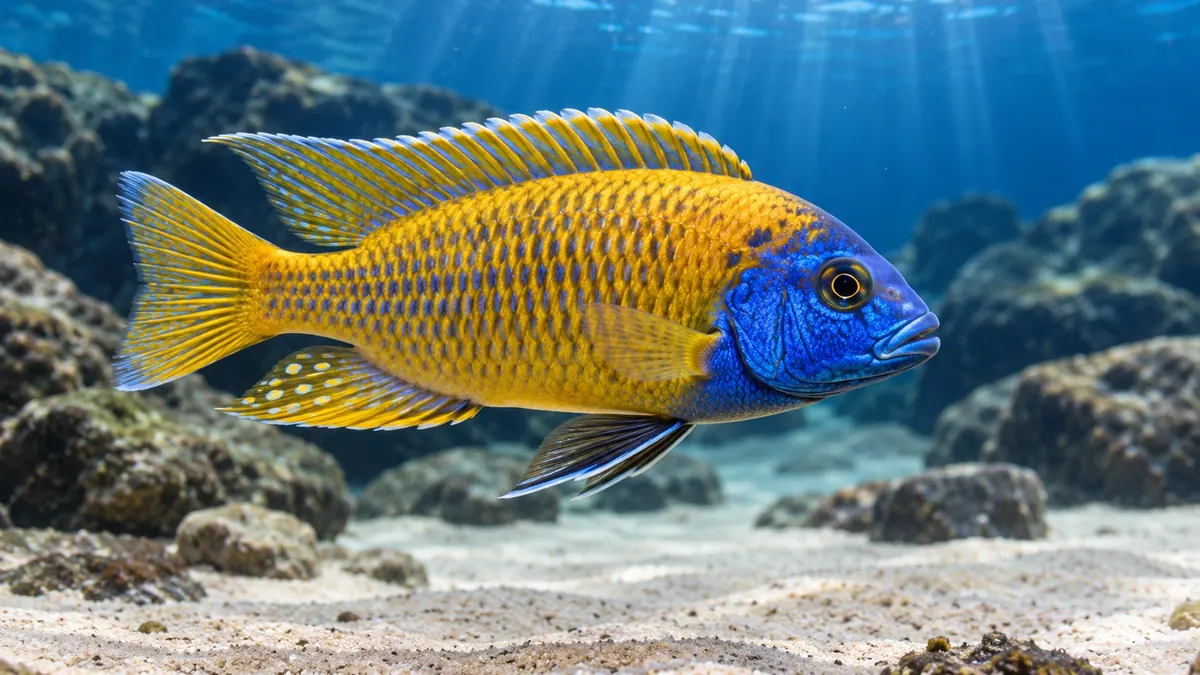 November 1, 2026
Benga peacock (Aulonocara baenschi): care, colors and tank mates
The yellow peacock with a blue face: size, tank, diet, male and female differences, and how to build a calm peacock tank.
Read →