
November 11, 2026
How to choose food for your cichlids: what to read on the label
What to look for on an African cichlid food label: ingredients, protein, fat, spirulina, color enhancers, pellet size, expiry date and how to store it.
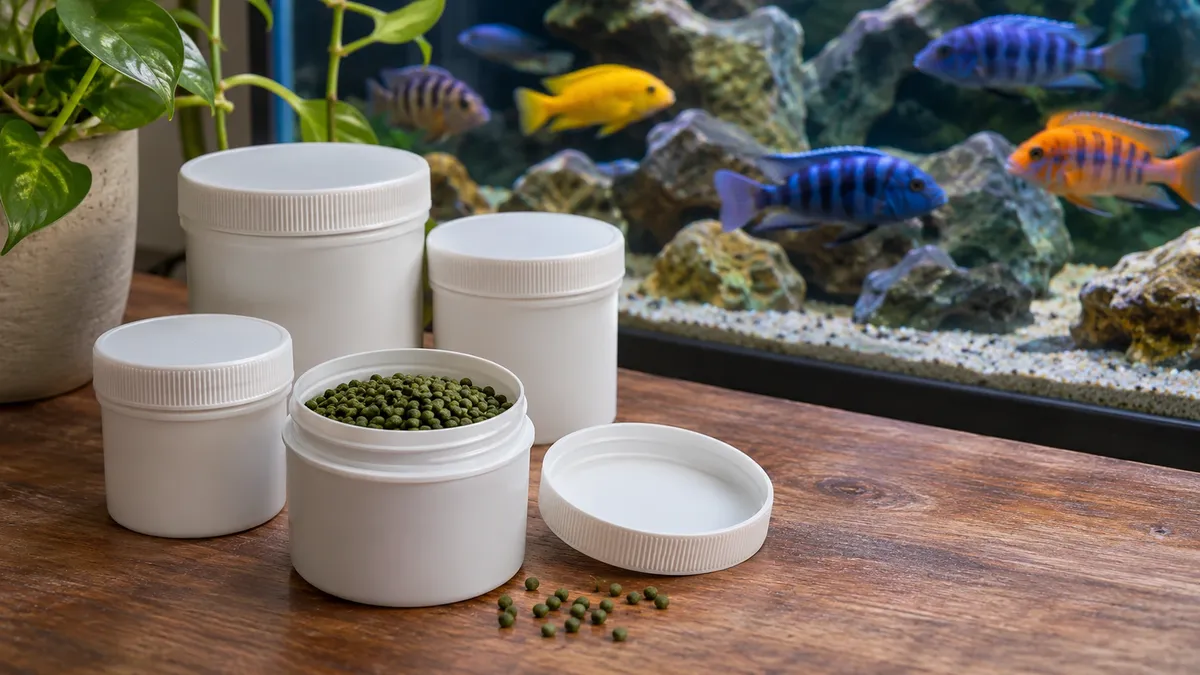
Food is half of an African cichlid's health. A good food brings color, growth and resistance; a poor one fouls the water and can cause problems like Malawi bloat. You do not need to be an expert: knowing how to read the label already puts you ahead of most keepers.
1. The first ingredients
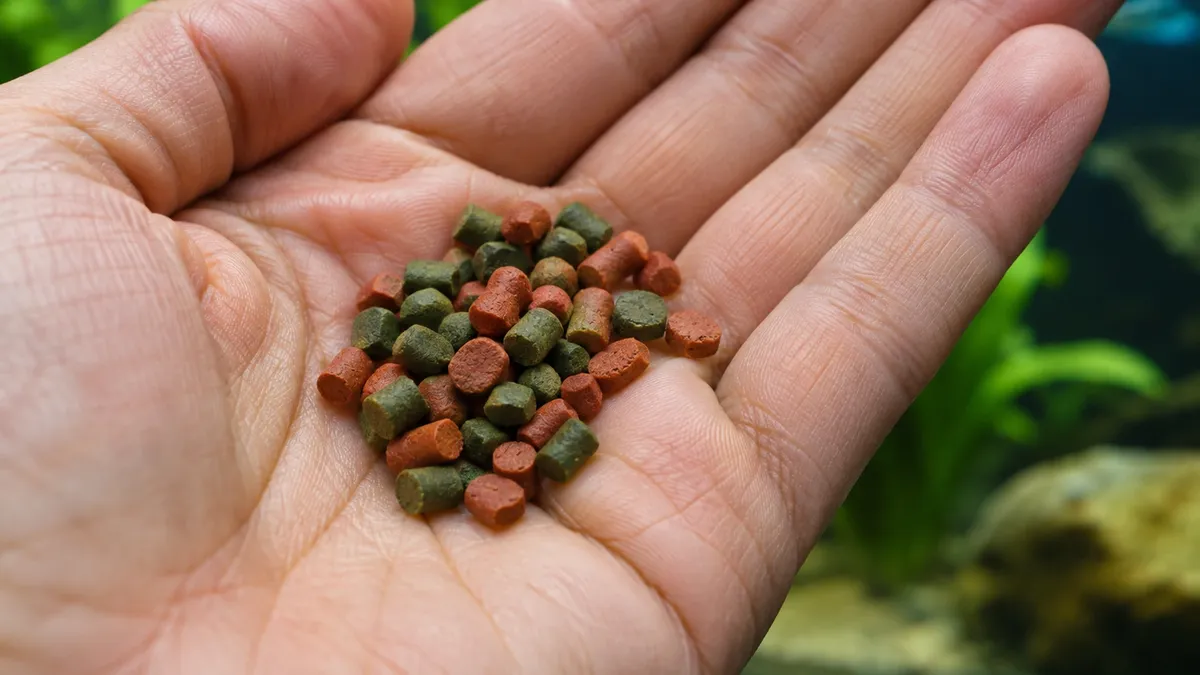
Ingredients are listed from most to least. The first three or four tell you almost everything:
- Good sign: whole fish, krill, shrimp, spirulina or algae at the top of the list.
- Bad sign: wheat flour, corn meal, soy or "by-products" as the first ingredient. They are cheap fillers that fish digest poorly.
2. Protein to match your fish
Not all cichlids eat the same. As a rough guide:
- Mbuna (Electric Yellow, Red Zebra, Auratus): they are herbivores. Look for spirulina or algae among the first ingredients and moderate protein, about 30 to 35 %. Too much animal protein causes digestive trouble.
- Peacocks and haps (Aulonocara, Venustus, Polystigma): they eat invertebrates and small fish. More protein suits them, about 40 to 45 %, with krill or fish.
We compare the diets in detail in feeding mbuna and peacocks.
3. Fat, fiber and vitamins
- Fat: moderate, roughly 5 to 8 %. Too much fat fouls the water and makes fish fat.
- Fiber: important for mbuna, which have the long gut of a herbivore.
- Stabilized vitamin C: helps resistance, and the stabilized form lasts longer in the jar.
4. Color: natural or artificial
Natural carotenoids such as astaxanthin, krill or spirulina bring out reds, oranges and yellows without harming the fish. Be wary of foods promising "instant color" without saying where it comes from. See why a cichlid loses color.
5. Size and whether it sinks
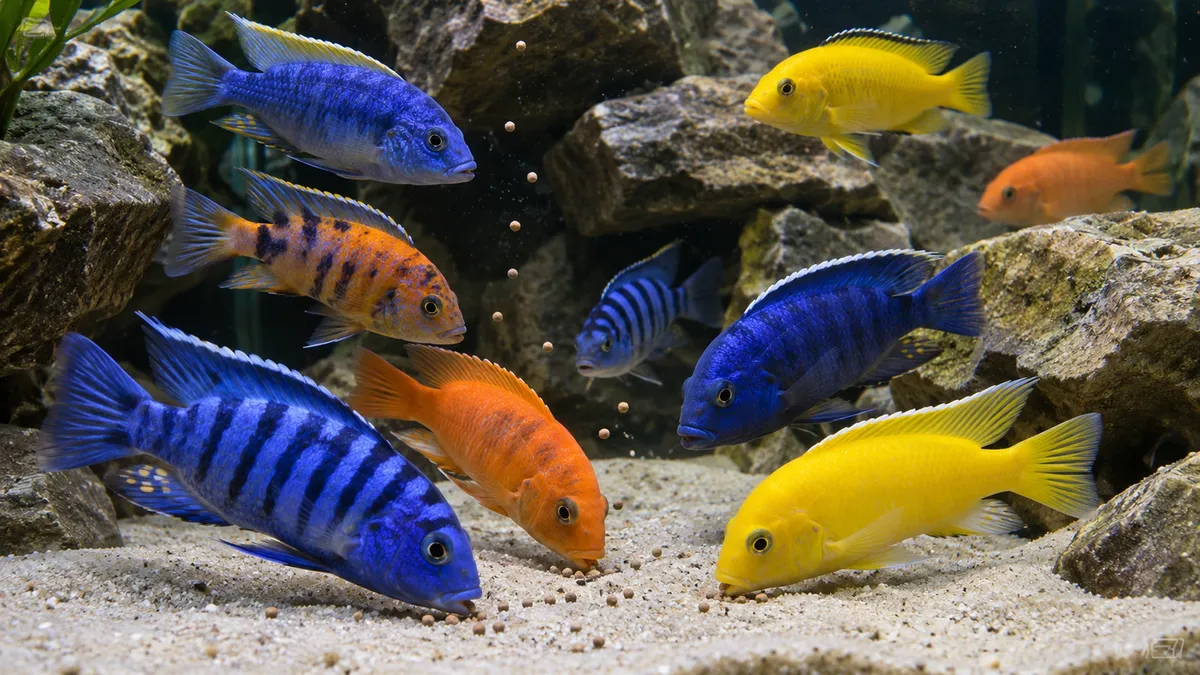
- Slowly sinking: African cichlids feed at every level, and a sinking pellet reaches the shy ones too.
- Pellet size: small (1 to 2 mm) for juveniles and mbuna, medium (3 to 4 mm) for peacocks and large haps.
6. Expiry date and storage
- Check the date. Vitamins fade over time.
- Buy what you use in two or three months: a giant tub that lasts a year loses quality.
- Keep it closed, dry and away from heat. In Costa Rica's climate, humidity ruins it fast.
How much to feed
Once or twice a day, only what they eat in a couple of minutes. It is better to underfeed than overfeed: leftover food rots on the bottom. One fasting day a week does them good.
If you are setting up your tank, start with the beginner's guide. And if you are unsure which food to use for a fish you bought from us, message us.
Discuss it in the forumMy aquarium
More from the blog
 November 19, 2026
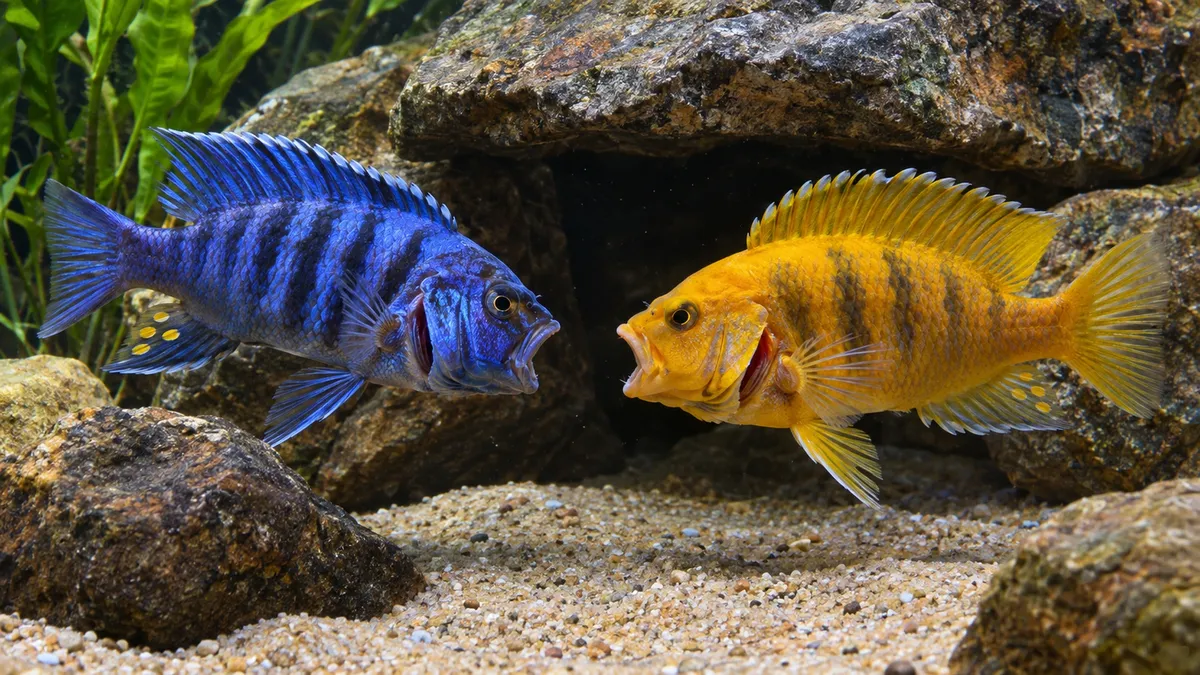
African cichlid aggression: why they fight and how to reduce it
Why African cichlids fight, when it is normal and when it is not, and what actually lowers aggression: sex ratio, rocks, colors and number of fish.
Read →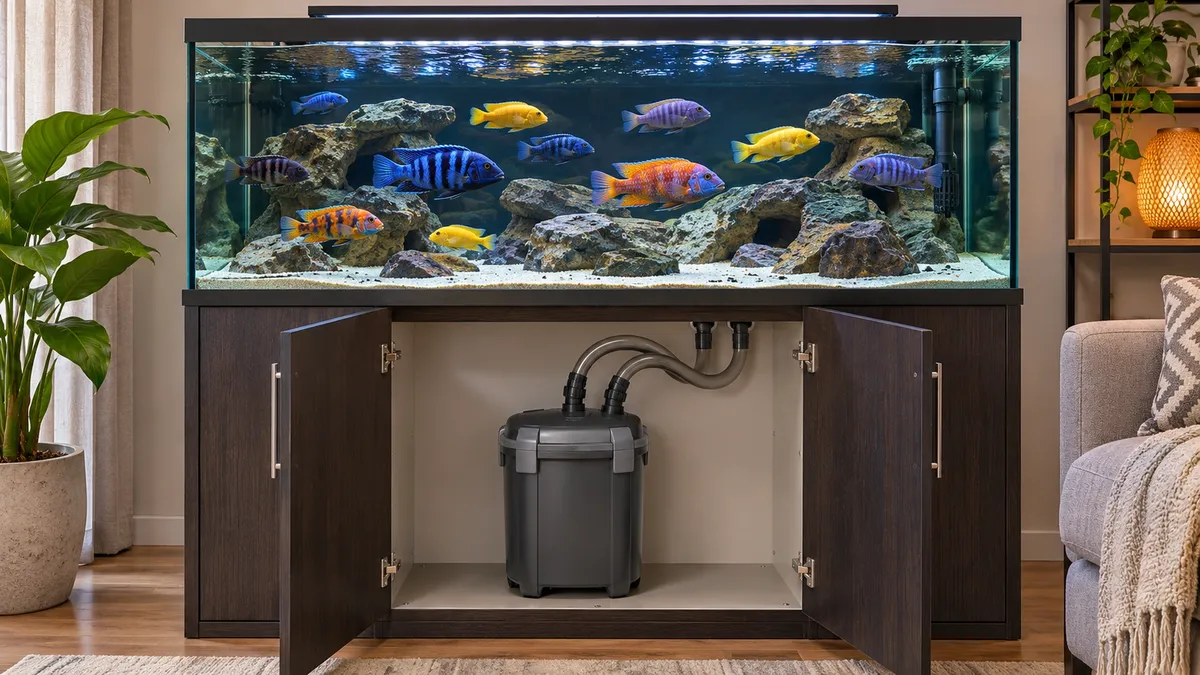 November 19, 2026
Which filter to use in an African cichlid aquarium
How much a cichlid filter should turn over, which type to choose for your tank size (canister, hang-on-back, sponge), how to order the media and how to clean it without losing the bacteria.
Read →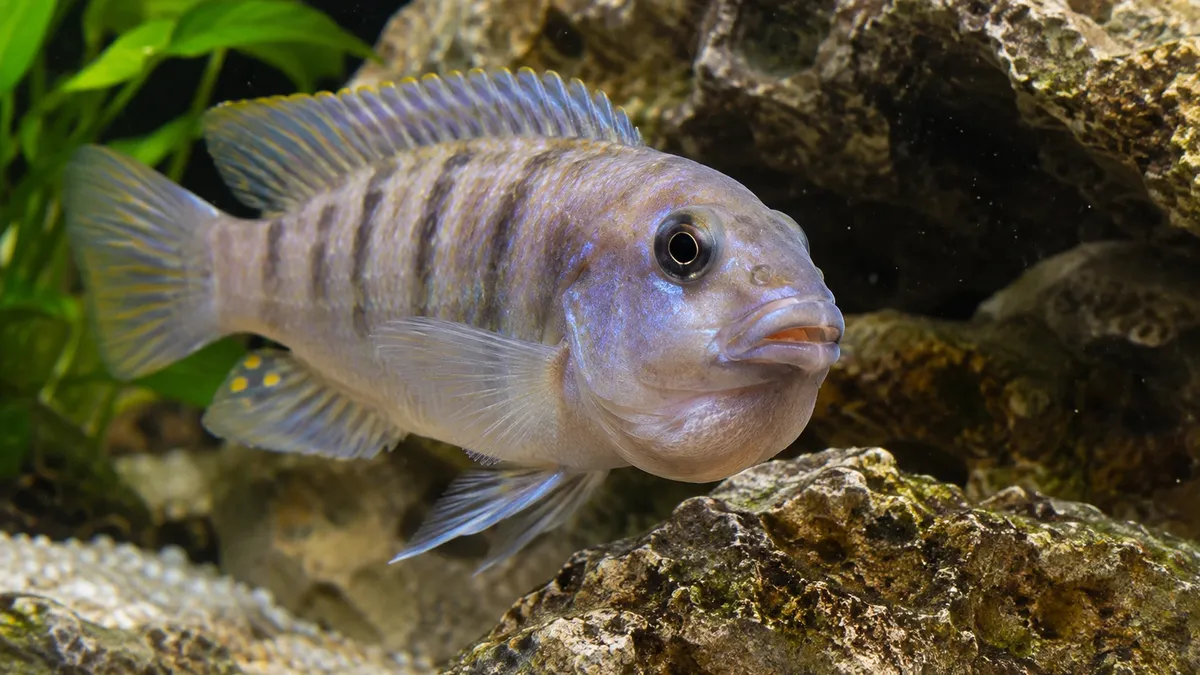 November 15, 2026
Holding female: how to tell if your cichlid has eggs in her mouth
The signs of a holding African cichlid female, how long it lasts, whether to move her, what to do when she releases the fry and how to feed them.
Read →