
October 30, 2026
Malawi bloat in African cichlids: symptoms, causes and what to do
Bloat is the most feared disease in mbuna. How to spot it early, why it happens, how to act and, above all, how to prevent it with the right diet.
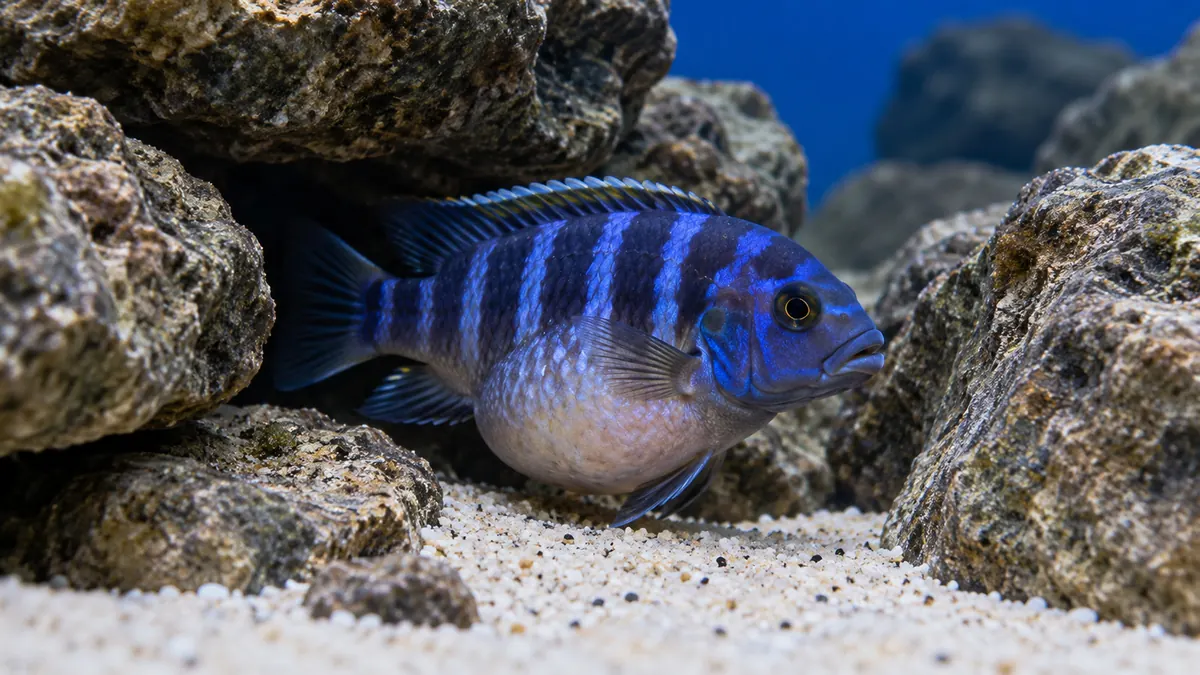
If you keep mbuna, sooner or later you will hear about Malawi bloat. It is a digestive disease that moves fast and, left alone, can kill a fish within days. The good news is that it can almost always be prevented, and caught early, the fish has a good chance. Here is what you need to know.
Note: this guide is for information. If you are unsure about a treatment, ask at a specialist shop or a vet who treats fish.
What Malawi bloat is
It is an inflammation of the digestive tract that swells the fish's abdomen. It mostly affects mbuna, cichlids that eat almost only algae in the lake and have a long gut built for digesting plants. There is no single known cause: the most accepted view is that it starts with an irritated gut, from a poor diet or stress, after which gut bacteria and parasites that are normally harmless get out of control.
Symptoms: catching it early
The key is to spot it at the first signs, before the belly swells much:
- Stops eating or spits out food. Usually the first sign.
- Hides and stays still near the bottom or in a corner.
- White, long, stringy feces instead of dark ones.
- Fast breathing.
- Swollen belly; in advanced cases, raised scales or a red, inflamed vent.
If you see the first two or three together in a mbuna, act that same day.
Most common causes
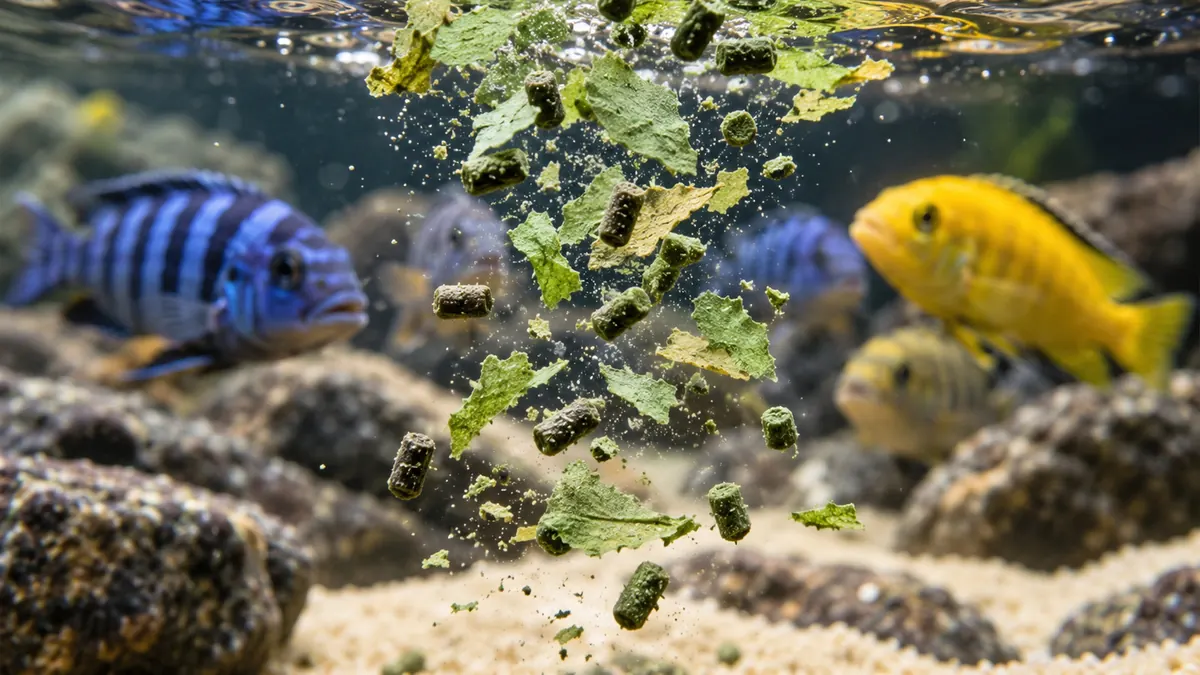
- Too much protein: carnivore foods, larvae, meat, or peacock pellets fed to mbuna. This is the number one cause.
- Overfeeding: large amounts several times a day.
- Stress: constant aggression, transport, sudden water changes.
- Poor water quality: high nitrate, too few water changes.
What to do if you suspect bloat
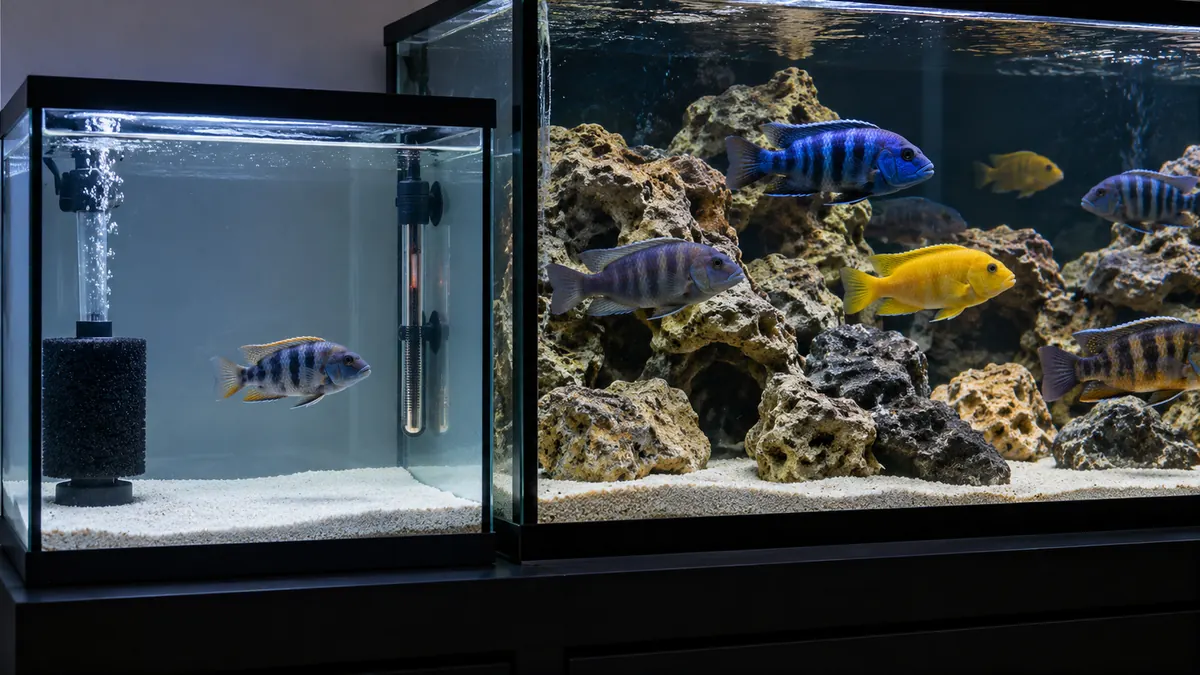
- Isolate the fish in a hospital tank with water from the main tank, a heater and a sponge filter. You can watch it closely, the others cannot harass it, and the treatment does not affect the main tank.
- Stop feeding during the treatment.
- Test the main tank's water: ammonia, nitrite, nitrate and pH. Change 25 to 30% of the water.
- Treatment: the one hobbyists use most is metronidazole made for aquariums, which targets gut parasites and bacteria. Always follow the manufacturer's dose and duration, and finish the treatment even if the fish improves sooner. Some hobbyists add Epsom salt to the hospital tank as a mild laxative, also at the labeled dose.
- Back to food: once the fish swims normally and looks for food, start with very small amounts of plant-based food and increase slowly.
If several fish show symptoms at once, the problem is probably the diet or the water of the whole tank: fix that first.
How to prevent it
- Spirulina or plant-based food as the staple for mbuna. More in feeding mbuna and peacocks.
- Small portions: what they eat in a minute, once or twice a day. A fasting day each week does them good.
- Do not mix mbuna with peacocks if you feed them different diets: the mbuna will eat the protein food. More in mbuna vs. peacocks.
- Stable water and weekly changes. See Costa Rica tap water.
- Quarantine every new fish: that is when stress peaks. See quarantine and acclimation.
- Less aggression: good rocks and a good species mix, as in compatible African cichlids.
Summary
Bloat is prevented with a plant-based diet, small portions, stable water and less stress. If a mbuna stops eating, hides and has white feces, isolate it and act that same day. If you are unsure about a fish, tell us in the forum with a photo or video. And if a fish is hiding without these symptoms, see why a cichlid loses color or hides.
Discuss it in the forumMy aquarium
More from the blog
 November 2, 2026
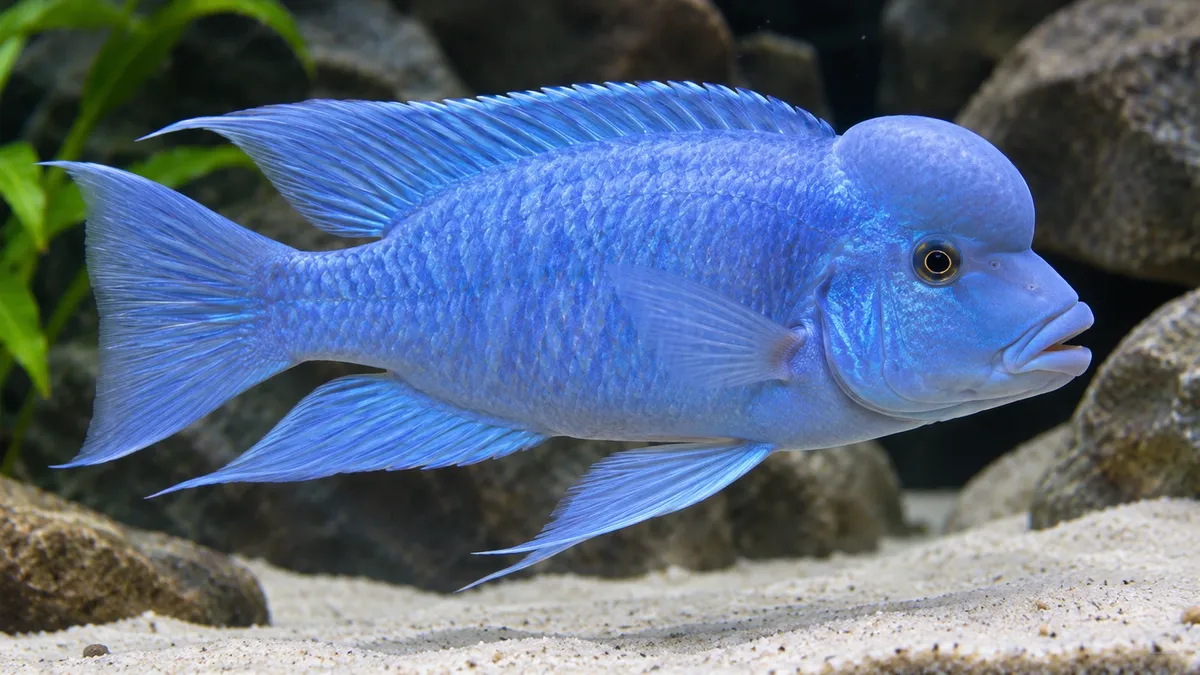
Blue Dolphin (Cyrtocara moorii): care, hump and calm temperament
Lake Malawi's humped blue cichlid: how big it gets, what tank and food it needs, how to sex it and why it is one of the most peaceful large cichlids.
Read → November 2, 2026
Venustus (Nimbochromis venustus): care, size and tank mates
Lake Malawi's giraffe cichlid: how big it gets, what tank it needs, what it eats, how to tell male from female and which fish can live with it without being eaten.
Read → November 1, 2026
Benga peacock (Aulonocara baenschi): care, colors and tank mates
The yellow peacock with a blue face: size, tank, diet, male and female differences, and how to build a calm peacock tank.
Read →