
November 1, 2026
Chipokae (Melanochromis chipokae): care and how to handle its temperament
One of the most beautiful and most aggressive mbuna: male and female colors, tank, diet, sex ratio and which fish it can live with.
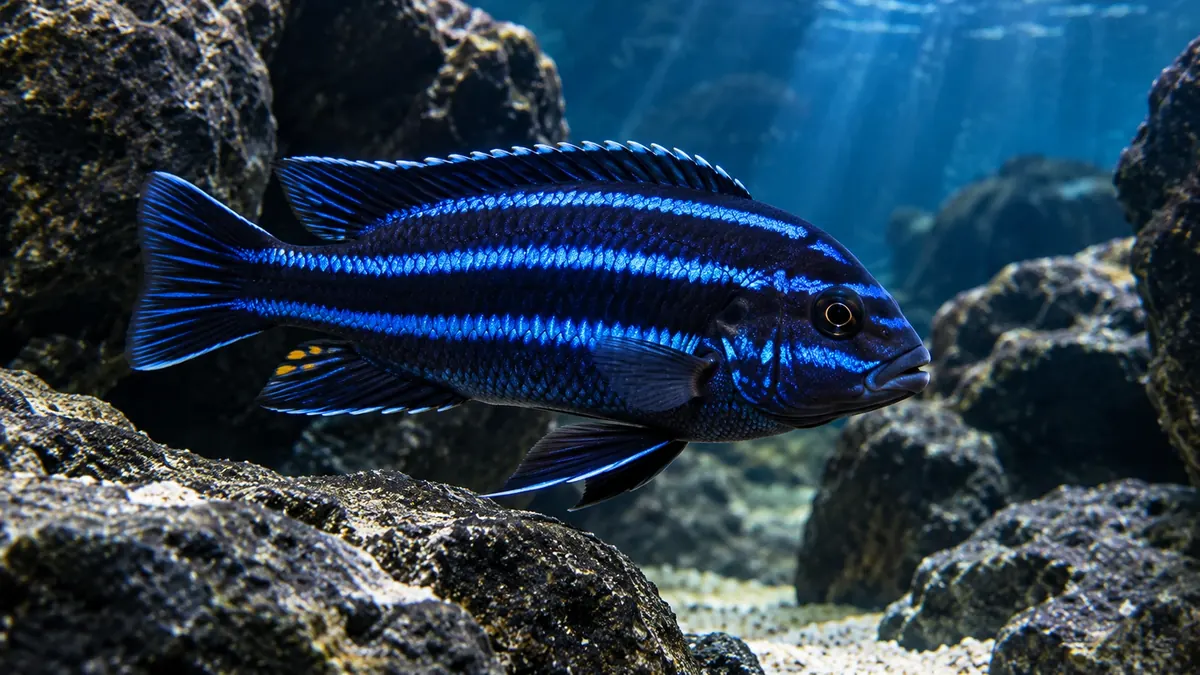
The Chipokae (Melanochromis chipokae) is one of the most spectacular mbuna: the adult male is almost black with electric blue stripes that glow under the light. It is also one of the most aggressive. With the right tank and tank mates it is an extraordinary fish; without them, a problem. This guide helps you get it right.
Quick facts
| Scientific name | Melanochromis chipokae |
|---|---|
| Group | Mbuna, Lake Malawi |
| Adult size | About 12 cm for males, slightly less for females |
| Temperament | Very territorial and aggressive |
| Minimum tank | 250 liters, 120 cm long or more |
| Water | pH 7.8 to 8.6, hard; 24 to 27 °C |
| Diet | Herbivore: spirulina and algae |
| Breeding | Maternal mouthbrooder |
Colors: two fish in one
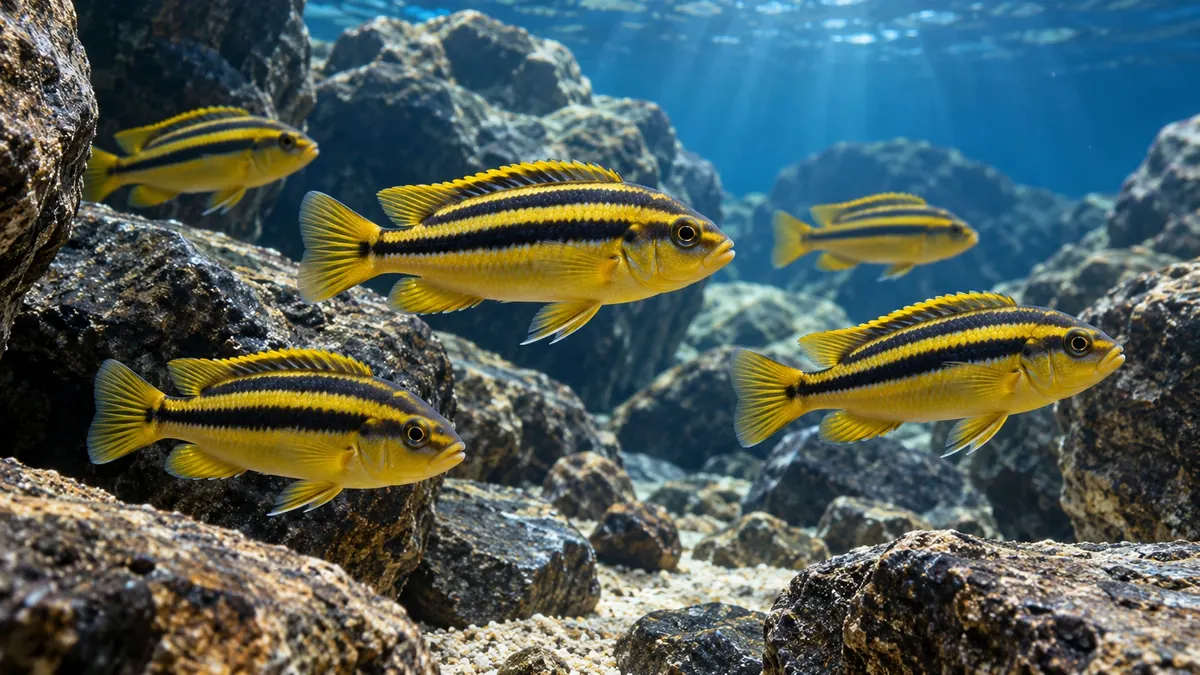
Like its relative the Auratus, the Chipokae changes pattern as it matures. Juveniles and females are golden yellow with black horizontal stripes. The adult male darkens to an almost black blue and his stripes turn electric blue. A well-built group shows both patterns at once.
Temperament: what to know
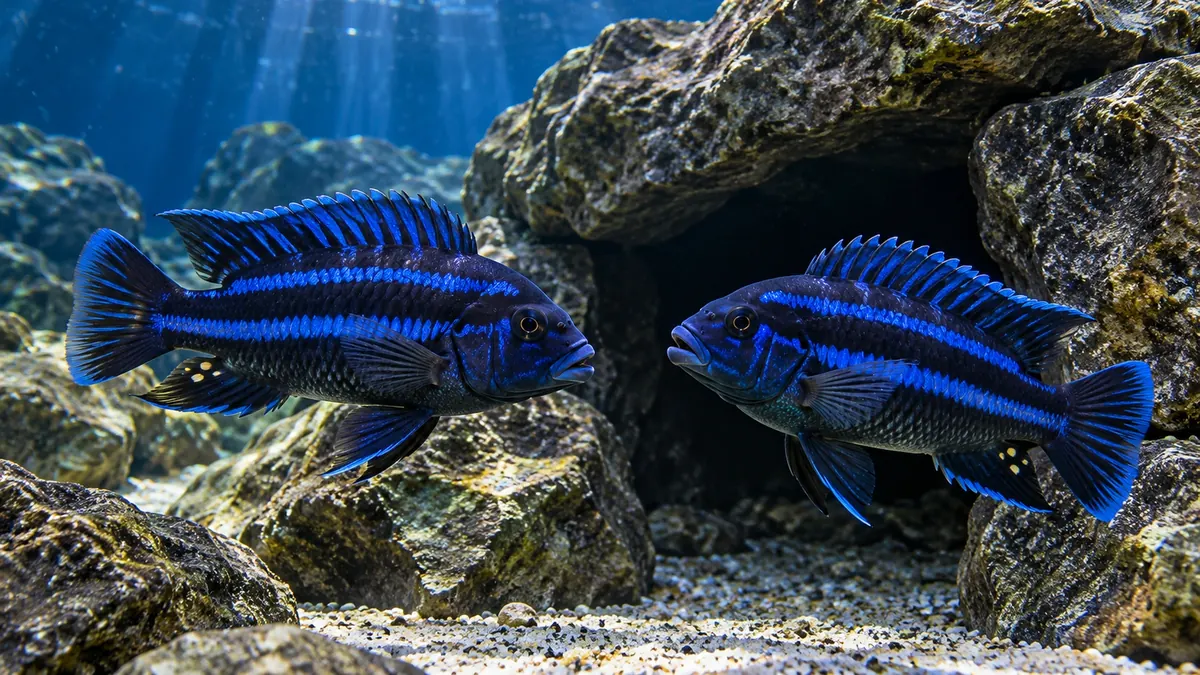
The male Chipokae defends his territory fiercely and does not tolerate other males, of his own species or of similar ones. The females are not calm either. To make it work:
- A single male with 4 to 6 females, so his attention is spread out.
- A large tank: 250 liters or more. In small tanks aggression has nowhere to dilute.
- Lots of rocks and caves, so you cannot see from one end of the tank to the other.
- Add it last, once the other fish have settled.
- Watch closely for the first weeks and have a backup tank in case a fish needs to be separated.
Tank, water and diet
It needs hard, alkaline water (pH 7.8 to 8.6, 24 to 27 °C), a good filter and weekly water changes. We cover this in tank size and stocking and Costa Rica tap water.
It is a herbivore: the staple should be a spirulina-based food, in small amounts, once or twice a day. Avoid meat and protein-rich foods, which cause Malawi bloat.
Tank mates
- Good: robust mbuna in very different colors, such as the orange Red Zebra. The Electric Yellow also works in large, well-decorated tanks.
- Avoid: the Auratus and other Melanochromis. Their patterns are similar, they clash constantly and they can crossbreed.
- Avoid: blue mbuna with stripes like the male's, and any calm fish such as peacocks.
- Never with community tropical fish.
More combinations in compatible African cichlids.
Breeding
It breeds readily. The female holds the eggs in her mouth for about three weeks and releases yellow, striped fry. With such a territorial male, it is best to move the female to a separate tank midway through holding. We explain how in how to breed African cichlids.
Chipokae in Costa Rica
See the Chipokae profile in our catalog for availability and price, or message us on WhatsApp from there. If this is your first tank, we recommend starting with calmer species: the beginner's guide helps you choose.
Discuss it in the forumMy aquarium
More from the blog
 November 2, 2026
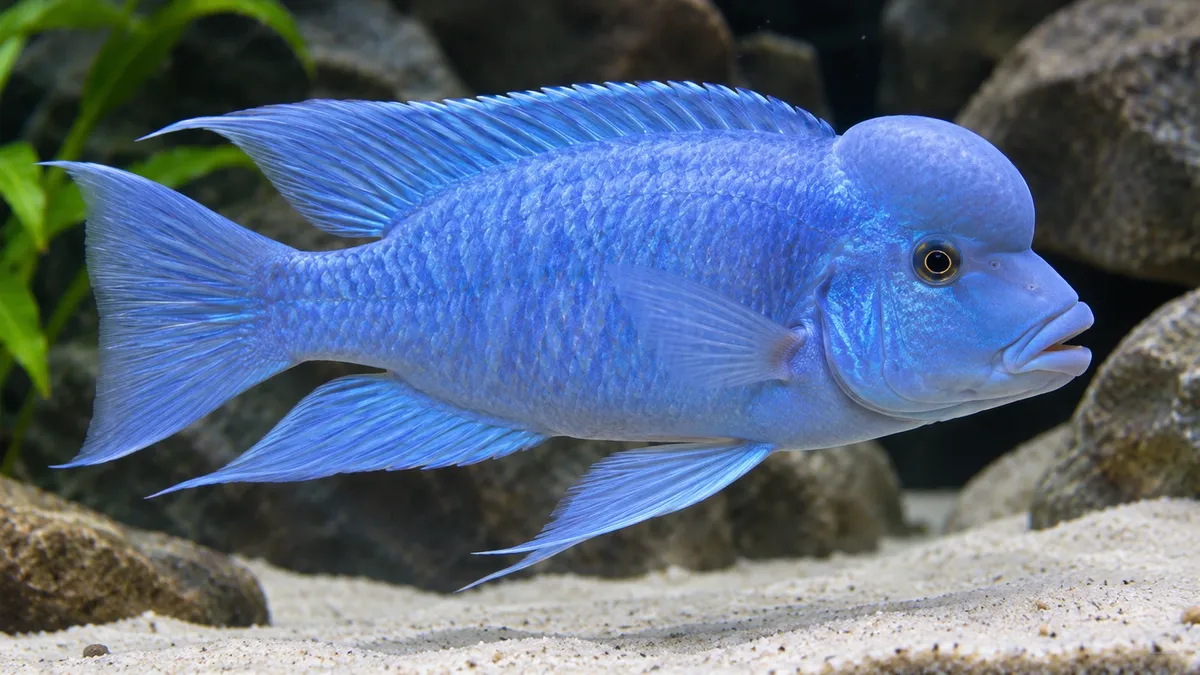
Blue Dolphin (Cyrtocara moorii): care, hump and calm temperament
Lake Malawi's humped blue cichlid: how big it gets, what tank and food it needs, how to sex it and why it is one of the most peaceful large cichlids.
Read → November 2, 2026
Venustus (Nimbochromis venustus): care, size and tank mates
Lake Malawi's giraffe cichlid: how big it gets, what tank it needs, what it eats, how to tell male from female and which fish can live with it without being eaten.
Read → November 1, 2026
Benga peacock (Aulonocara baenschi): care, colors and tank mates
The yellow peacock with a blue face: size, tank, diet, male and female differences, and how to build a calm peacock tank.
Read →